
Assessing the Lovely Wet Beginning to the 2025-26 Winter
Five days into January, we've accumulated nearly 16 inches of precipitation, which is 176% of what we'd expect for the winter to date. Just as important to how much rain we've received is how it has fallen: gradually and with breaks in-between.
If you were wondering about how I feel about our early rain, the title of this blog probably gave it away. So far, this winter has been just about ideal, with ample water delivered (at least since harvest ended) in the best possible manner.
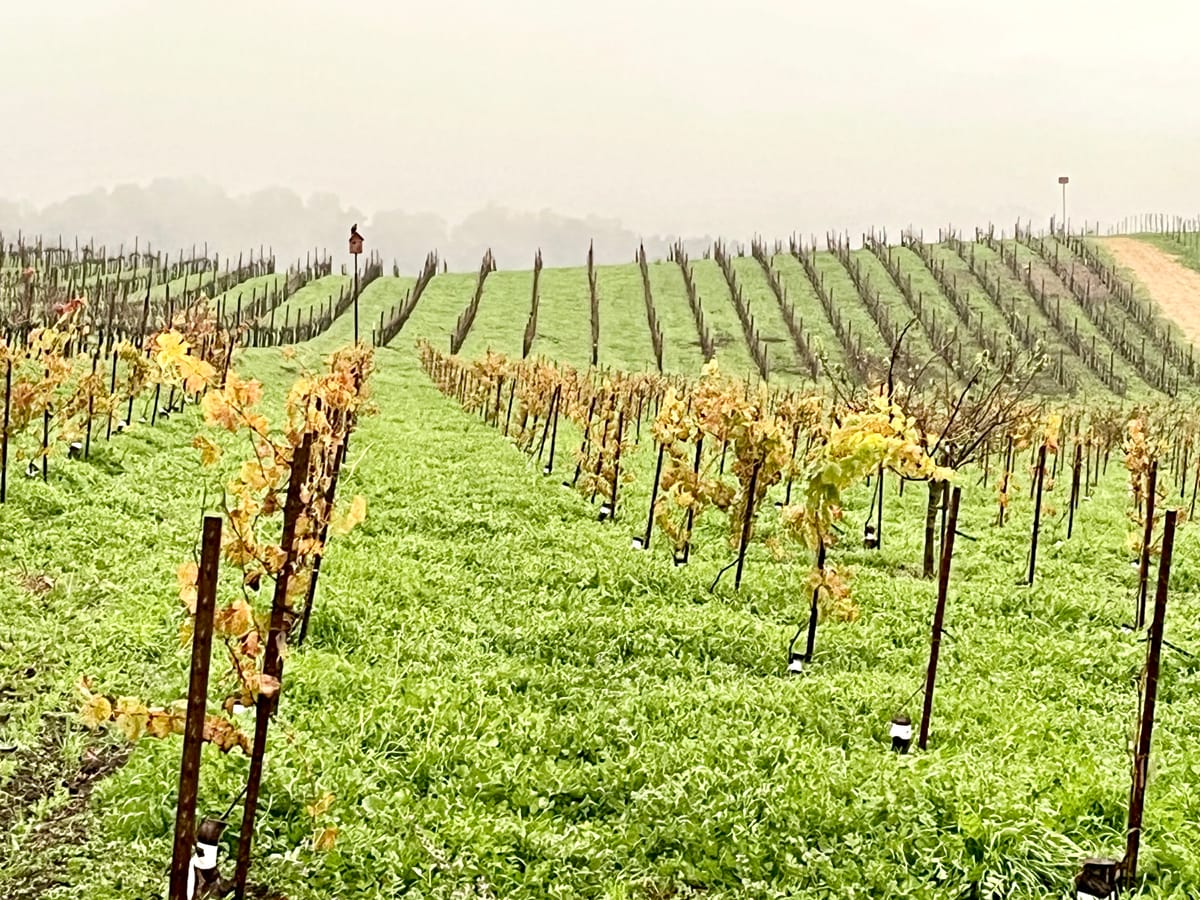
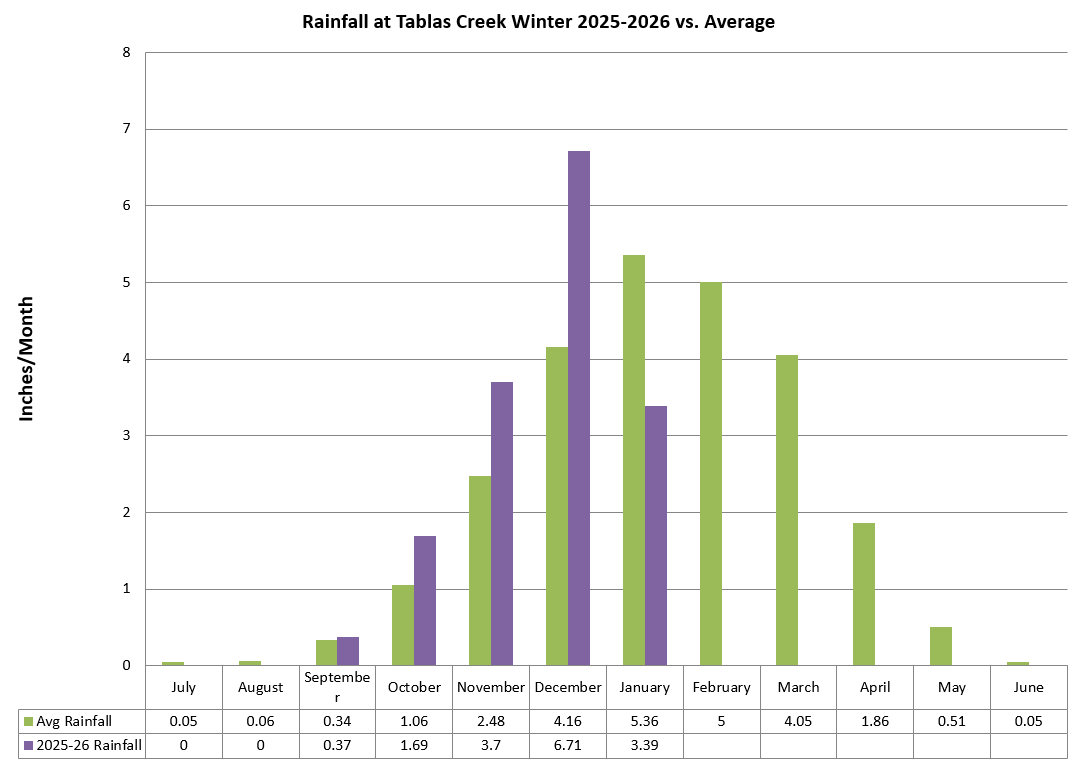
As often occurs in wet winters, the first rains came early. We got about a third of an inch of rain in September, which produced some striking pictures but didn't have much impact either on the soils or the progress of harvest. On October 14th, we received about an inch and two thirds, which was enough water to force us to wait a week to resume harvesting and to begin the vineyard's transition from summer gold to winter green about a month earlier than usual. November started dry (for which we were grateful, as it allowed us to wrap up harvest in good shape) but turned wet mid-month, with six consecutive wet days dropping more than 3.5" of rain. After another month-long interlude, new storms rolled in a few days before Christmas and it stayed pretty wet until yesterday. Here's what the year looks like so far (and note that January 2026 includes just the first five days, so we're on a pace to exceed our average for the fifth consecutive month even though we've got a week of dry weather in our immediate forecast):
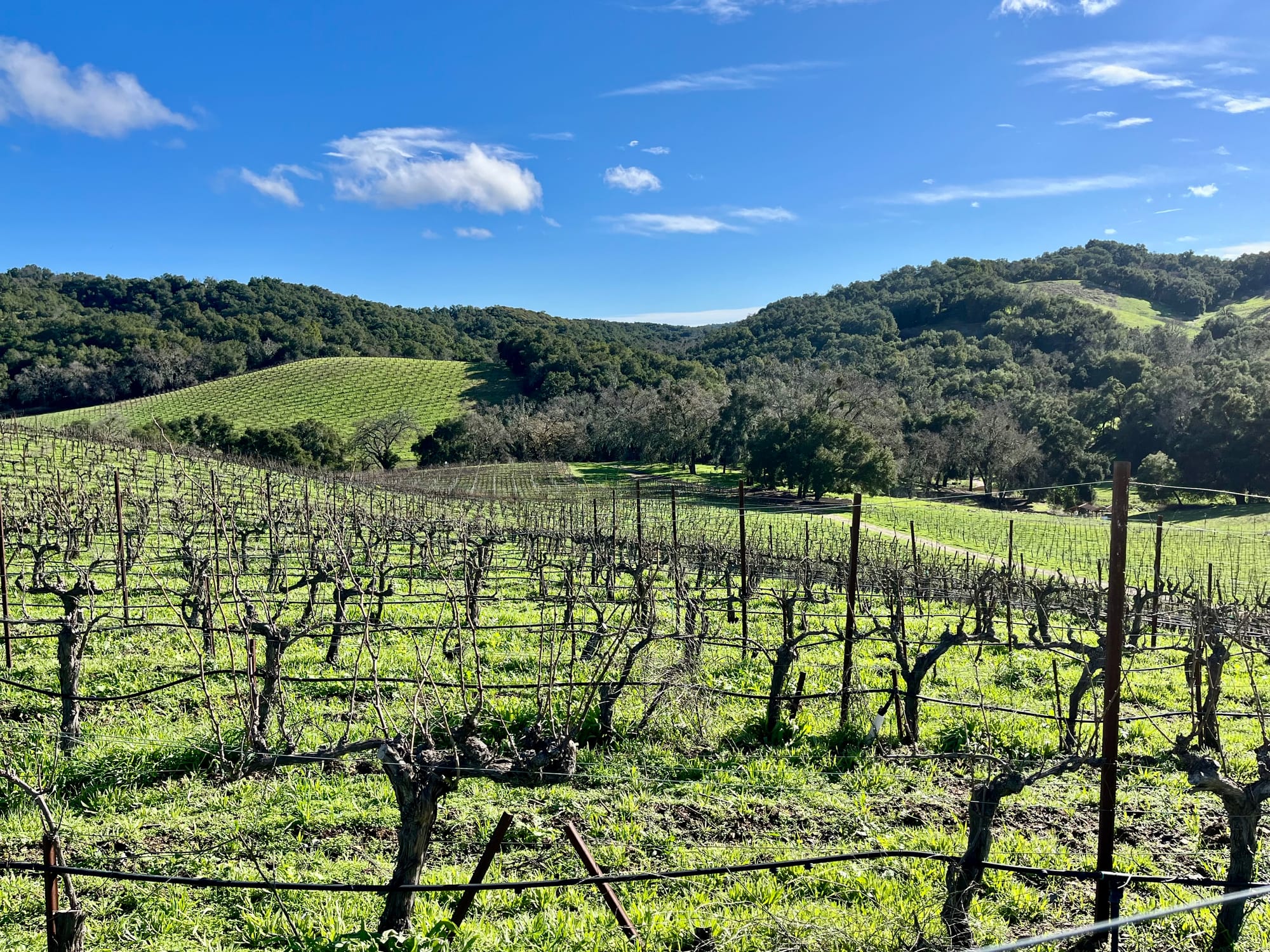
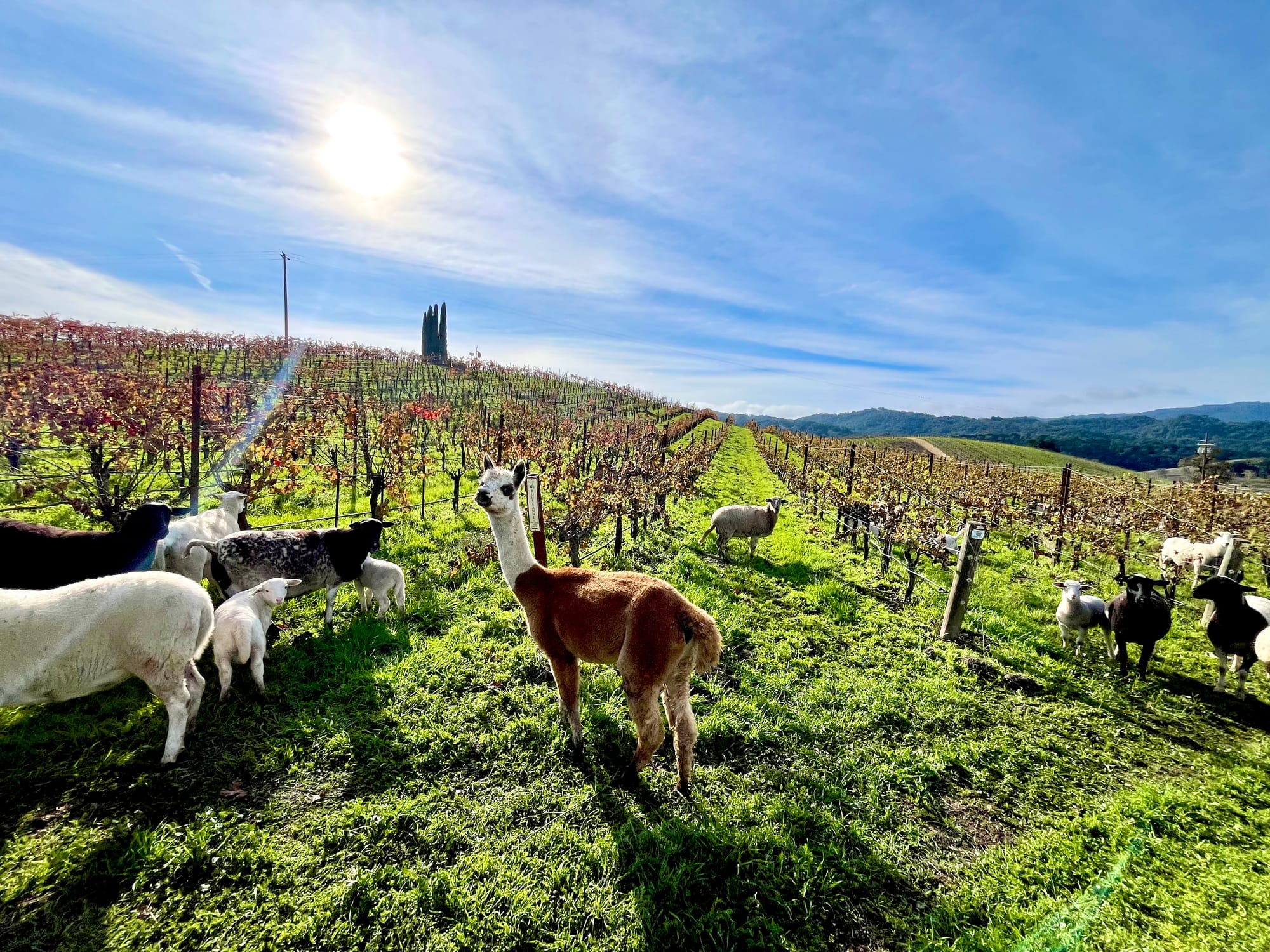
Oh, and the vineyard looks like this:
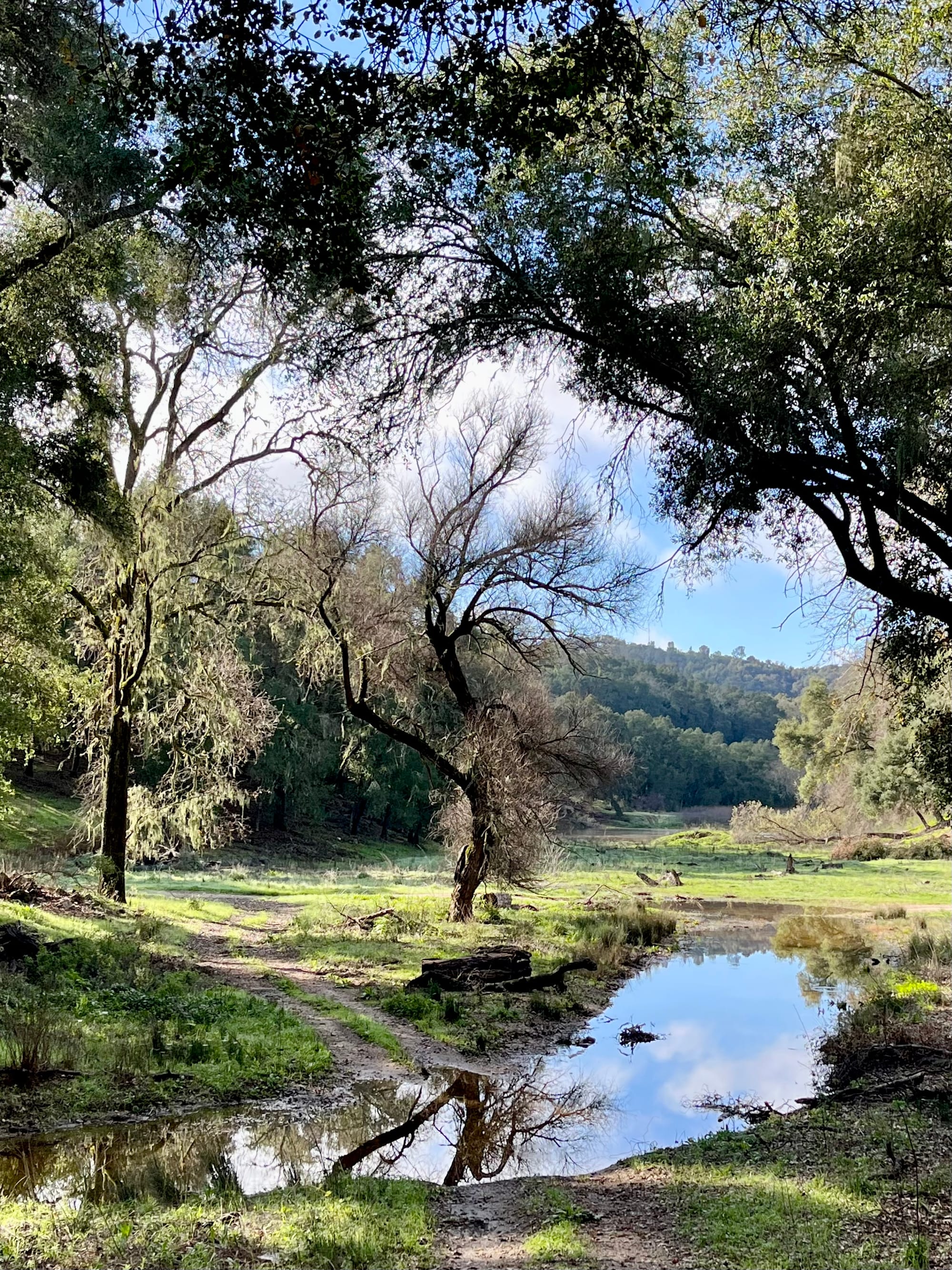
For the winter, we're at nearly 16 inches, which is 176% of what we'd expect as of January 6th. But just as important as how much rain we've received is how it has fallen. In a climate where rain often comes in massive doses, sometimes overwhelming the soil's capacity to absorb it, this year's precipitation has come gradually. We've tallied 18 days with at least a tenth of an inch of rain, and just five of those days have exceeded an inch. Just two have exceeded an inch and a quarter, and just one (Christmas Eve) exceeded two inches. That has meant that it has all soaked in. Las Tablas Creek is barely flowing:
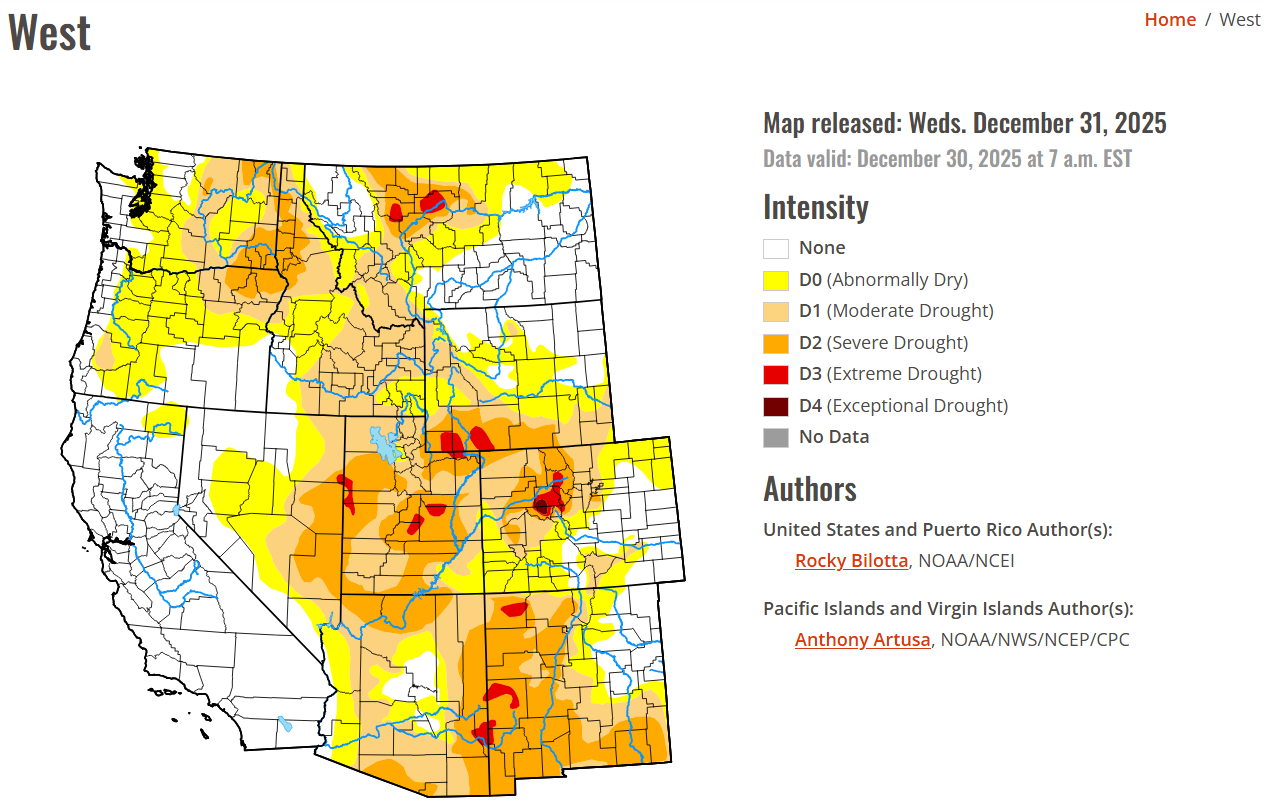
What's more, the rain has been broadly distributed throughout California, unlike some winters (I'm looking at you, 2024-25) where the north received ample rain while the south was dangerously dry. I'm not sure I can remember a US drought monitor report that showed virtually the entire state of California's drought intensity as "None":
So, on the water front, so far, so good. How about on the temperature front? Regular readers of the blog know that below-freezing nights aren't unusual (or unwelcome) in Paso Robles in the wintertime, but this year we've only seen five so far. It's rarely both rainy and frosty here, given that typically it only freezes when it's clear enough for radiational cooling to take place. So the relatively few frost nights are unsurprising. The next week, with high pressure newly in place and clear skies at night, may well see us double our frost night total for the winter so far. That all goes to say that I'm not worried about the relative lack of frost. Frost nights are coming, and the ground is already cool and saturated.
What does all this mean for the 2026 vintage? It's way too early to say. But I do feel confident saying that this will be a great cover crop year, as the combination of early germination, ample rain, and sunny intervals have combined to make it as green in early January as I can ever remember. That should bode well for a healthy, happy flock of sheep, for ample organic matter (and therefore water holding capacity) in the soil, and for great microbial and fungal activity. All those things should help get the growing season off on the right track. After that, we'll see. But so far, this winter has been just what the doctor – and our flock – would have ordered.
We ❤ you, winter in Paso Robles.