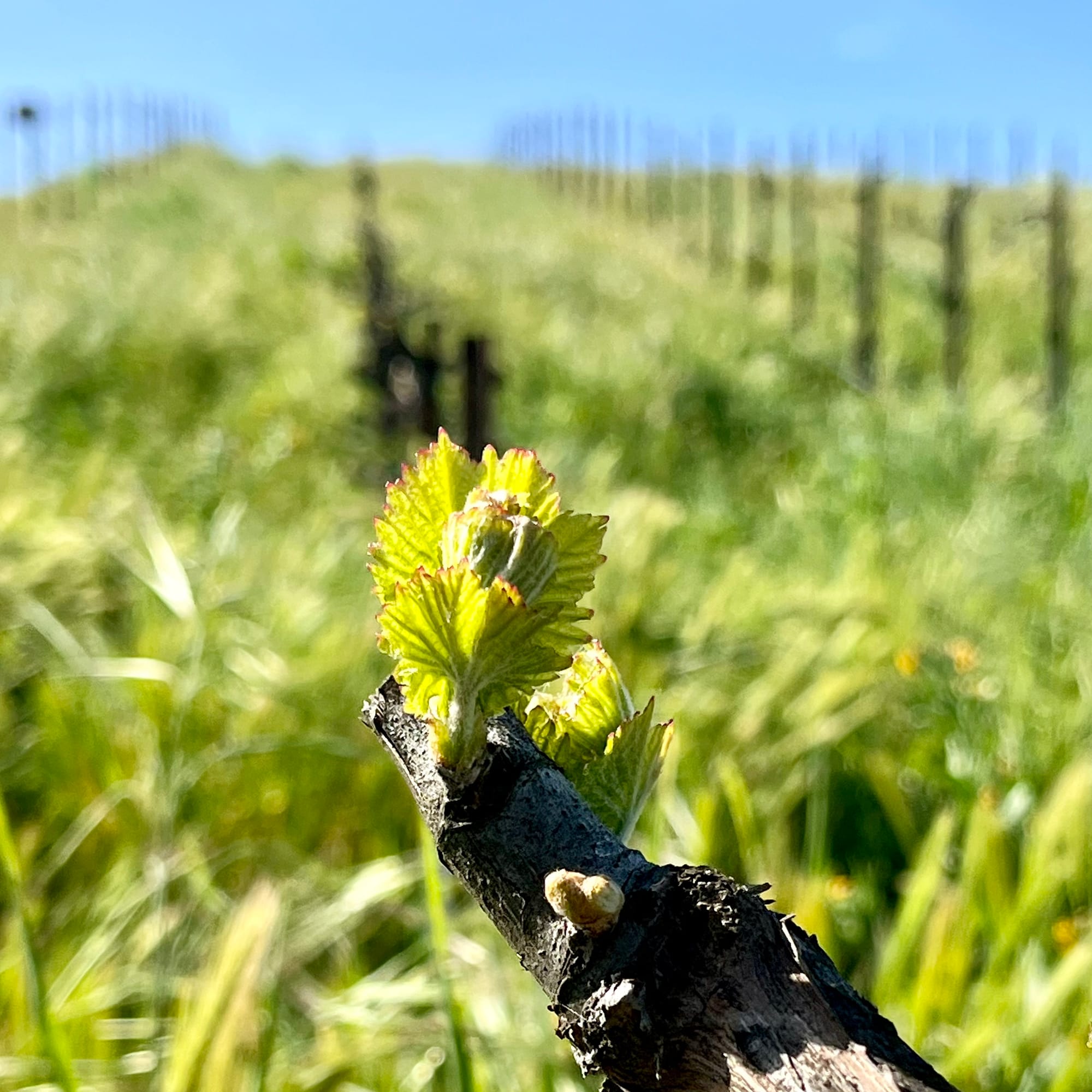
Budbreak 2026 arrives two weeks early... and this week's potential record heat means it will spread fast
Every day of the last three weeks has seen highs at least in the upper 60°s F, without a low dropping below the upper 30°s. We've topped 70°F every day for the last week, and 80°F two of the last three days. So it's no surprise that the vines have woken up.
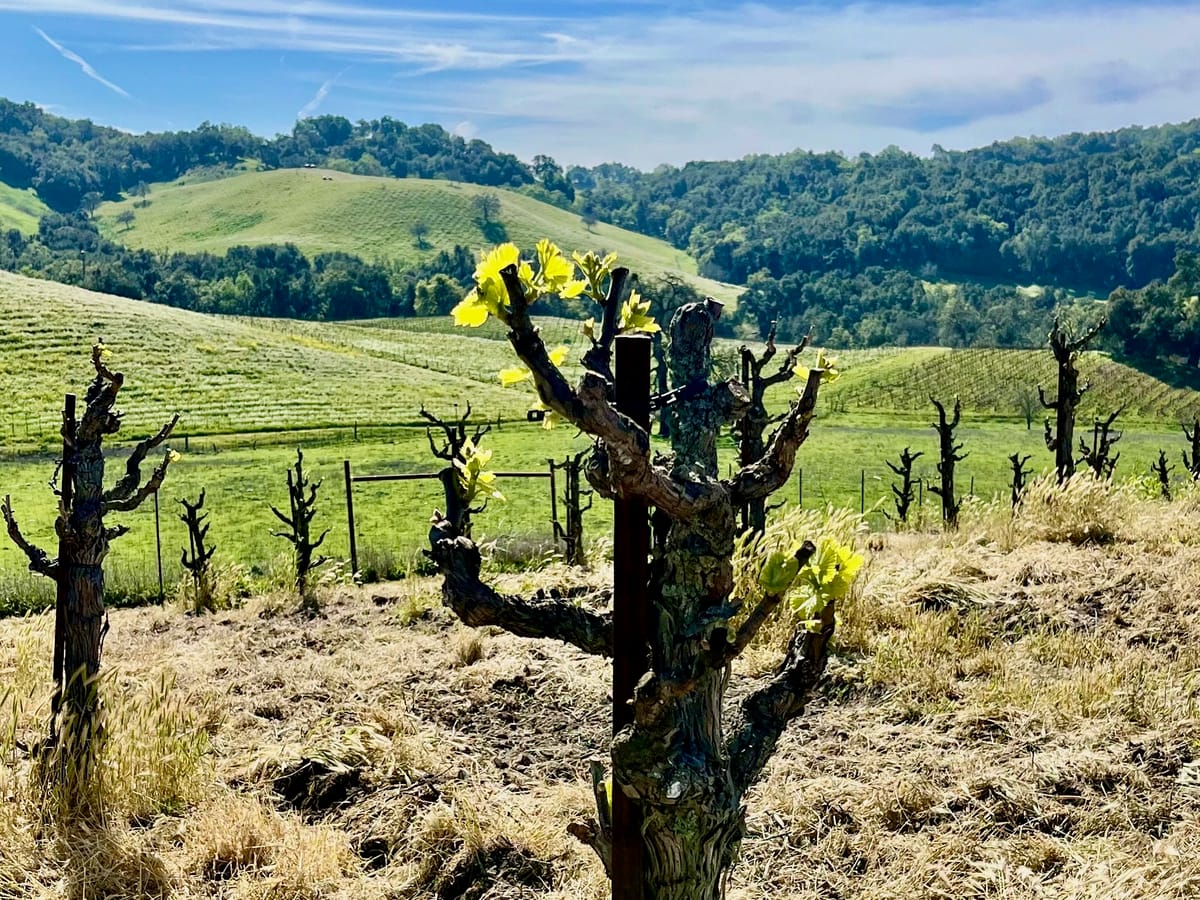
This winter has played out in a classic California pattern. When it's been wet, it's been really wet. But in between each of those stormy periods, we've been getting multiple weeks of warm, sunny weather. The last serious rain that we received was the second week of February. The next week dried out and saw below-freezing nights. Since then it's stayed sunny and dry but has warmed up. Every day of the last three weeks has seen highs at least in the upper 60°s F, without a low dropping below the upper 30°s. We've topped 70°F every day for the last week, and 80°F three of the last four days. So it's no surprise that scenes like this are what we're seeing on our hilltops:
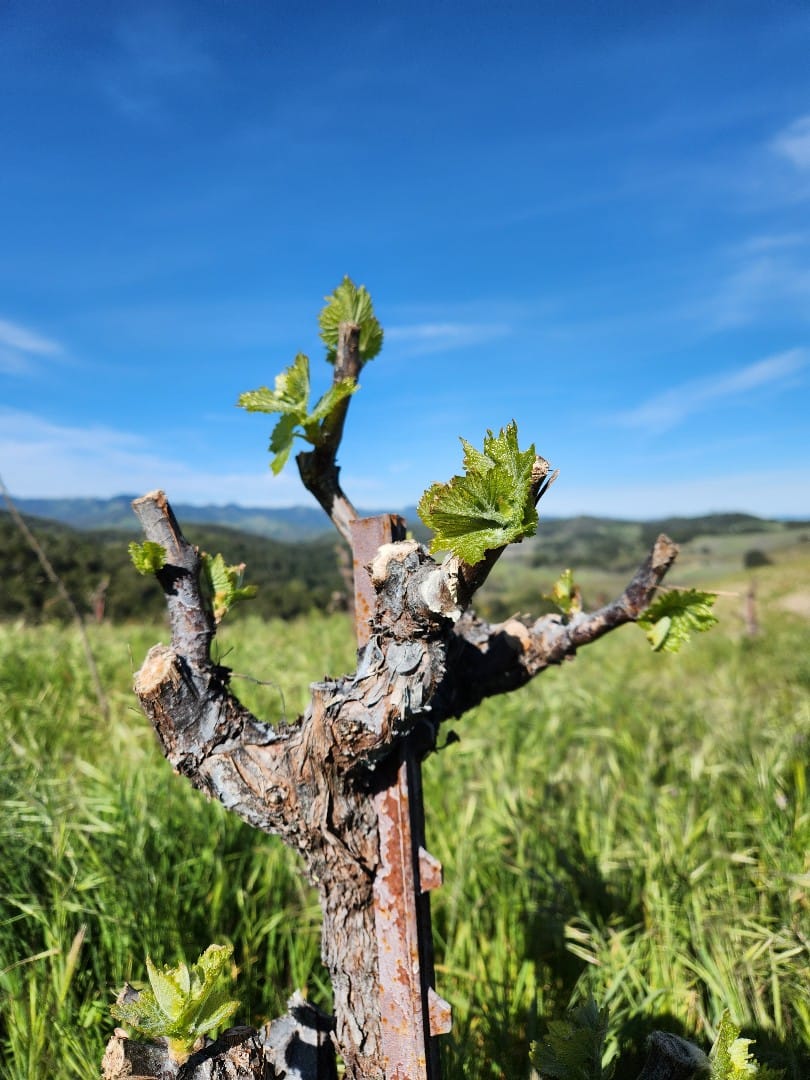
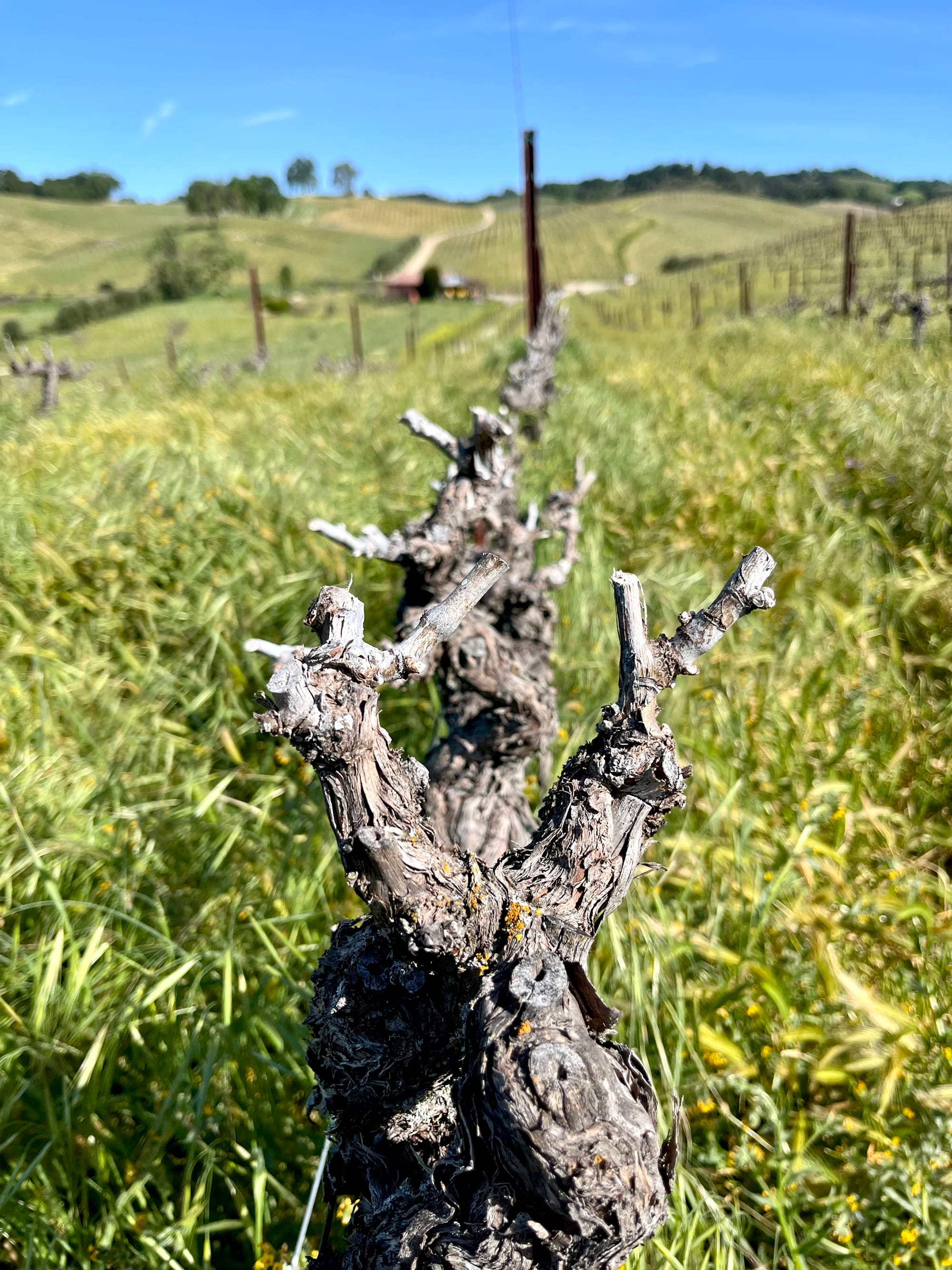
So far, we've only seen leaves on our early-sprouting varieties (Grenache, above, plus Grenache Blanc and Viognier) and mostly at the tops of the hills. Lower areas are still dormant no matter their variety (in this case, Roussanne):
Budbreak, as you probably guessed from the name, is the period when the grapevine buds swell and burst into leaf. It is the first marker in the growing cycle, a point when we can compare the current season to past years. Upcoming markers will include flowering, veraison, first harvest, and last harvest. And like harvest, budbreak doesn't happen for every grape simultaneously. Early grapes like Viognier, Grenache Blanc, Grenache, and Vermentino tend to go first, followed by Syrah, Marsanne, Tannat, and Picpoul, and finally, often three weeks or more after the earliest grapes sprouted, Roussanne, Counoise, and Mourvedre.
If you're wondering about how the grapevines know when to sprout, it's largely a question of soil temperatures. Because dry soils warm up faster than wet soils, we're used to seeing early Budbreak in dry winters. The 2025-26 winter has actually been fairly wet overall, but even in a wet winter, if it stays warm enough for long enough the grapevines do wake up. We've had 14 days this winter where the weather station in our vineyard measured below freezing temperatures, which is low for us. By contrast, last winter we saw a more-normal 38 below-freezing nights.
We saw our first few scattered leaves – mostly on vines that our flock of sheep had nibbled on in their rotations through the vineyard – push buds at the very end of February, and by the end of the first week of March we could no longer dismiss what we were seeing as just a few outliers. That puts us about two weeks ahead of our long-term average, just a week behind our earliest-ever budbreak in 2016. For an overview, here's when we saw first budbreak the last dozen years:
2025: Second half of March
2024: Mid-March
2023: First week of April
2022: Mid-March
2021: Last week of March
2020: Last week of March
2019: Second half of March
2018: Second half of March
2017: Mid-March
2016: Very end of February
2015: Second week of March
2014: Mid-March
Note that it's pretty much impossible to assign a hard date for something like budbreak. After all, it's not a single vine we're talking about, it's a continuum across 125 acres of vineyard with eighteen different varieties. One of the few tools we have to impact when things sprout is when we prune. Because pruning stimulates growth, we tend to start with the later-sprouting grapes like Roussanne and Mourvedre and prune our most frost-prone blocks (essentially the lower sections of our early grapes) last.
Now our biggest worry becomes frost. Before budbreak, the vines are safely dormant, and a freeze doesn't harm them. But once the vines sprout, the new growth is susceptible to frost damage. April frosts cost us roughly 40% of our production in both 2009 and 2011, and an extremely late frost on May 11th, 2022 hit just one block but cost us most of that year's Roussanne crop. So, we've got nearly two months to go before we can relax. We'll be up a lot at night, turning on frost fans and microsprinklers to help protect the new growth as best we can. There's nothing scary in the 10-day forecast, which will get us most of the way through March. But that still leaves us all of April to worry. And worry we will, because not only are the next 10 days supposed to be frost-free, they're going to be potentially record-breaking, with heat that we'd expect in May more than March. So even our late-sprouting grapes in our low-lying areas will likely be out by the time the calendar flips to April.
View on Threads
Meanwhile, we're trying to keep our sheep in the vineyard as long as possible. Knowing budbreak was imminent, we've moved them to our latest-sprouting blocks. With the early start to this year's cover crop growth we've been able to get them through the whole vineyard twice, which is great, but we know that time is running short.
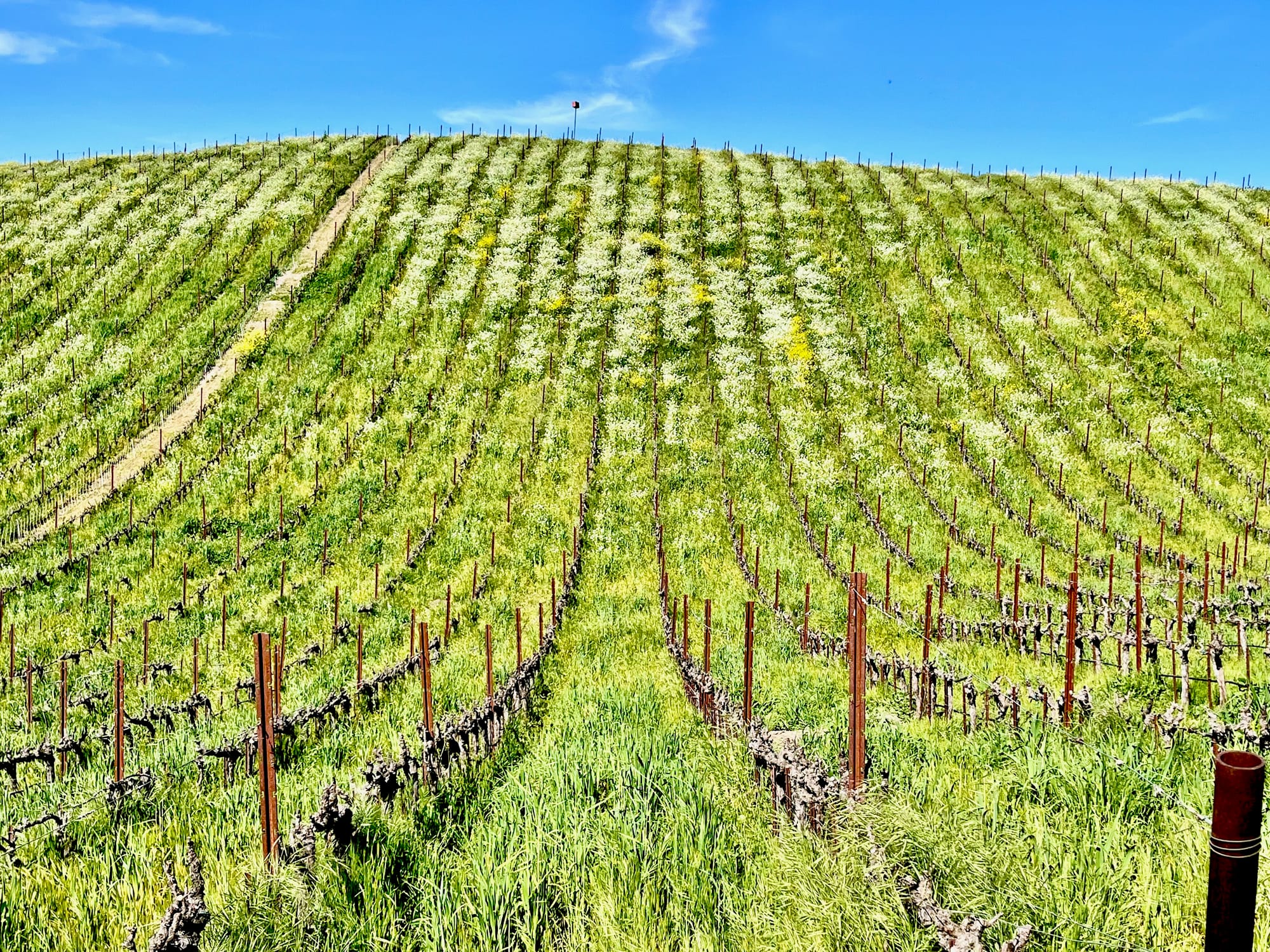
Speaking of the cover crop, it's absurdly lush and beautiful in the vineyard right now. There are areas where the combination of planted cover crop and naturally-seeded annuals is taller than the vine cordons:
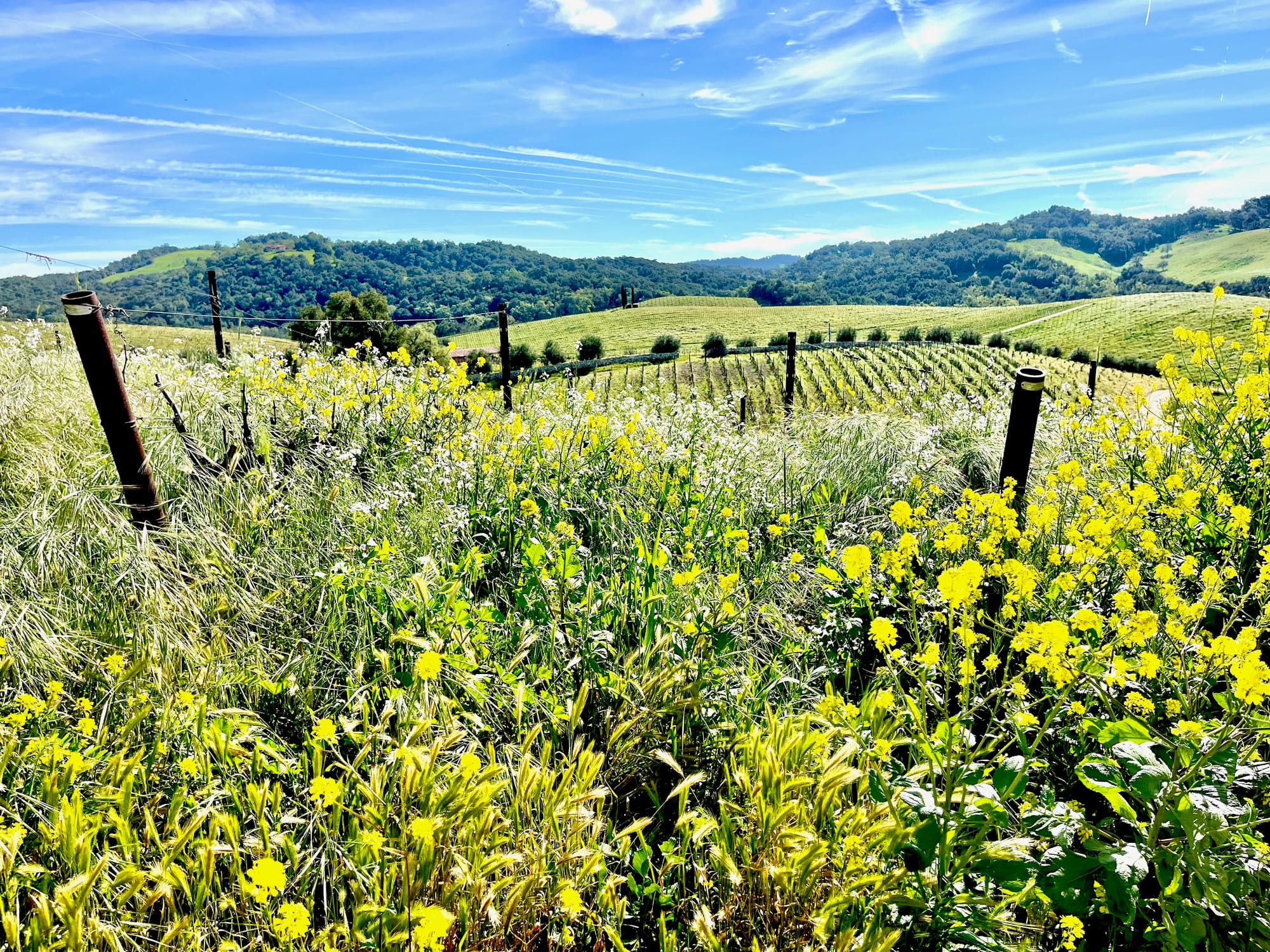
A longer view through the valley at the western edge of the property shows the deep green of the grasses with the sparkle of flowers. The vines may be waking up, but the lush green of the cover crops could only be March:
You might think that earlier budbreak increases the risks of frost damage. And yes, all other things being equal, having fewer nights where you have to worry about temperatures dropping below freezing is better than having more. But sometimes, California weather patterns can be long-lasting enough that what we see in March sustains itself through April. We're hoping for the same this year.
Meanwhile, we'll enjoy the rapid changes in the vineyard, and the hope that always comes with the emergence of new buds. Please join me in welcoming the 2026 vintage.