

Did tariffs on imported wines help American wineries? If so it's hard to see.
American wineries faced headwinds in 2025 that included demographic shifts, reduced tourism, and higher input costs. You might think that tariffs on imported wines would have helped. They didn't.
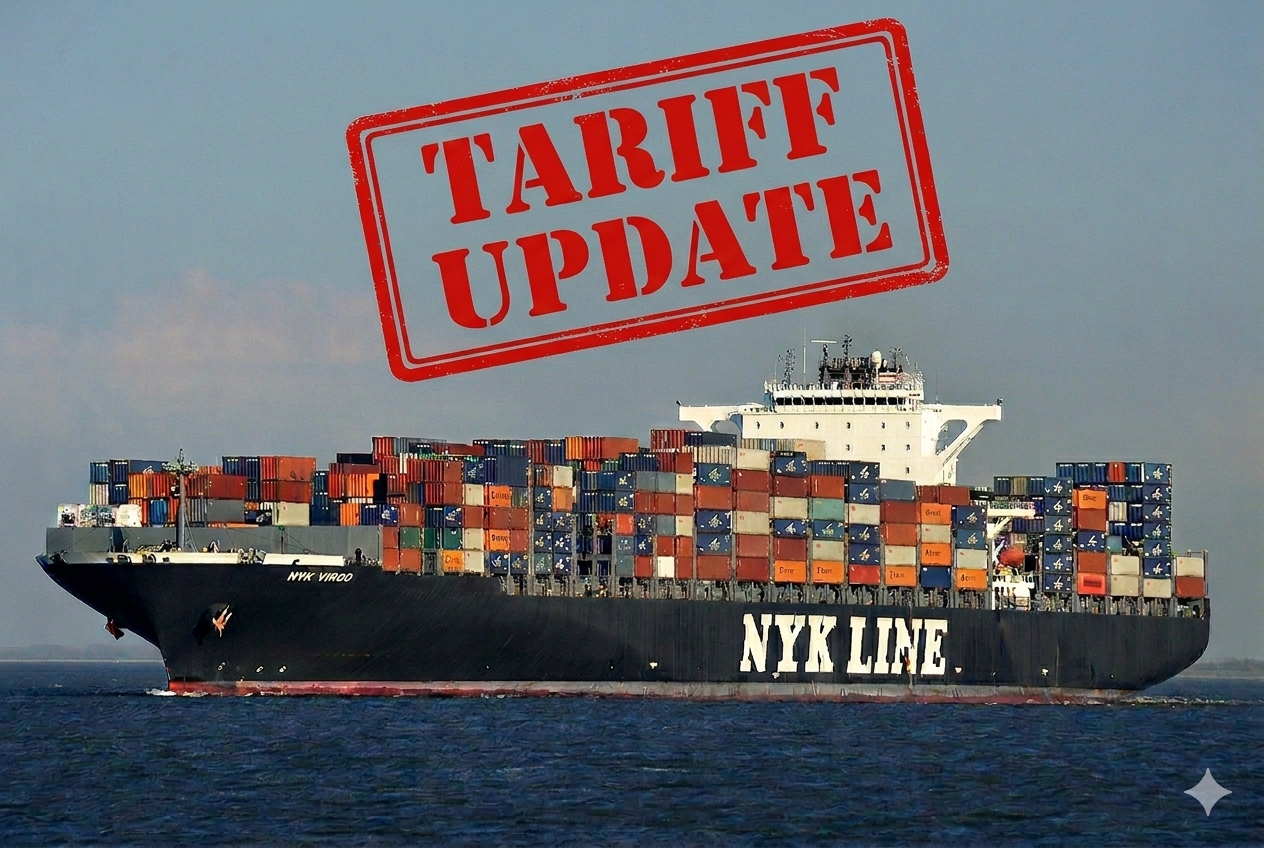

Last March, when the rhetoric was running hot about potentially sky-high tariffs on imported wines, I wrote a blog Why 200% tariffs on European wines would be extremely dangerous for American wineries. My chief arguments were the following:
- Wines are not commodities that are truly interchangeable between regions. A California Sangiovese isn’t going to substitute for a Chianti, because the place is integral to the finished wine.
- The mismatch between what is imported and what is produced domestically is dramatic. Take that same Sangiovese example. The grape represents less than 0.5% of the grape acreage in California, and it takes five years from the decision to plant to getting wine made from those vines into the market. So even if a consumer (or a restaurant) wanted to substitute out their Chianti for an American equivalent, production wouldn't allow them to. On a broader level, the United States consumes about 375 million cases of wine a year and produces about 300 million.
- The state-licensed wholesalers that we are mandated by federal law to use all sell both domestic wines and imports, and a shock that caused a massive loss in import sales would spill over into failures that would impact domestic wineries’ abilities to distribute. That network was under strain a year ago, and is under much greater strain now (see articles here and here).
- We have the example of what happened last time tariffs on European wines went into place back in 2019. Those tariffs didn’t result in sales growth for American wineries.
- American wineries would likely face retaliation abroad and see their export sales decline.
In the end, the tariffs that went into place weren’t the massive, order-changing ones that were being threatened at the time. They ended up ranging from 10% (Chile and Argentina) to 30% (South Africa) with the key wine-producing countries of the European Union at 15%. And so some of the most severe potential impacts were averted. But that doesn’t mean that the impacts were positive. There was a good article published in the New York Times last week where Eric Asimov spoke to American wine producers and importers about the impacts they had seen. One of the comments that stuck with me was from Jeff Kellogg, owner of Kellogg Selections, a distributor of both imported and domestic wines in the mid-Atlantic states. From Asimov's article: “Much of his company’s growth, Mr. Kellogg said, came from imported wines rather than American wines, and partly at the expense of other American companies.”
At Tablas Creek, we did OK in 2025. Our total sales were up about 2%. That included a decline of 1% in our direct-to-consumer sales, an increase of 15% in our wholesale sales, and a decline of 39% in our export sales. There were a few things we noticed that feel directly attributable to the administration’s tariff regime:
- The decline in export sales. We had seen growth of 126% in our export sales in 2024, and I had new programs set to launch in Canada and France in 2025. Instead, in response to American rhetoric, Canada pulled all American products off the shelves of their state liquor stores, resulting in a near-total loss of American export sales there. European and Asian markets that had been mainstays for us, ordering regularly year after year, let us know that because of the unpopularity of America abroad, they were not going to be bringing in wines in 2025. We definitely weren't alone; American wine exports overall were off 33.5% in 2025, a loss of more than $428 million in sales. Frankly, I think it’s a wonder that we managed to finish 2025 with our export sales above where they were in 2023.
- We saw many fewer international visitors to our tasting room. Sure, the vast majority of our visitors are domestic even in a normal year, something above 90%. (In this, we’re unlike a place like Napa Valley, which because of its prominence and its proximity to a major international airport, can see up to 20% international visitors). International tourist visits to the United States were down 6% in 2025, led by a 25.4% decline in Canadian visitors. Our tasting room saw a small traffic decline of 3.3% in 2025, or about 900 fewer guests. I think that it’s pretty safe to say that we would have seen growth and not a decline if international tourism had stayed at historical levels.
- We saw many fewer trade visits than we have in previous years. These visits largely come from and are often funded by the network of distributors and importers who sell Tablas Creek around the country. We heard, again and again, that because of the shaky overall wine market, distributors didn’t feel comfortable passing along the higher costs produced by the tariffs, and instead absorbed those costs in their margins. What gets squeezed out by this sort of belt-tightening? Enrichment visits to wine regions. The declines in these sorts of visits were dramatic: off by something like 50%.
- The tariffs on many of the things we use to make and bottle our wines, from barrels to pumps to bottles to capsules (many of which are not available domestically) pushed up our input costs.
But how about out in the market? Did the higher costs on (tariffed) imported wines result in more sales for domestic wines? It really doesn’t look like it. Total wholesale wine sales in 2025 were down about 5% in volume, and were down equally between exports and domestic. How about higher margins for American wineries, which is after all how tariffs typically help a domestic industry? Nope. It looks like the average price on wholesale sales of American wines was flat, while the average price of an import rose 4%.
Did the increase in price and the disruption of the wholesale market drive more people to patronize domestic wineries’ direct-to-consumer efforts? Nope. American direct-to-consumer wine sales were off a startling 15% in volume in 2025. Because the sales of inexpensive wines declined more sharply than those of more expensive wines, the decline in total value was less dramatic, but still down a total of 6%. I feel pretty good about our performance by comparison.
You might be wondering, with all these negative impacts, how we ended up seing a slight increase in overall sales. I think that we had a remarkable year in 2025. Some of the highlights that we saw included:
- Some of the best scores we’ve ever received from reviewers like Vinous, James Suckling, and Robert Parker Wine Advocate.
- The release of our first-ever Muscardin, the 14th and final grape in the Beaucastel Chateauneuf-du-Pape collection, resulted in a lot of positive industry buzz and articles in Wine Spectator and in Decanter.
- Vinous published a retrospective tasting of our Esprit de Beaucastel and Esprit de Tablas flagship wine, our first article like that in that esteemed journal
- We released the majority of our new wines from the outstanding and plentiful 2023 vintage, after three years where our main supply was from the challenging 2020 vintage and the painfully scarce 2021 and 2022 vintages. The 2023 vintage came with outstanding reviews for the region and the state.
- We’re comparatively well situated to take advantage of trends that are moving the wine market toward wines with lower alcohols and greater refreshment, especially whites, and we had good timing for a national launch of the Alouette Grenache, our first chillable red.
- We co-founded the Wine Atlas Collective, which has provided us a network of tasting room referrals and e-commerce business from other like-minded independent wineries.
- We worked our tails off. I spent more time on the road and in the market supporting our wholesalers, importers, restaurants, and retailers than I ever have. Darren Delmore, our indefatigable National Sales Manager, did as well. And we enlisted our winemaking and marketing teams for additional participation in events around the state and region. One result was that we hosted 79 events open to the public outside of our home region in 2025, our most ever.
In the environment of a decade ago, if all those things went right, we’d have been disappointed with a jump of less than 10% of our sales. To be up 2% in 2025 something I’m truly proud of. But it really should have been better. I don’t think there’s any way you can look at the wine market and not feel that the tariffs have been a part of the problem, rather than a part of a solution.
The good news is that the legal basis for the tariffs was ruled unconstitutional a week ago. The bad news is that the administration has vowed to use different means to achieve the same results. Those means are limited by statute to 180 days unless extended by Congress, which seems unlikely. But as long as they’re in place, those tariffs will be a part of the headwinds that we, and the rest of the domestic wine community, are having to face.