

Plenty of the choices facing the wine world are hard. Making wines with "American" on the label 100% from US grapes shouldn't be one of them.
California AB 1585 would require that any wine that says "American" on its label and is produced, bottled, labeled, or sold in California be sourced 100% from American grapes. It might not be a game-changer for struggling growers or for consumer transparency, but it seems like a good start.
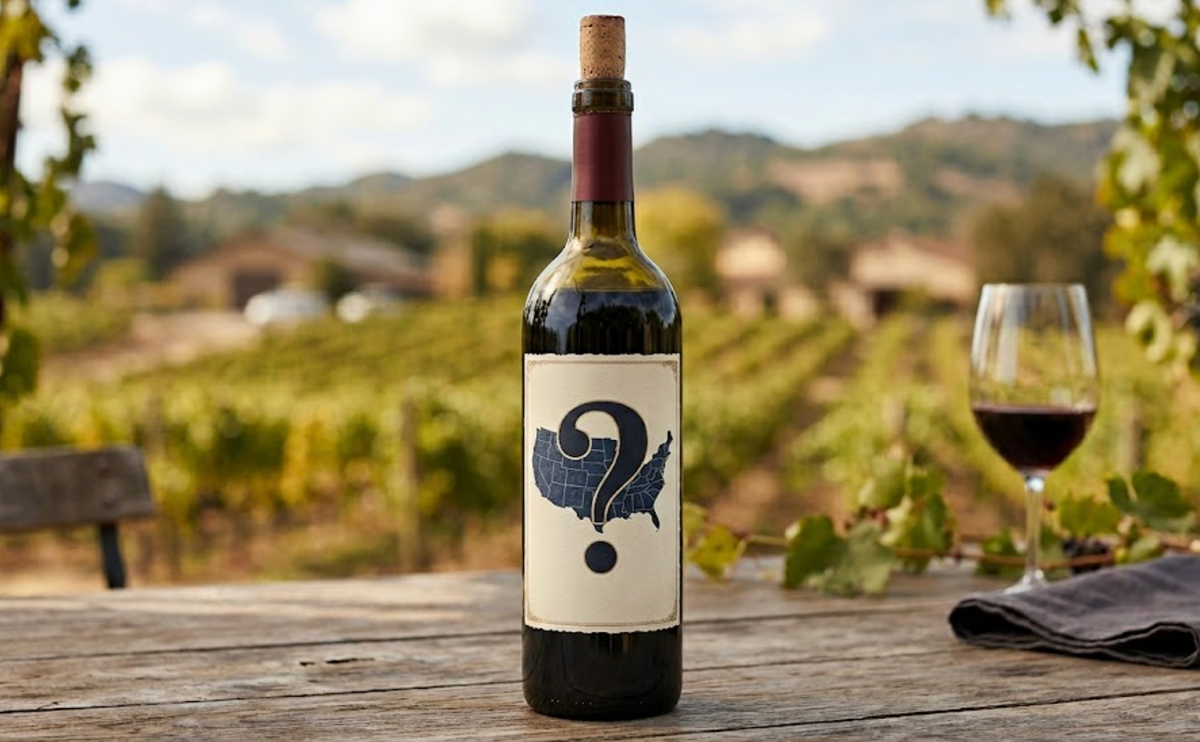
There are real challenges that American wineries are facing. I've written about some of them here on this blog. A partial list includes climate change, distributor consolidation, rising shipping charges, a well-connected neoprohibitionist campaign, a tariff regime that is driving up costs while depressing exports, and demographic shifts that are seeing the core Baby Boomer generation buy less wine. The net result is that American wine sales have seen their first multi-year declines in two generations, and there are gloomy headlines about the state of the wine industry seemingly everywhere you look.
Wineries are suffering, particularly the largest ones who are most exposed to the lower end of the market that is hurting the worst. But I think it's fair to say that grape growers are suffering more. Last year saw some 40,000 acres of grapevines (about 10% of the state's total) removed from the ground in California, and at least that acreage go unharvested. The average price paid per ton of grapes – those that did sell – dropped 3.8% in 2025. The price paid on the open market (so discounting those grapes under long-term contracts) dropped even more sharply, by 8%.
It is against this backdrop that two wine country state assemblypeople, Rhodesia Ransom of California's 13th Assembly District in the Central Valley, and Damon Connolly of California's 12th Assembly District that includes Marin County and parts of Sonoma, introduced AB 1585. It would require that any wine that uses the appellation "American" on its label and is produced, bottled, labeled, or sold in California be sourced 100% from grapes grown in the United States.
Does it sound to you, like it does to me, like this should already have been the case? I'm guessing it does. After all, a wine labeled "California" has to come 100% from California fruit, required by state law since 1942. But current federal statute allows for up to 25% foreign grapes to be blended into a wine that carries the "American" appellation. And it appears that this leeway has been used extensively in recent years. In a hard-hitting blog posted this week, Stuart Spencer, the Executive Director of the Lodi Winegrape Commission, shared the following graph correlating the price per ton of grapes in several Central Valley regions with the imports of bulk wine from abroad. His point was that when grape prices go up, wineries turn to (cheaper) imports instead, although you could also interpret the chart to show that when California grapes are scarce (pushing up prices) wineries turn to imports to fill the production gap:
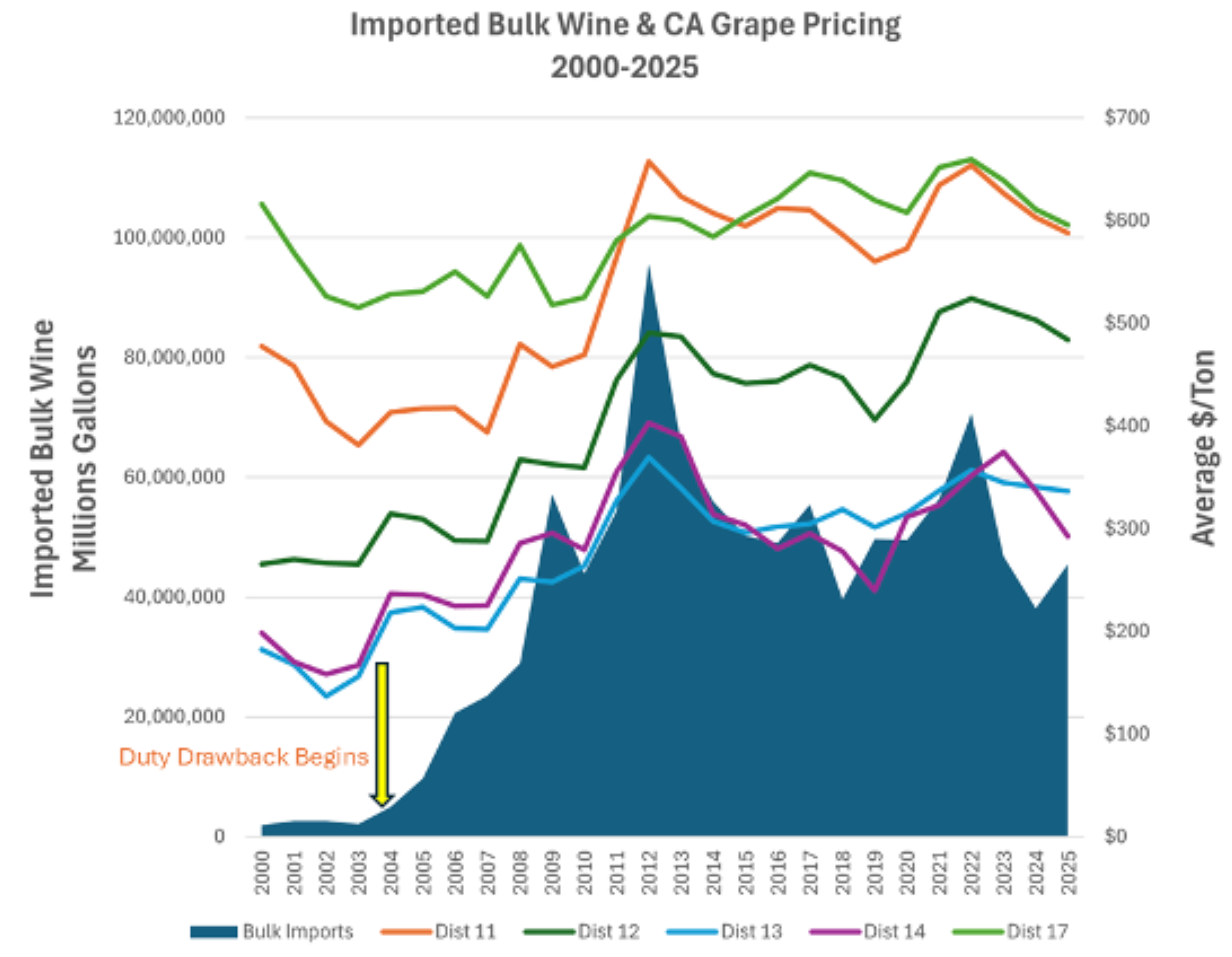
You can understand Spencer's concern. From just a few million gallons (the equivalent of about 12,500 tons, or at Central Valley tonnage, about 1,000 acres) that total last year had grown to around 45 million gallons, or the equivalent of over 280,000 tons. That displaces the same fruit that would have come off of some 22,500 acres in the Central Valley, or around half of what went unharvested last year. I have not been able to find any data on how much of these imports go into wines with the "American" designation on the label, but every gallon that does must feel like a personal attack to growers who haven't had a market for their fruit in recent years.
In his blog, Spencer takes aim at the California Wine Institute, which represents California wineries and of which we're a member. I am a strong supporter of the Wine Institute's work, and we participate in many of their programs. I also sympathize with their dilemma here; this is an issue which divides California wine, pitting the state's growers against the state's largest wine companies, who are the source of much of the Wine Institute's funding. (The issue isn't a big one for most small or mid-size California wineries like us, as we/they don't typically use any imported bulk wine.) But in this case, I would argue that the broader wine community would be better served by embracing the legislation and the greater transparency that it would bring.
As I see it, there are two major benefits to the legislation. The first is economic, to the grapegrowing community here in California. In general, the wines that carry the American designation are among the very lowest priced on the shelf. Think sub-$20 boxed wines and the like. Even if at very low prices, it would be better for the growers to have those grapes purchased and used than to leave them unharvested, or to have to pull out the vines. At $300 per ton, that's something like $84 million in grape purchases.
The second benefit is, I think, more important. There's real danger of consumers losing faith in wine labels. As long as the inclusion of imported bulk wine in wines with "American" on the label was flying under the radar, there wasn't a lot of damage being done. But now that it's reached the level that important wine organizations in California are publishing blogs and talking points, I think that the balance of risks has changed. There's a reason that the state of California requires that wines that are labeled California must be 100% from California sources, despite that the federal requirements are more forgiving. California wine is a brand, and it's appropriate that the state take action to protect that brand. Having the American designation required to be from American grapes would put us in line with countries like France and Italy that require that any wine with that country's name on it be 100% from that country's sources.
I've read a few objections to the legislation that are worth addressing.
- The worry that using all California grapes would push prices to uneconomical levels for wineries. I don't see this as a big problem in either short or long term. In short term, there's plenty of cheap supply available. The general rule is that the economics work out for a winery if they're selling a wine for a per-bottle price one one-hundredth of the grape price per ton. So if you can sell a wine for $3 per bottle, you can support a grape price of $300 per ton (which is what the graph shows as available from District 14 last year). In the longer term, the falling demand for this category of wine should keep prices low.
- The worry that this will tie the hands of wineries during shortages. This seems like something that could be addressed when and if a crisis happens. The legislature or an appointed commission could declare a shortage and waive the requirement for a year. European wine regions do this routinely, easing or waiving requirements to prevent catastrophes. Examples include prohibitions from irrigation that are waived during droughts, or air quality regulations that are waived to allow the burning of smudge pots to protect from frost.
- The worry that it would be better to have this change be mandated at the federal level, instead of by the State of California. A change to federal statute would be cleaner. But given that all the country's largest wine companies are based here, I don't see a big difference in the impact. If California changes its standards, it will be a de facto national change. There is precedent in and outside of wine; California has a long history of setting higher standards than the rest of the country in arenas like appliance minimum energy standards, emissions, vehicle fuel efficiency, and (as mentioned in my fourth paragraph) wine labeling.
Note that I have no problem with the use of imported fruit if it's properly designated. I believe in a free market system where a better product should have a chance at capturing market share. That's part of why I think that tariffs on imported wines are a bad approach even without the unintended negative consequences that they bring about. But I do think that it's unfair for wine to be passed off as American when it's coming from another country.
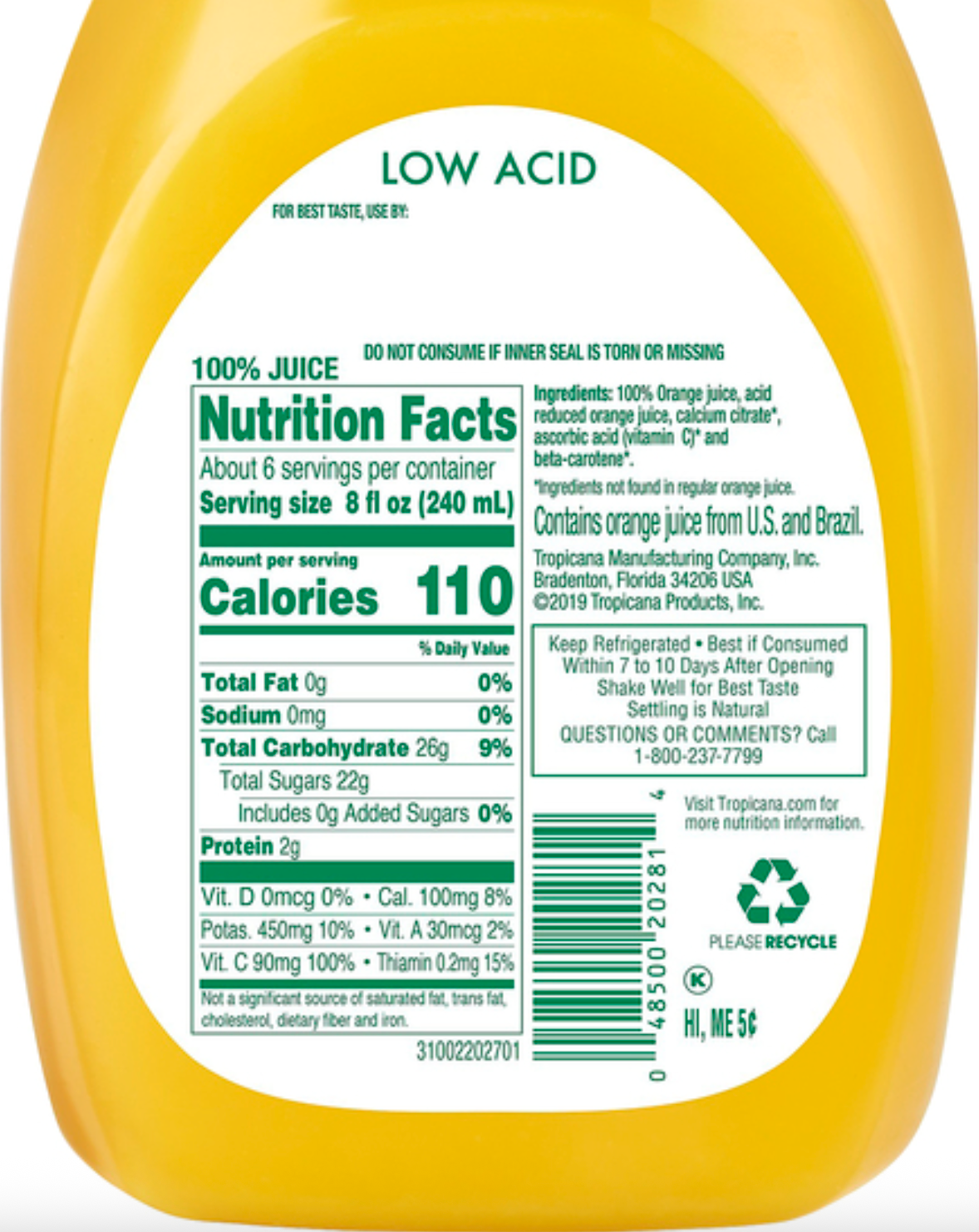
It's worth noting that I'm not actually sure that the big wine companies' behavior would change if they have to properly note the source of imported wine. Have people changed their purchasing decisions on orange juice now that most national brands (like the Tropicana bottle pictured below) say that they contain "orange juice from the US and Brazil"? I don't feel like they have. But it has made space for premium brands to differentiate themselves by offering 100% US orange juice.
There is another issue here that's complicating the discussion. In the graph that I shared earlier, you may have noted the "duty drawback begins" arrow in 2004. When I wrote a blog arguing against 200% tariffs on imported wines back in March of 2025, I got a few comments from grape growers arguing that this duty drawback was the real problem. I'll let Spencer explain it:
A loophole in the Duty Drawback program allows companies to recover alcohol taxes paid on imported bulk wine when a similar wine is exported. Because wine operates under a special carve-out rule, that exported wine does not have to be the same product.
The result: companies can import cheap bulk wine, export domestic wine, and receive a tax refund tied to the import. In effect, imported bulk wine enters the U.S. market virtually tax-free creating a financial incentive to choose imports over local farmers.
Would there be the incentive to import bulk wines if this tax break didn't exist? I'm not sure. This is all far enough outside the world in which Tablas Creek operates that I'm not really an expert here. But I can understand why growers feel like the deck is stacked against them.
In any case, my concern here is the reputation of American wine. As we've seen from the impact of misleading campaigns like those for various "clean wine" companies (beautifully debunked in this article by Felicity Carter), consumers are quick to assume that the actions of the worst actors in an industry are commonplace.
Although I have no dog in this specific fight about imported bulk wine, I think that wineries of whatever size should be supporting moves toward greater transparency if we want to be attractive to future consumers. This seems like a good first step.