
A UV fungus-fighting robot was just named one of Time's best inventions of 2026, and we got to test one.
Sulfur has been used for more than 4,000 years to combat mildew in commercial vineyards. We're excited to have spent the 2026 growing season trialing an invention that could finally change that.
By Austin Collins
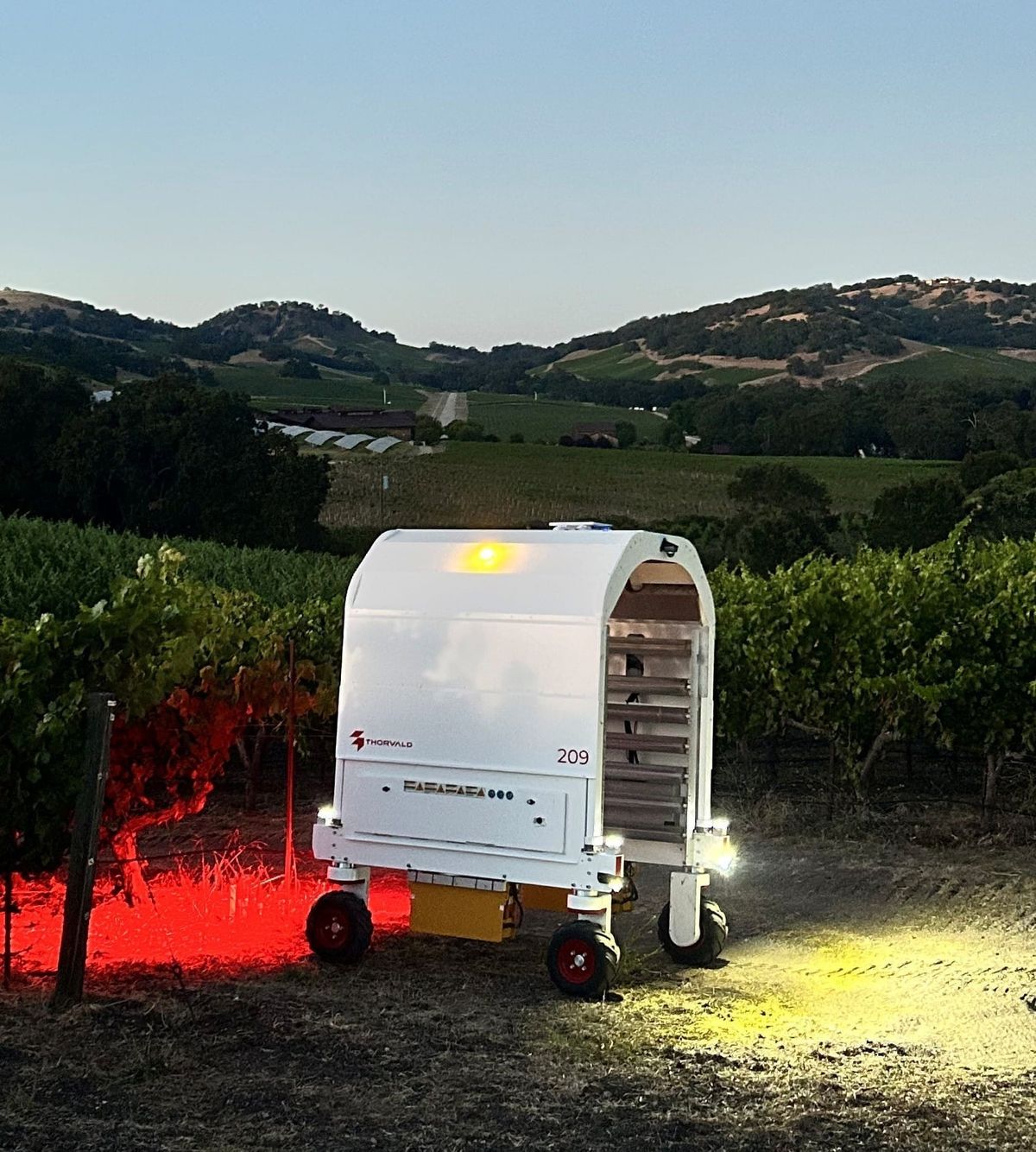
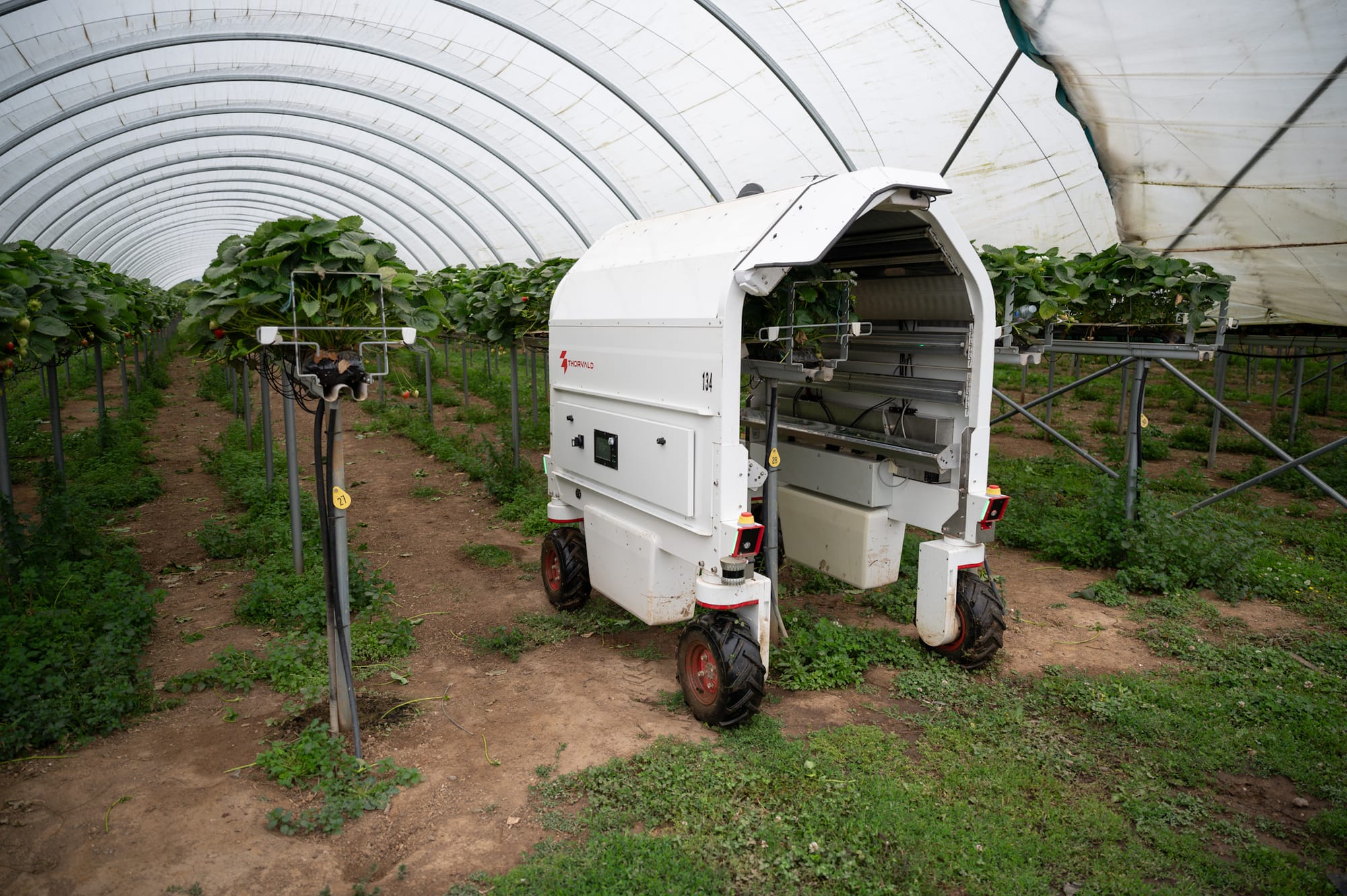
Time Magazine recently named Saga Robotics' Thorvald one of the best inventions for 2026. Thorvald is a UV-C fitted autonomous robot designed and built to battle fungal outbreaks in tabletop strawberries. More recently, Thorvald has been modified to fit over the trellised vineyard rows of California with a primary goal of battling powdery mildew. For the last year we've been one of the vineyards that has trialed this new tool.
Powdery mildew is by far California winegrowers' most troublesome fungal disease. It is caused by the fungal parasite Erysiphe necator and unlike many fungi can thrive even in dry climates when temperatures are between 70 and 90 degrees. It attacks all green parts of the vine including leaves, shoots, and clusters. Once it is established it begins to produce spores in just over a week and can spread rapidly if left untreated, easily capable of taking out an entire grape crop. In non-organic systems it is treated with a range of synthetic and non-synthetic contact fungicides, which are sprayed on the vines and combat mildew chemically, or with systemic treatments that are absorbed by the plant and inhibit mildew's ability to grow or to reproduce.
The most common organic approach to powdery mildew control is sulfur applications. It is incredibly effective and has long been used in conventional and organic vineyards alike. But while it's a naturally occurring mineral, it's a potential irritant to human eyes and lungs, and can even burn grapevines in hot weather, which is why at Tablas Creek we do everything we can to minimize our use of sulfur. We pay close attention to each microclimate and are constantly screening for any mildew indicators. Our crews do a lot of canopy work in our most sensitive areas, opening canopies and maximizing airflow to naturally combat mildew without exposing the clusters to too much sun. Even with all of this hand work, spraying is required in most vineyard blocks. This is why Saga's Thorvald is so exciting. Its UV-C light damages the mildew's DNA, preventing it from reproducing, without requiring the application of any product at all.
Our industry, like many others, is subject to trends. Ideas, or in this case machinery, spread rapidly and it seems you are rarely alone in trying these "new" things. Some ideas stick around, but most fizzle out in time if the benefit they promise doesn't pan out, or doesn't justify their cost. However, it is starting to feel like Thorvald robots might be one of the ones that makes it. They are increasingly popping up in organic vineyards across California, and have the potential to massively lower the total use of fungicides in vineyards. One trial reported by Saga, at our fellow Paso Robles winery Castoro Cellars, reported a 97% reduction in pesticide use over their 100-acre test.
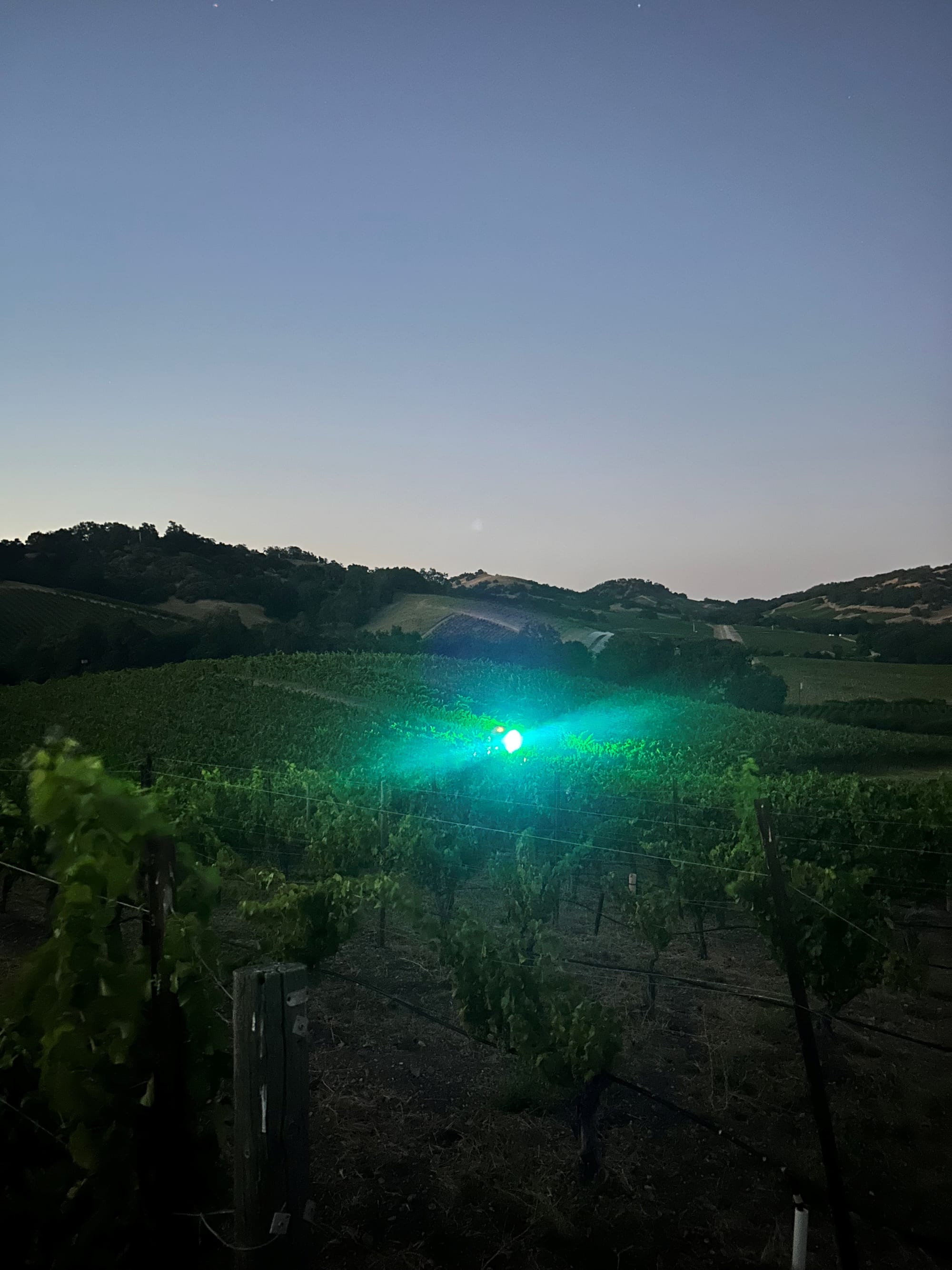
Strawberries, which were the original target for Thorvald, are another crop that requires regular application of fungicide. But they are low plants, and usually planted on flat ground. To fit over California vineyard rows, Saga made changes to the dimensions and bulb placements, though the wheels and propulsion system remained the same. We were able to get our hands on one of these units mid-season this year, and it was deployed in June. We intended to max out our one robot's acreage at 10 acres, but we quickly found out our terrain was too much for it. The slope of our hills, the off-camber nature of some of our rows, and the sometimes massive squirrel holes required us to shrink our trial of 10 acres to half an acre. But that doesn't mean it didn't provide real promise for the future. Maybe most exciting was how it moved through the vines on its own and silently, as compared to an operator seated in a 100hp diesel tractor with a sprayer on the back.
It is not only the use of chemicals that can negatively impact our land. Our tractors burn diesel fuel, which emits pollutants, and weigh a lot (some more than 5 tons), which can lead to soil compaction. Soil compaction is a serious issue with our heavy clay soils, sometimes outweighing the possible risk of fungal growth. Because of this we try to limit the number of tractor passes we run. Plus, early in the growing season, when the soil's moisture levels are high, it can be completely inaccessible to any tractor. Thorvald could remedy this issue, as its first rendition weighs under 800 pounds.
Moving forward, Saga now has a newer model of Thorvald which they're marketing as the "Wine" robot. Specifically designed for more rugged vineyard sites such as ours, but still weighing under 1000 pounds, this new robot will allow us to expand our trial area with the ability to hopefully begin as soon as we have growth. It will run one night a week up until veraison, when the risk of powdery mildew affecting fruit drops considerably. We will train our tractor drivers on how to run an autonomous robot, ideally simply starting its program and pulling it out if it gets stuck. As opposed to continually reminding them to be careful when handling products that can be harmful to their health. Sounds much better, doesn't it?
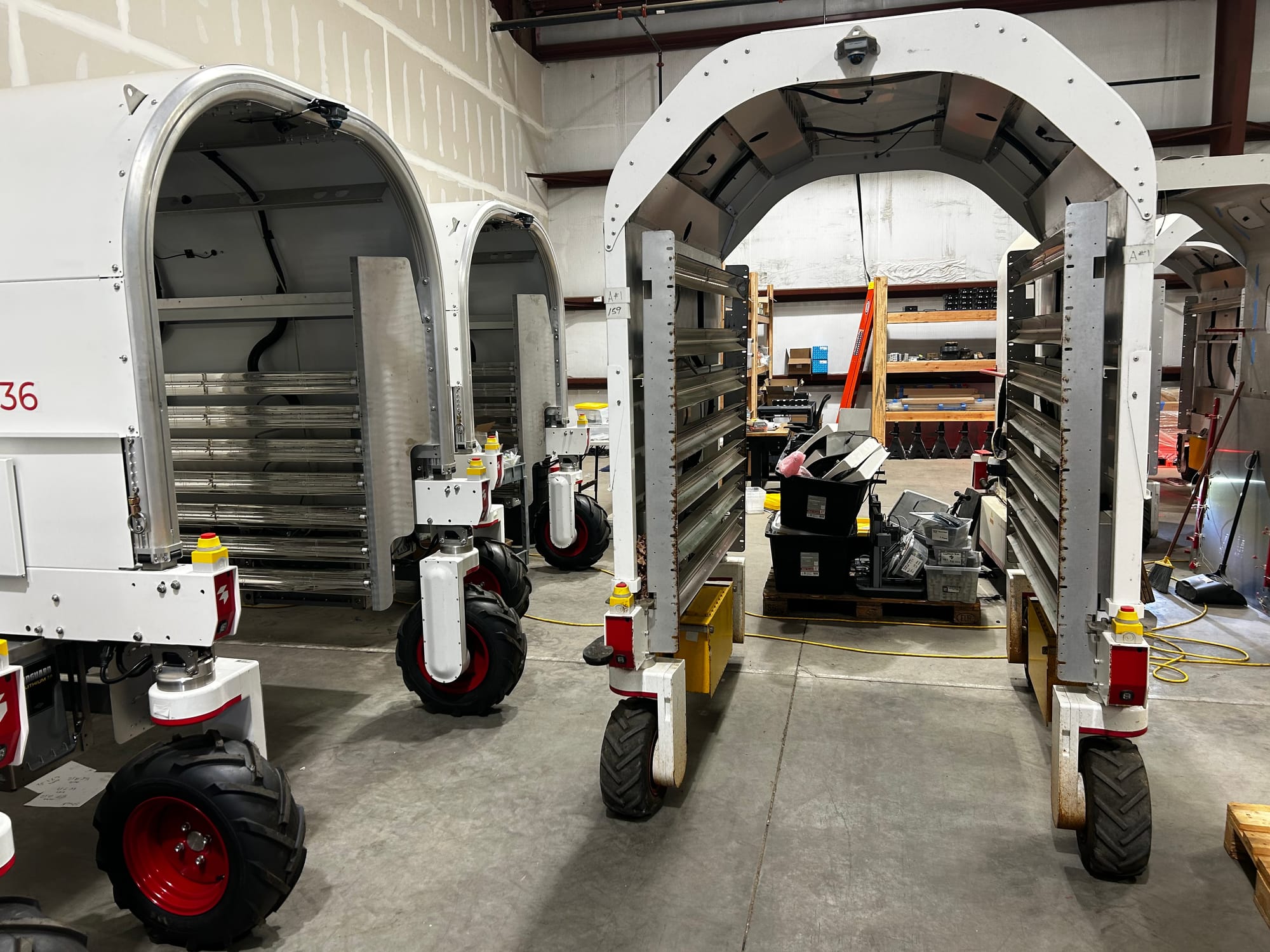
Sulfur has been used on crops for its anti-fungal properties for over 4,000 years. Yes, 4,000! This robot offers the potential to significantly reduce or even eliminate the practice of spraying sulfur in many commercial vineyards. This is huge for everyone, not just for farmers. It decreases the risk of potentially harmful sprays drifting into public zones, limits residue which ends up in soils and on grapes, and lowers the carbon footprint of farming. It's still early, but the potential here is real. It's no surprise it was named as one of TIME’s best inventions of 2026. Next step, next year: can we get it running successfully on 10 acres at Tablas Creek?