
Harvest 2026 Recap: In a Year with One Surprise after Another, the Final Surprise is Positive
At points during the 2026 harvest, we were worried we'd be down 45% or more. That makes the 26% decline we did see feel like a reprieve. But the decline, like the year itself, doesn't conform to a simple narrative.
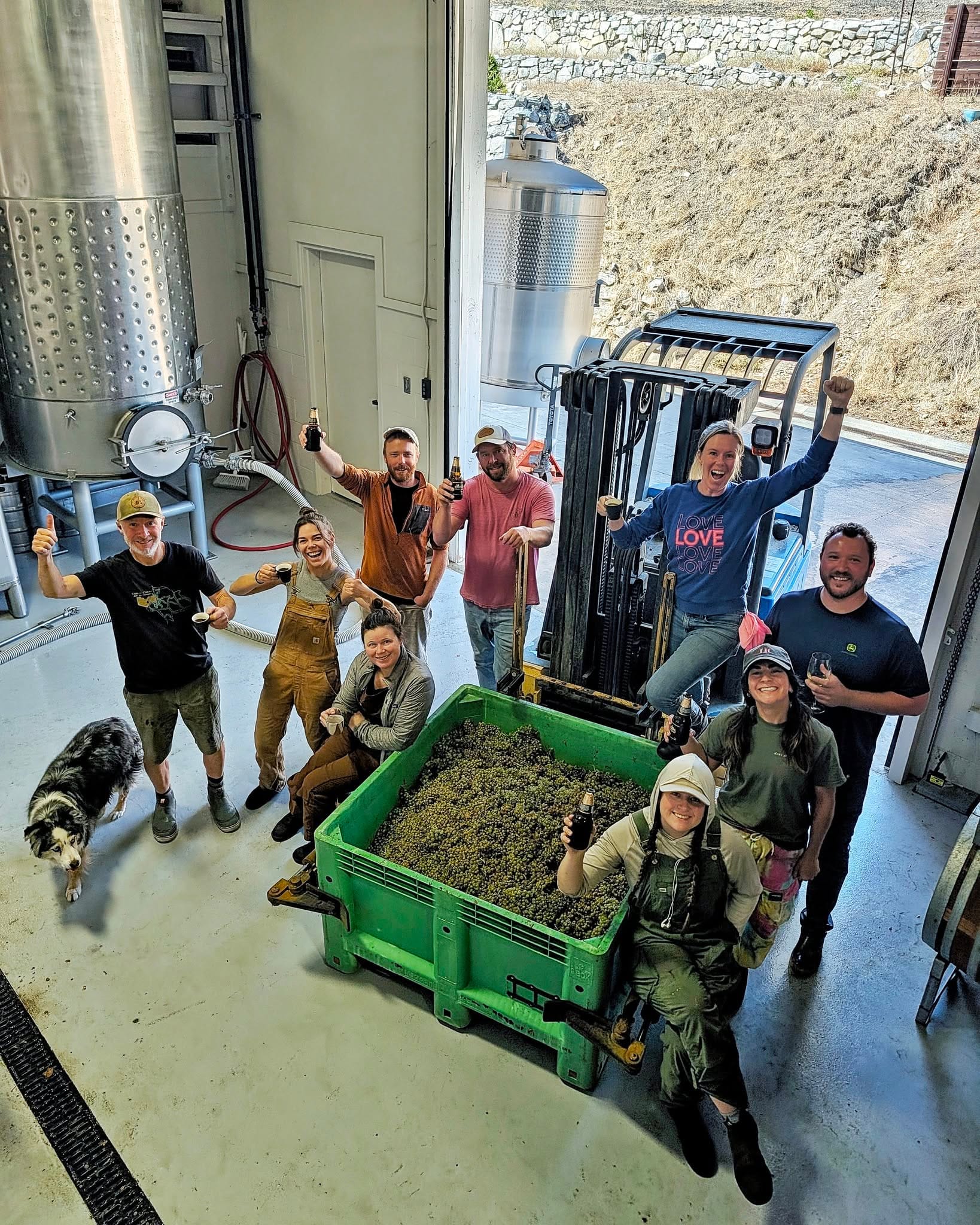
Last Wednesday, with the fourth pick of our oldest Roussanne block, we completed the 2026 harvest. This was the 11th week of harvest, which tied with last year for our longest in the last two decades. Even better, that last Roussanne pick brought us up nearly to the same quantity of this famously fickle grape as we harvested in 2025. No wonder the team was ready to celebrate:
In the chart below, orange bars are our estate lots, while blue represents purchases for the Patelin or Lignée programs. It's not exactly a bell curve... more a sleeping triceratops:
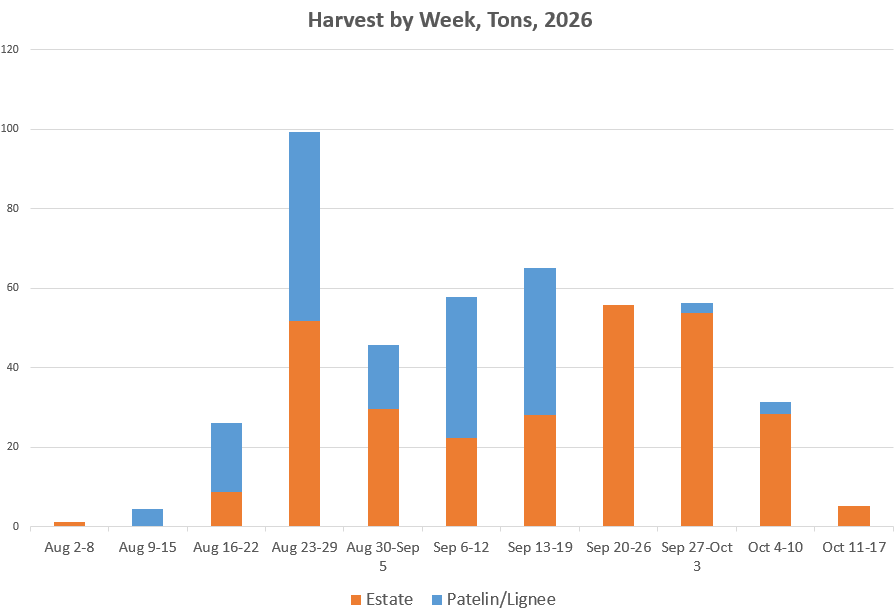
Our last pick felt characteristic of the year, which both required and allowed us to be deliberate. Four picks through the same block? Sure. This wasn't the only one. Just two weeks that topped 60 tons? Yep. For context, as recently as 2024 we had four consecutive weeks where we picked more than 100 tons each week. And as for yields, we got a little more than we were worried we might. It's not every year that "down 26.5%" feels like a reprieve, but it did in 2026:
|
Grape |
2026
Yields (tons) |
2025
Yields (tons) |
% Change
vs. 2025 |
|
Viognier |
5.3 |
14.4 |
-63.2% |
|
Marsanne |
10.1 |
11.0 |
-8.2% |
|
Grenache
Blanc |
19.8 |
30.5 |
-35.1% |
|
Picpoul Blanc |
4.6 |
7.4 |
-37.8% |
|
Vermentino |
13.3 |
18.1 |
-26.5% |
|
Bourboulenc |
3.9 |
5.9 |
-33.9% |
|
Roussanne |
34.0 |
34.5 |
-1.5% |
|
Other whites |
6.4 |
5.9 |
8.5% |
|
Total
Whites |
97.4 |
127.7 |
-23.7% |
|
Grenache |
73.1 |
114.7 |
-36.3% |
|
Syrah |
47.3 |
45.9 |
3.1% |
|
Mourvedre |
34.7 |
53.7 |
-35.4% |
|
Tannat |
5.3 |
11.0 |
-51.8% |
|
Counoise |
18.1 |
21.8 |
-17.0% |
|
Cinsaut |
2.8 |
5.0 |
-44.0% |
|
Other reds |
5.7 |
6.9 |
-17.4% |
|
Total Reds |
187.0 |
259.0 |
-27.8% |
|
Total |
284.4 |
386.7 |
-26.5% |
While the overall tonnage is down substantially from last year, it's down less (about 11%) from our 10-year average. Because we pulled out or grafted over a couple of blocks, most notably the 8-acre Mourvedre Mountain block that sits behind the winery, our tons per acre are not quite as low as the decline in tonnage suggests. We finished at 2.38 tons per acre. Other recent vintages that saw similar yields include 2021, 2022, and 2024.
The grapes that saw sharp drops in yields fall into four broad categories.
- Three (Viognier, Tannat, and Mourvedre) were principally victims of removed acreage, though the tons per acre were down a bit too. We do have new acreage of Viognier and Mourvedre, but it's not yet producing.
- Two others (Bourboulenc and Cinsaut) were grapes that we felt we hung too heavy a crop on last year, and while they'd likely have been down anyway, the decline would have been less.
- Two others (Picpoul and Vermentino) are mostly from older blocks that are showing some signs of decline, while the new plantings of both that we've put in the ground aren't producing enough yet to make up the difference.
- Two others (Grenache and Grenache Blanc) are... well... Grenache. It seems like Grenache, which is susceptible to shatter in a normal year, was most impacted this year by the cool, wet weather when it was flowering.
On the flip side, there are two stories going on with the grapes that saw flat or increased harvests.
- There are grapes like Syrah and Marsanne, which seem to have dodged the year's challenges, likely because they flowered in a benign interlude in our spring.
- There are grapes like Roussanne, Picardan, and Clairette Blanche which have benefited from some new acreage coming into production.
The biggest culprit in this unevenness between varieties was the very early start to the growing season and the resulting fact that the grapes were flowering during cooler, wetter conditions than normal. The graph below shows our accumulation of Growing Degree Days (GDDs) by month, a common measurement of heat accumulation. Note that October just includes the first 14 days since we finished harvest on the 14th and the weather after that didn't impact the crop:
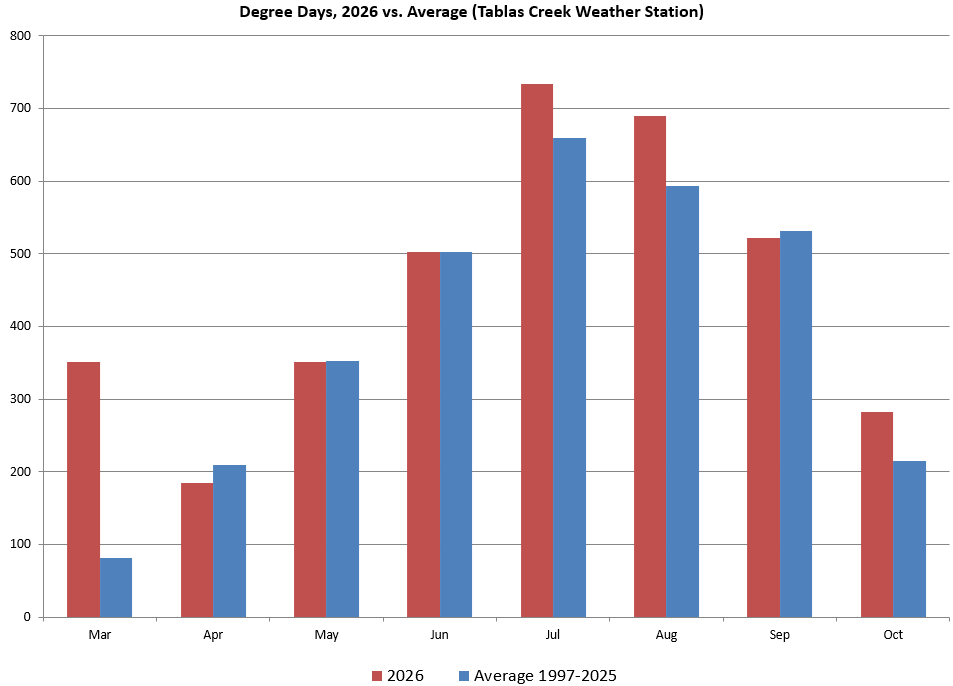
Although the overall GDDs were about 15% above our average, which shows (accurately) that it was a warm year, that obscures a lot of nuance in the data. We had four slightly-cooler-than-normal months and three somewhat-warmer-than-normal months. And then we had March, which was off-the-charts warm. April, May, and June were basically average. But that doesn't mean that the months played out the way we're used to seeing. Because of the early start, a grape that would normally be flowering in late May was flowering in late April this year, and an average late April is a lot cooler and wetter than an average late May. So while the months (outside of March) weren't all that unusual, don't let that lull you into thinking the year played out normally from a grapegrowing perspective.
We had 135 harvest lots, an increase of one vs. 2025. These included one fewer estate lot (95 instead of 96), six more Lignée lots (12 instead of 6, thanks mostly to us getting more different grapes from the Fenaughty Vineyard) and four fewer Patelin lots (28 vs. 32). Those Patelin and Lignee lots, plus the Pinot Noir for our Full Circle bottling, added 164 tons to the 284 tons that came off the estate. While our decline in estate tonnage was a function of the conditions we saw, the decline in Patelin tonnage was planned. We contracted for a little more white, a little less rosé, and about 50% less red, thanks to a plentiful 2025 red crop sitting in the cellar, and were able to more or less hit our numbers on each.
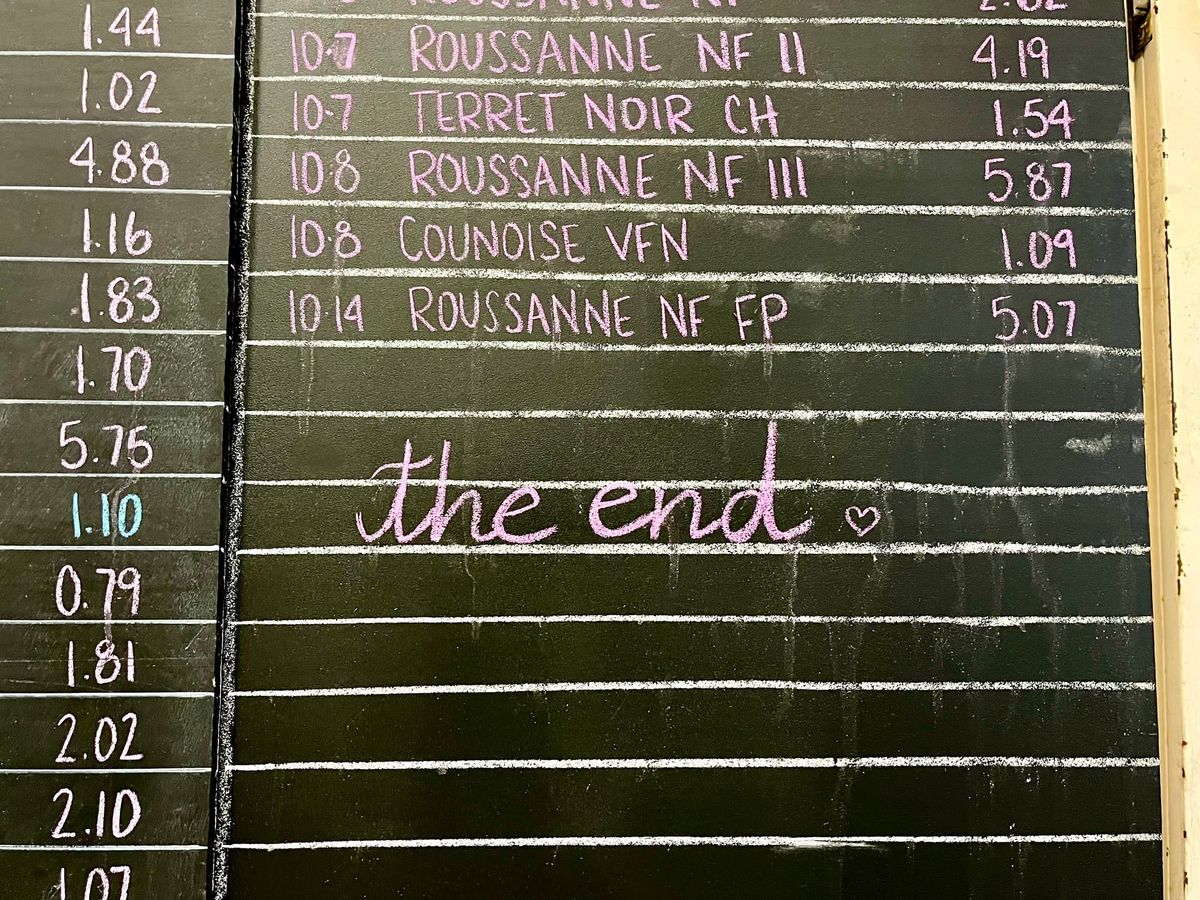
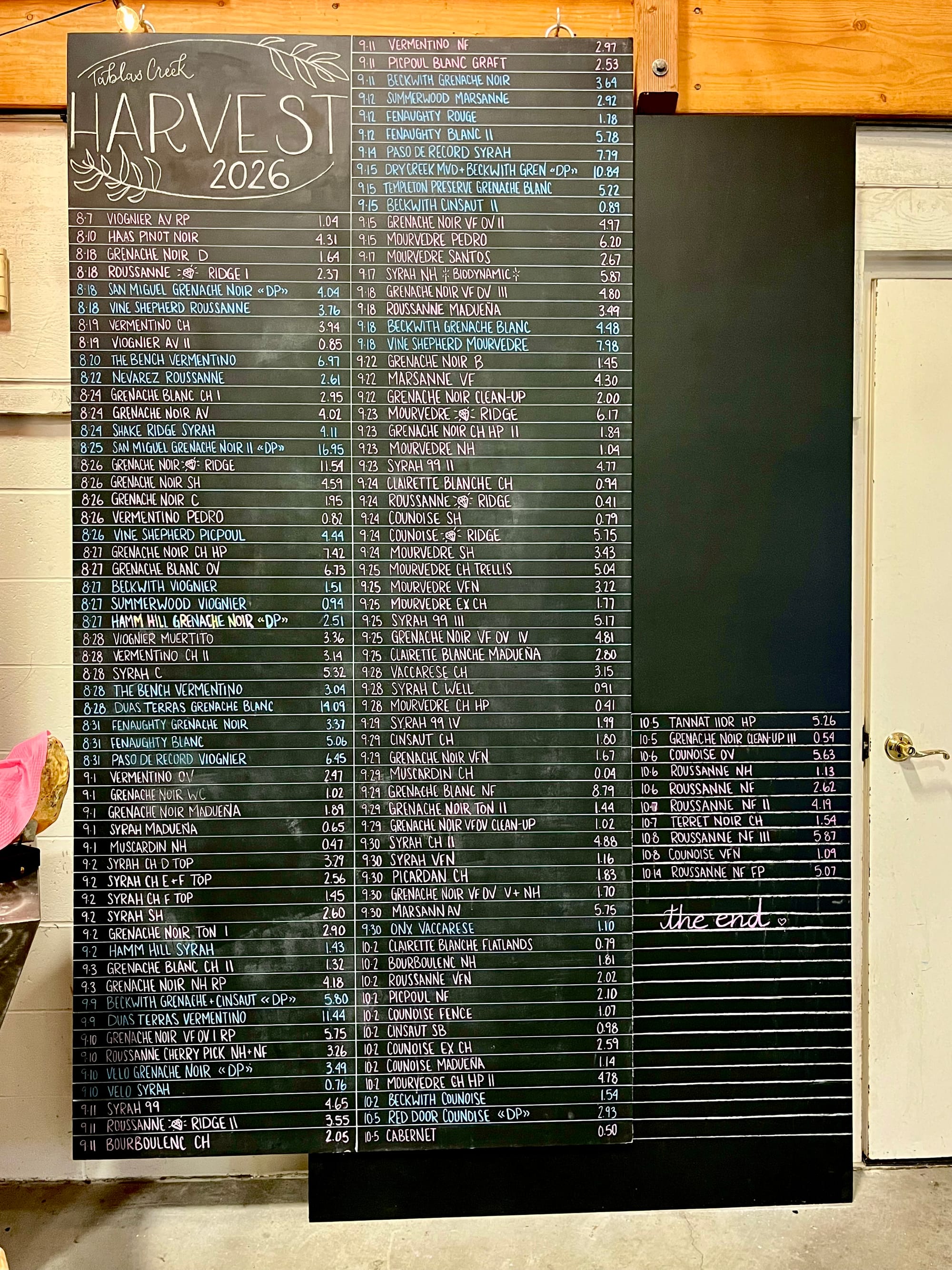
It feels representative of the year that even with 27.2% less total tonnage than last year, we saw essentially the same number of picks. We chose to make more passes through our own property, for reasons I'll explain in a bit, and saw relatively few big (10 ton or more) Patelin lots, as those typically go into Patelin red. Like last year, we ran out of space on our harvest chalkboard (below) but this year the team was ready, and added a third column. Note all the Roman numerals at the end of many of the lines. Each one indicates the pick number through a block that we picked multiple times:
One other way that you can get a quick assessment of a vintage is to look at average sugars and acids. We averaged 22.21° Brix and a pH of 3.74. Neither of those numbers is particularly anomalous for us; the previous decade saw averages of 22.41° Brix and a pH of 3.62. The slightly lower sugars and slightly lower acids from this year do suggest that the long, dry growing season took a toll on the vines. This was part of the reason we felt we needed to make so many picks. We wanted to get the fruit that was ripe off the vines while it still had good acids, while we left the lagging clusters out, willing to accept lower acids if we could get the sugars up to respectable levels. We have done more tartaric acid additions this year than we did last year, but a similar level to other warm years like 2022 and 2024.
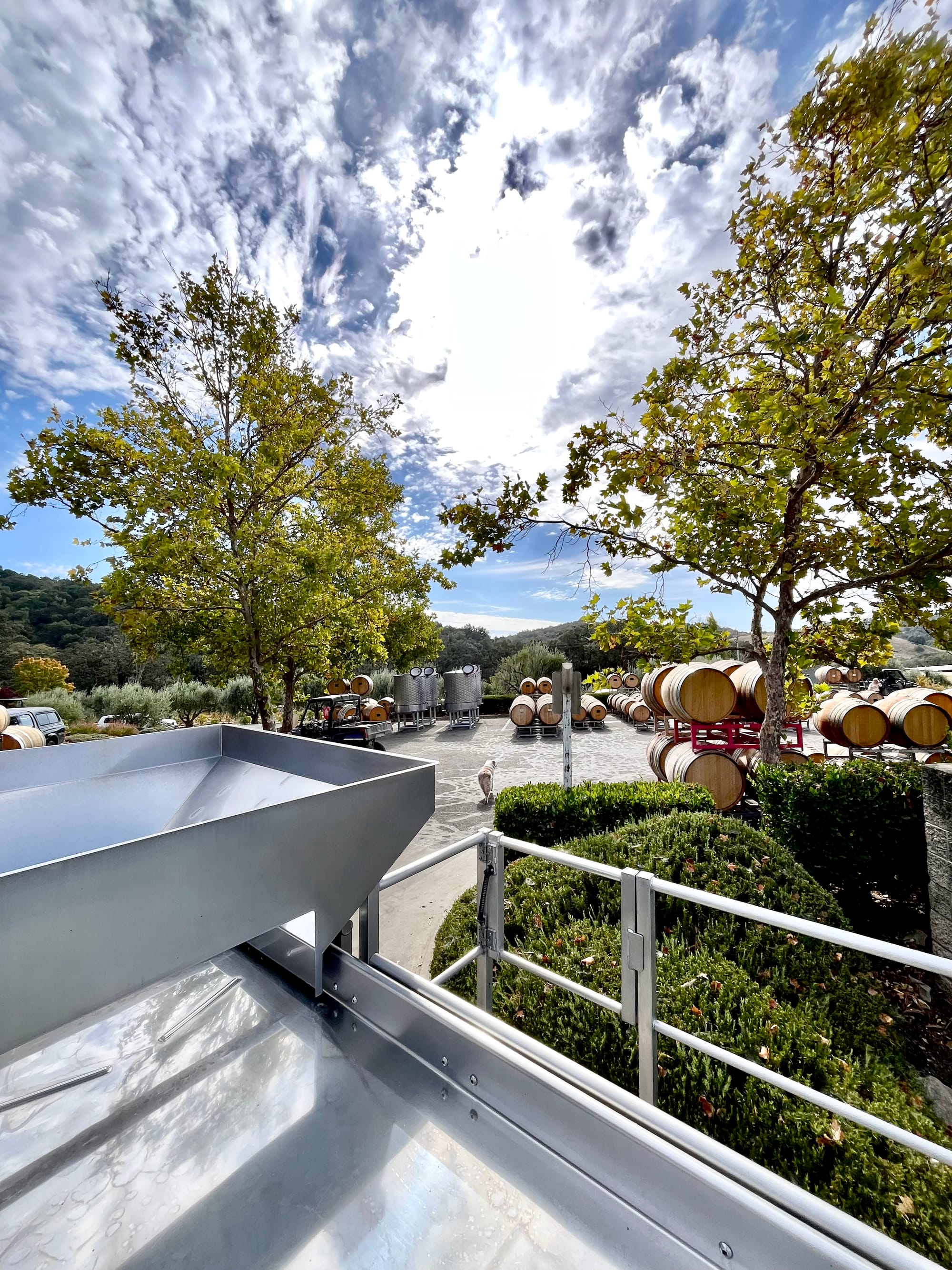
Just because we've finished picking doesn't mean that we're done with our cellar work. There are still lots to be pressed off, tanks to be dug out, fermentations to monitor, and lots of barrels to fill. The crush pad today was staging barrels rather than bins, and also featured the washed sorting table and stainless steel fermenters which will be stored away soon:
Now that the fruit is all in, it's welcome to start raining any time. And it looks like we won't have long to wait. There's an early season storm coming tomorrow that looks like it could dump an inch or so on us over two days. My favorite weather follow is Dr. Daniel Swain of UCLA, and he posted about it this morning:
View on Threads
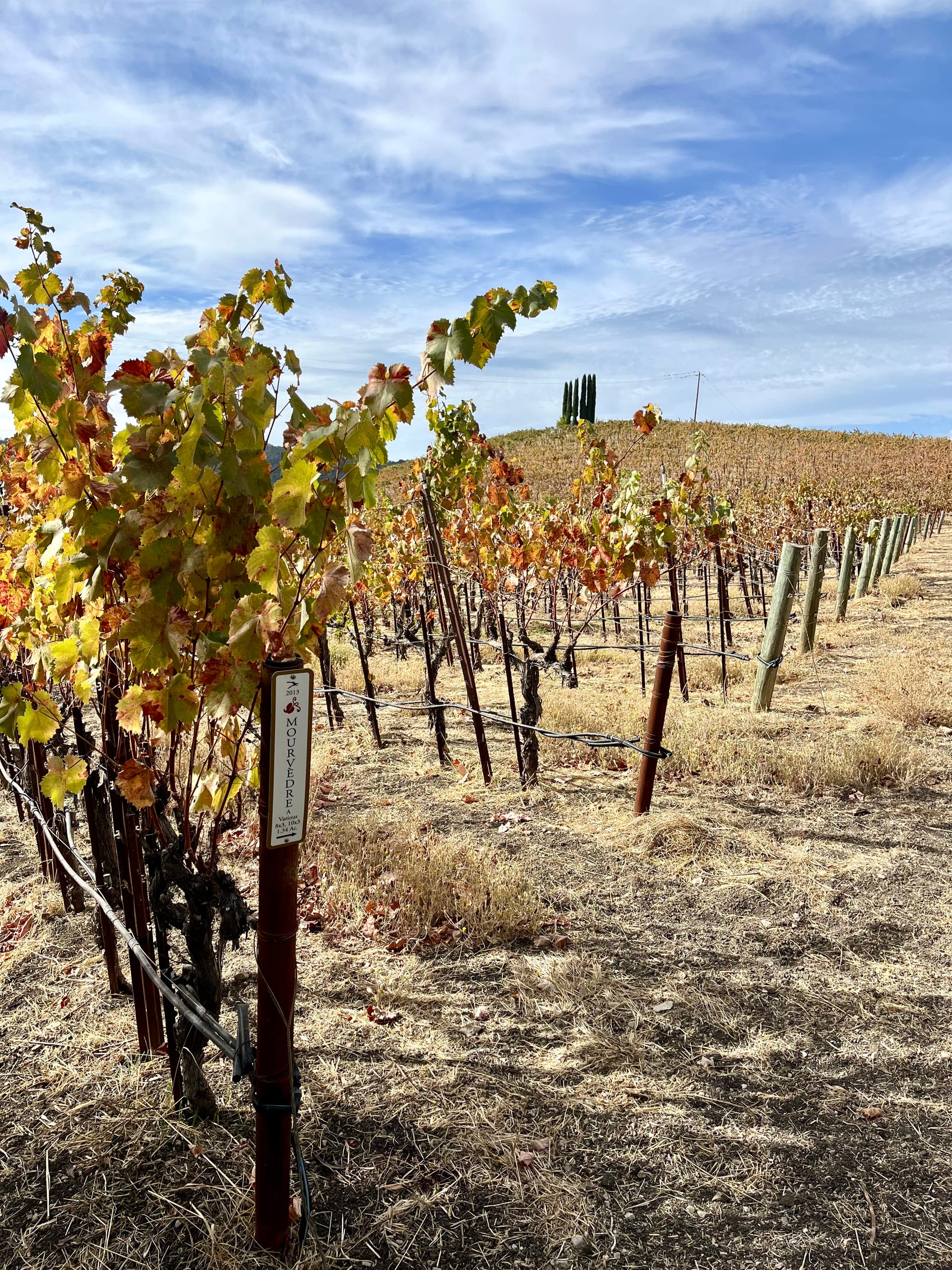
A little rain right now, to get the cover crops growing in advance of what could be a very wet winter, would be perfect. And it really felt like the season was changing today, between the colors of the vine foliage, the wind whipping up from the west, and the high clouds building up throughout the day:
I caught up with Director of Winemaking Chelsea Franchi yesterday, and she took me over to one of our presses that was being washed for the last time of the year. She pointed out that one of the welds that hold the door to its track had broken on the very last bin of Roussanne. For her, it was indicative of the year. Even when things went wrong, they went wrong at the right time, in a way that didn't hurt us too much.
That feels like an epitaph from the 2026 vintage. It wasn't always easy. It wasn't ever predictable. It won't be plentiful. But it offered opportunities to winemakers and vineyard operators who were on top of their game and had control of their sourcing. It offered high quality even if not high quantity. And the surprises it came with were more often than not pleasant ones. Hey, we'll take it.