
A Picture Worth 1,000 Words, Retention Basin Edition
Deep, crumbly calcareous layers and thin but rich layers of topsoil stress our vines while giving them the resources they need to thrive despite that stress. While out recording an explainer recently on how we keep our water on-site, I snapped as clear a photo as I've ever found illustrating this.
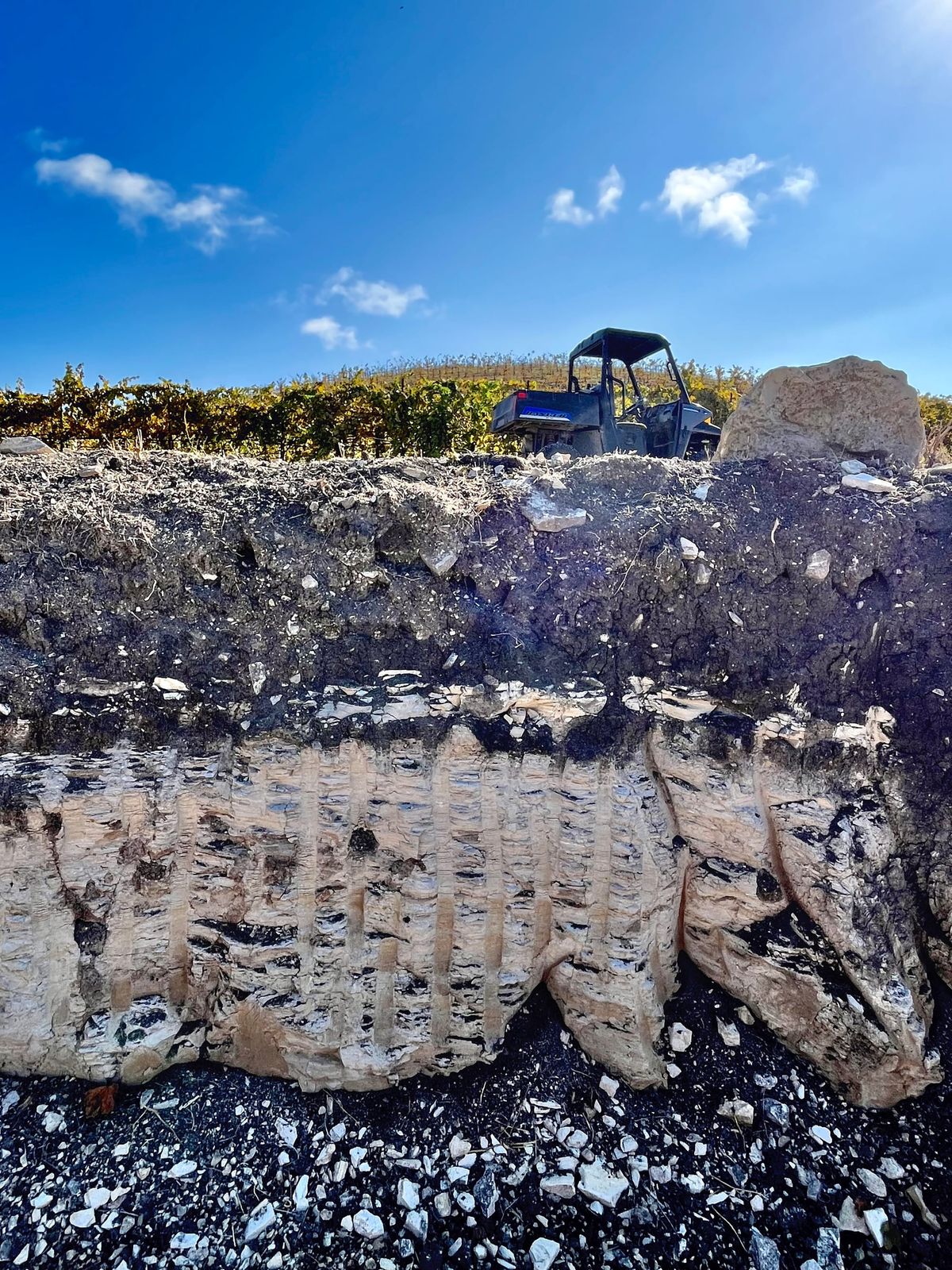
Every now and then I stumble upon a photograph that illustrates something essential about the place we live and farm. I had that experience a couple of weeks ago, when I was checking out the newly-expanded retention basins that we've set up at the low points in our property. This was before the rain that we've seen over the last week, so I was standing in the basin looking east over its lip. In the photo (which is the cover photo for this blog) you can see a couple of feet of topsoil over what looks like three or four feet of the calcareous shale that originally led us to this location as the home for our Chateauneuf-du-Pape-inspired project that would come to be called Tablas Creek. I say "what looks like three or four feet" because what appears to be a soil layer under that is actually some topsoil that has tumbled into the hole and is sitting on top of a much deeper calcareous layer that goes down as deep as we've ever been able to dig: likely hundreds of feet or more.
I was there to record an explainer about how our system of retention basins works to keep the water that falls on the property on site by encouraging it to soak in rather than to run off. If you want to watch that explainer it's here:
View on Threads
But I thought that the photo was such a great illustration of what we prize about the soils here that I wanted to give it its own blog. I won't go into it in the detail that I did in my 2020 blog Why Calcareous Soils Matter for Vineyards and Wine Grapes (to which I refer you if you want the full chemical and physical analysis) but I did want to point out a few things that this photo shows:
- The relatively limited topsoil above the calcareous layers. This spot is at one of the lowest points on our property, surrounded by higher hills. So you'd think that this would be a place where there was as much topsoil as anywhere. And you'd be right. But even in this spot, there are only a few feet of organic matter above the white, chalky base. That means that our soils remain basic (as opposed to acidic) and have a superabundance of calcium ions. Because calcium ions can displace potassium ions from receptors in grapevine roots, and potassium is a critical nutrient used by grapevines to break down acidity during the ripening cycle, having excess calcium in your soils can preserve acidity in the growing cycle and make wines with more freshness.
- How soft those "rocks" are. You sometimes hear the soils out in west Paso Robles described as limestone. And there are some scattered limestone deposits mixed in with the softer layers. Limestone is hard; you can make buildings out of it. Grapevine roots can't break it apart. And its chemical composition is the same as what we have (calcium carbonate). But rather than having to wait for those limestone soils to decompose into something soft enough to plant in (as you'd find in places like Burgundy) the old seabed that underlies our vineyards never got heated and compressed enough to solidify all the way into rock. So our calcareous soils are crumbly and porous, which allows them to absorb the winter's precipitation and give it back to the vines during the dry summer months, and also to permit our grapevines' roots to penetrate deeply enough that they can get down into layers that hold moisture even after six dry months.
- How rich and full of organic matter the topsoil looks. This photo was taken before it had rained much here. And yet that organic layer is still deep brown, contrasting clearly with the crumbled pale calcareous bits that have made their way up over the years. Because our topsoil layer is relatively thin, it's super important that it be as packed with nutrients and microbial life as possible. That's what led us to farm biodynamically in the first place, and what kept us going in our first-in-the-world pursuit of Regenerative Organic Certified status this decade. One look at these soils suggests it's working. The combination of integration of grazing animals, minimization of tillage, and fostering of cover crops and other plants that provide organic matter shows up in the soil's deep color and light, friable texture. Knowing that, according to the USDA, raising the organic matter in your soils by 1% allows them to hold an extra 25,000 gallons of water per acre just makes this pursuit more rewarding.
The combination of deep, crumbly calcareous layers and thin but rich layers of topsoil both stresses our vines and gives them the resources they need to thrive despite that stress. The combination produces wines with both intensity and freshness. I can't think of a photo I've seen recently that illustrates both aspects as clearly.