
Summer Solstice Report: After a wildly anomalous March, the weather has reverted to normal, but some oddities remain
After a March so much warmer than normal that all sorts of unprecedented possibilities were on the table, we've seen more normal conditions return since the beginning of April. But our early start is still likely to have consequences for the 2026 harvest.
You may remember the blog I wrote after our warmest-ever March put all sorts of crazy outcomes on the table. Would we harvest in July for the first time ever? Would we be done picking in September? Would we suffer a spring frost that could cost us the majority of our crop? I'm happy to report that our frost season is in the rear-view mirror and we didn't sustain any significant damage, and the temperatures and rainfall since the beginning of April have been remarkably close to average. Check out temperatures first, as measured in Growing Degree Days (GDDs), a commonly used agricultural measure of heat accumulation (note that when I first published this I extrapolated June based on the data through 6/21 but it's now been updated to include the whole month):
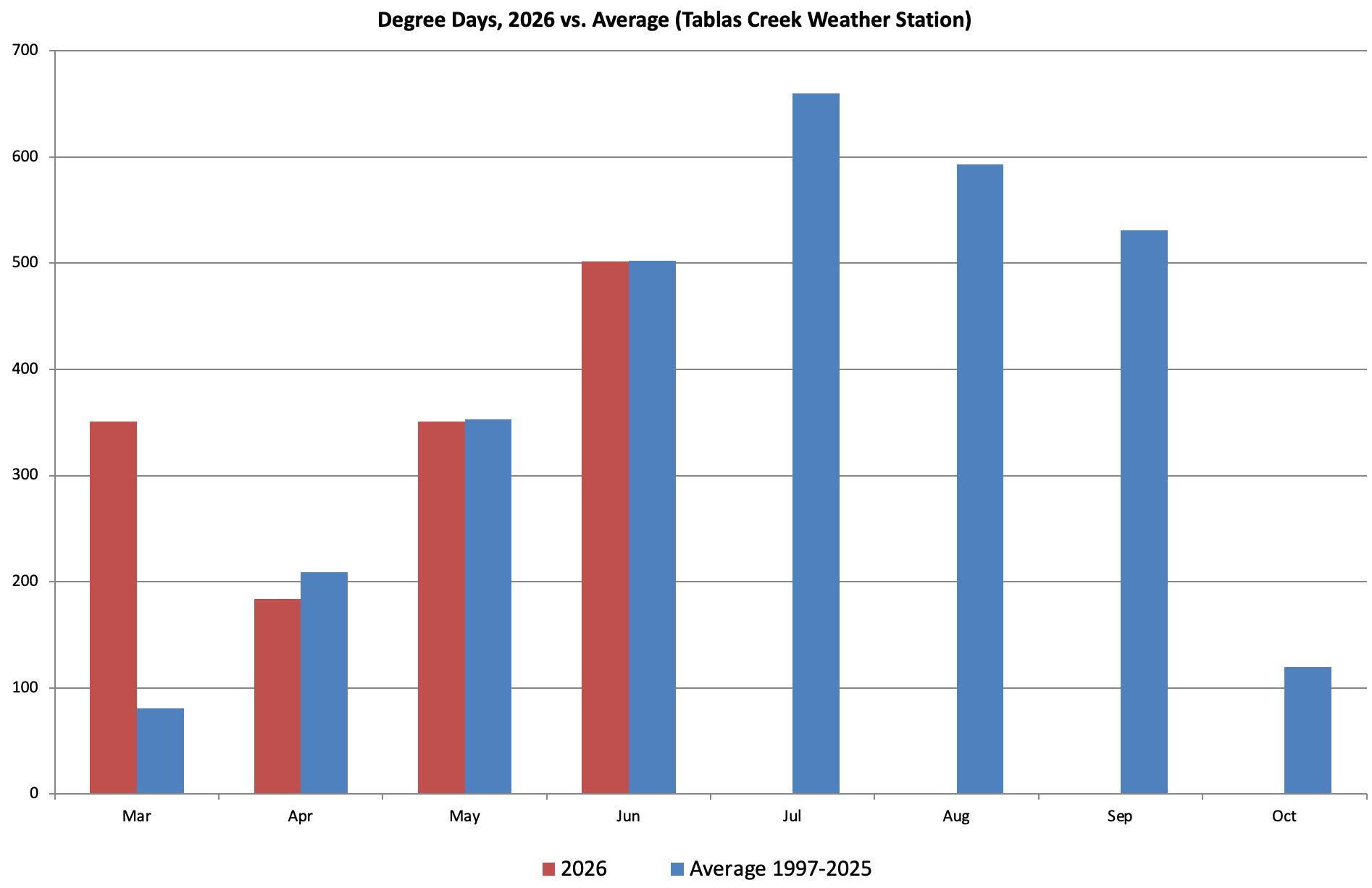
After a March that saw more than four times our normal amount of heat and was as warm as our average May, the last three months have all been within 10% of our long-term averages. Taken together, we're about 2.5% below our normal heat accumulation since April 1st. Of course, March did happen. So despite our moderate last few months, we've still accumulated 18% more GDDs than our 2016-2025 average. But we're essentially tied in total GDDs, as of the end of June, with both 2022 and 2017. Things are coming back into recognizable territory.
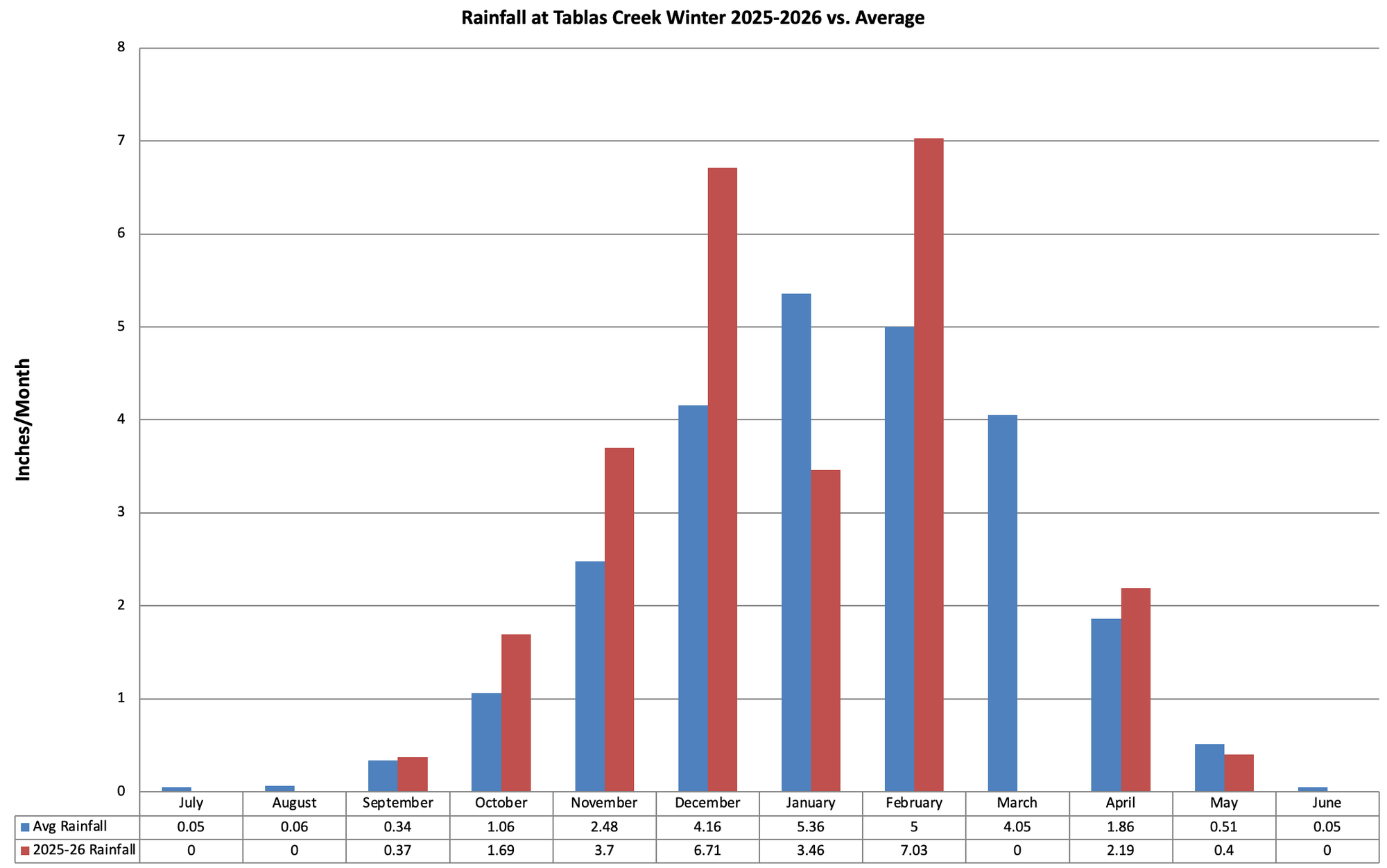
How about rainfall? After a totally dry March, we were wondering if our rainy season was over. It was not. We got five days in April with measurable precipitation, and one more in May. We're going to finish our rain year (which is measured July-June) slightly above our long-term average:
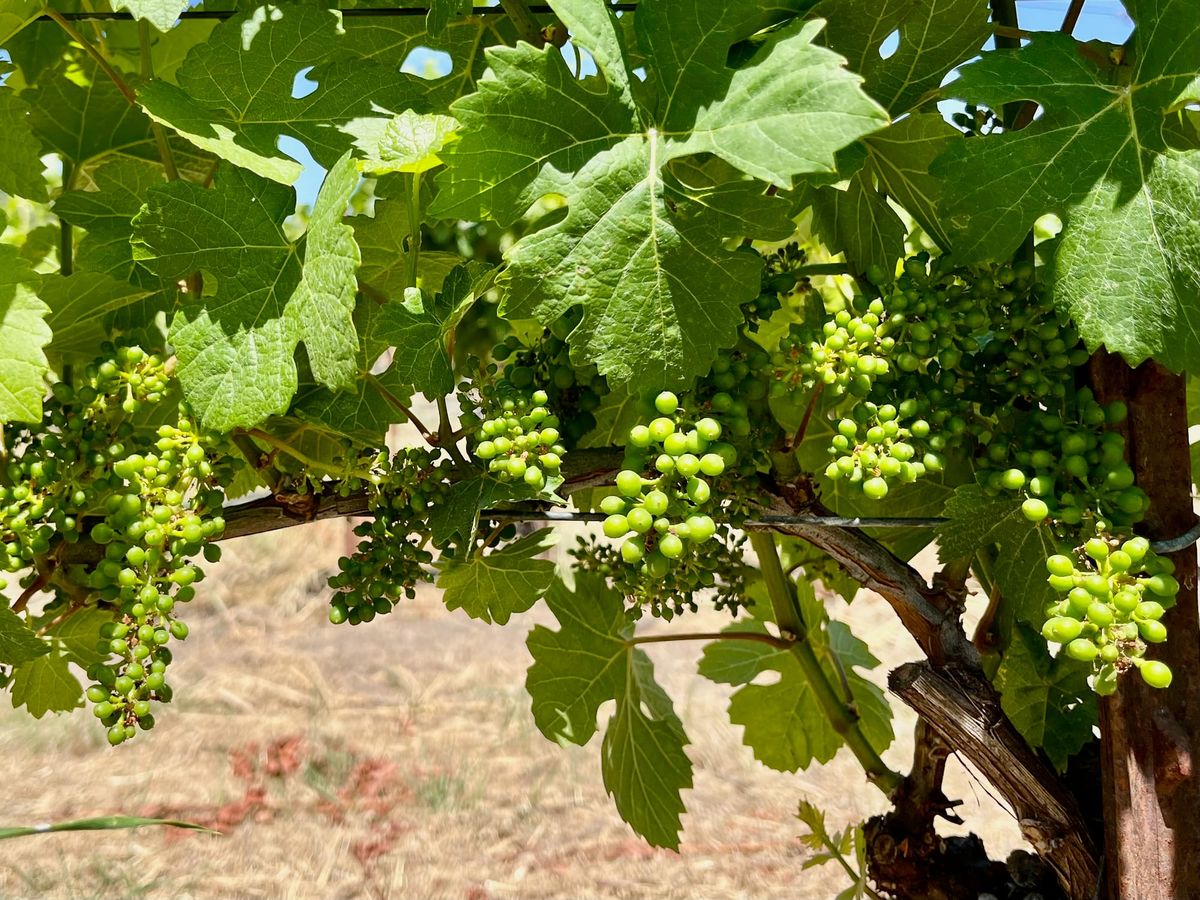
Although we dodged any significant frost events, we did have a lot of nights that got close. Our main weather station is in the middle of the vineyard, in a cool spot but not one of our coldest. At that station, we registered six days in April and another day in May that dropped below 37ºF, which makes it likely that our coldest spots dropped near freezing. That cold weather, along with our rainy days, meant that we didn't get optimal conditions for flowering. Now it wasn't a disaster. But because of our warm March, the vineyard was more advanced than it usually is in April and May, so more likely to have been flowering when this chilly and/or wet weather occurred. During flowering, you hope to avoid both extreme heat and cold, rain, and wind. We didn't have a lot of wind this year, or extreme heat, but we did have enough chilly nights and enough rain to see more shatter and more millrandage than we have since 2023.
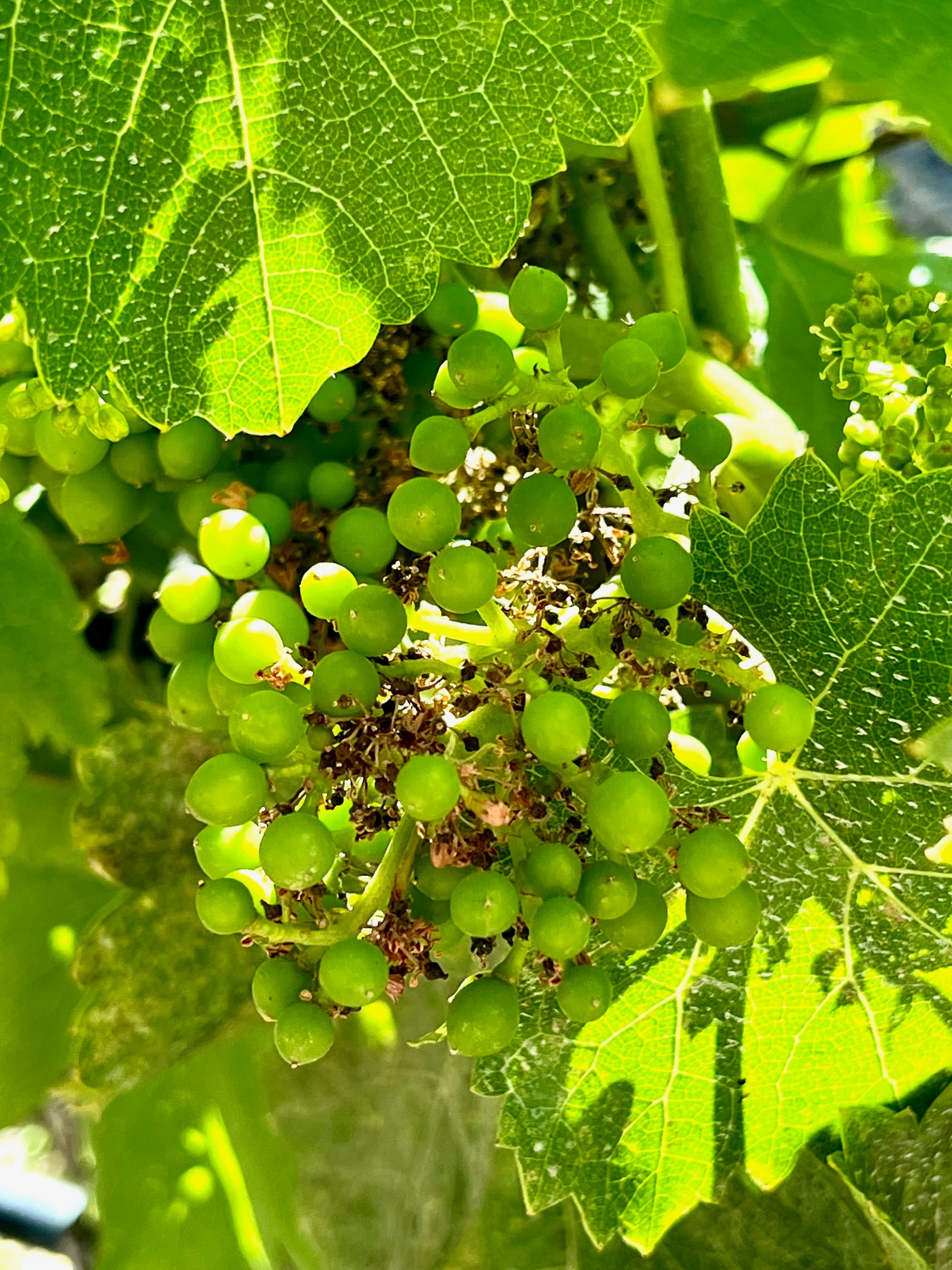
What is shatter? It's the incomplete fertilization of the flowers in a cluster and results in bunches with fewer berries than you'd expect. Different grapes have different proclivities toward shatter, with Grenache being amongst the most shatter-prone. This Grenache bunch is typical. You can see all the unfertilized flowers:
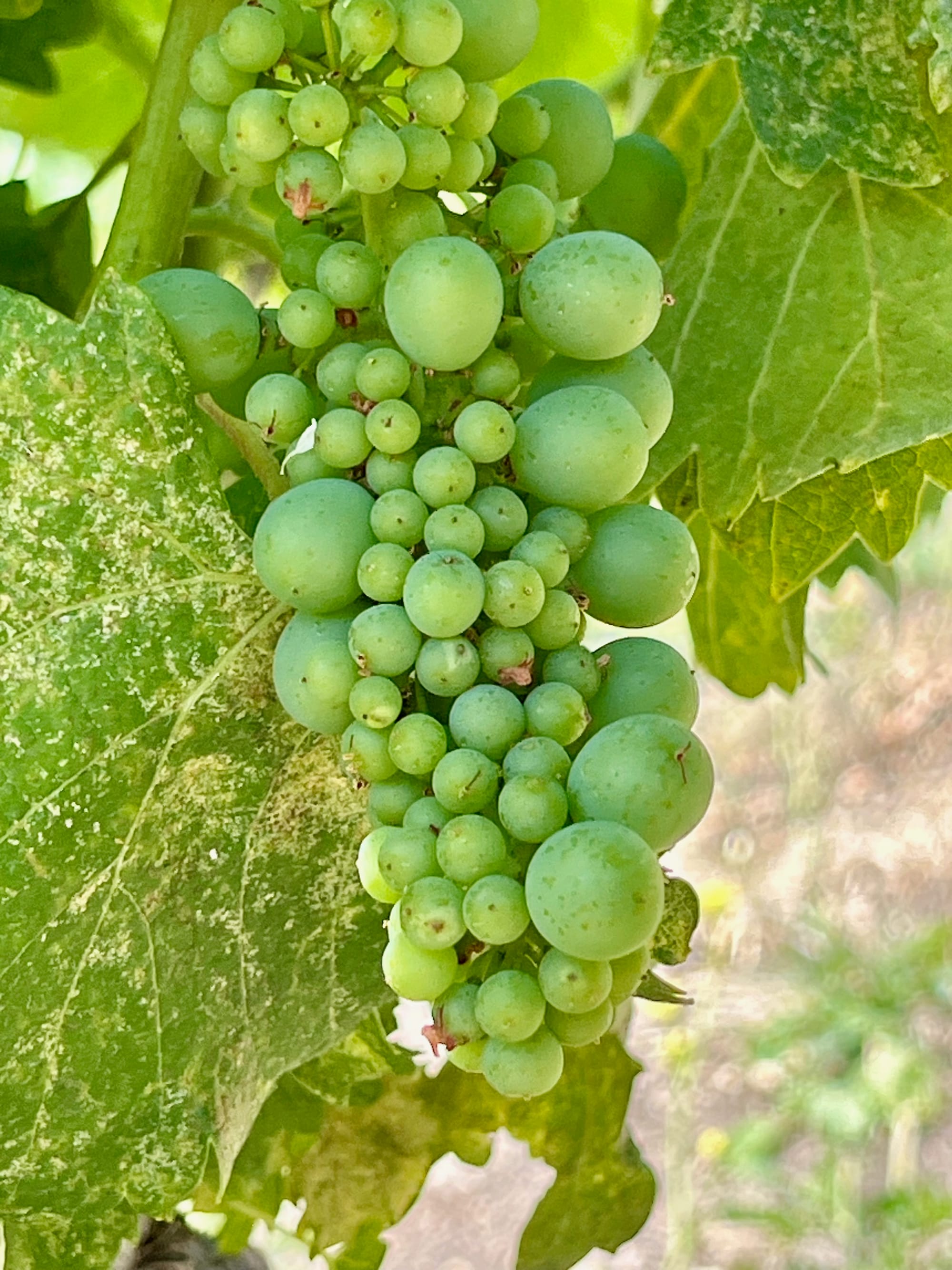
How about millerandage? That's a condition (also known as hens and chicks) caused by similar conditions to those that cause shatter. But unlike shatter, where the berries don't form at all, with millerandage you get a mix of full-sized berries and smaller, seedless berries that develop more slowly. The below Viognier bunch is a classic example:
The good news, in both cases, is that while shatter and millerandage can have a negative impact on quantity, they don't typically result in lower quality, and can even have some positive effects. Shatter produces looser clusters that are more resistant to mildew, while millerandage can have a positive impact by increasing skin-to-juice ratio and therefore color and flavor intensity. The last year where we saw significant shatter or millerandage was 2023, which we're convinced is going to go down as one of our greatest-ever vintages. That's nice to remember. And we're not too worried that we're going to see major losses in yield. We see only modest occurrences of both conditions: enough to keep an eye on, but not enough to think we'll be suffering for fruit. Our yields in 2023 were slightly above our long-term averages.
In addition to keeping a watch on these two issues, we're trying to get a sense of sequencing. As I noted in my blog on flowering back in May, we're seeing more variation by where we are in the vineyard than we are by what the variety is. For example, we have a Viognier block next to a Mourvedre block down near the creek at the southern end of the property. I recorded an explainer last week where I showed that the grape that we normally kick off harvest with (Viognier) and the one we normally finish out harvest with (Mourvedre), separated by just a few feet, are at nearly-identical stages. I've share a photo of each below. Can you tell which is which? I'll share the answer at the end of the blog.
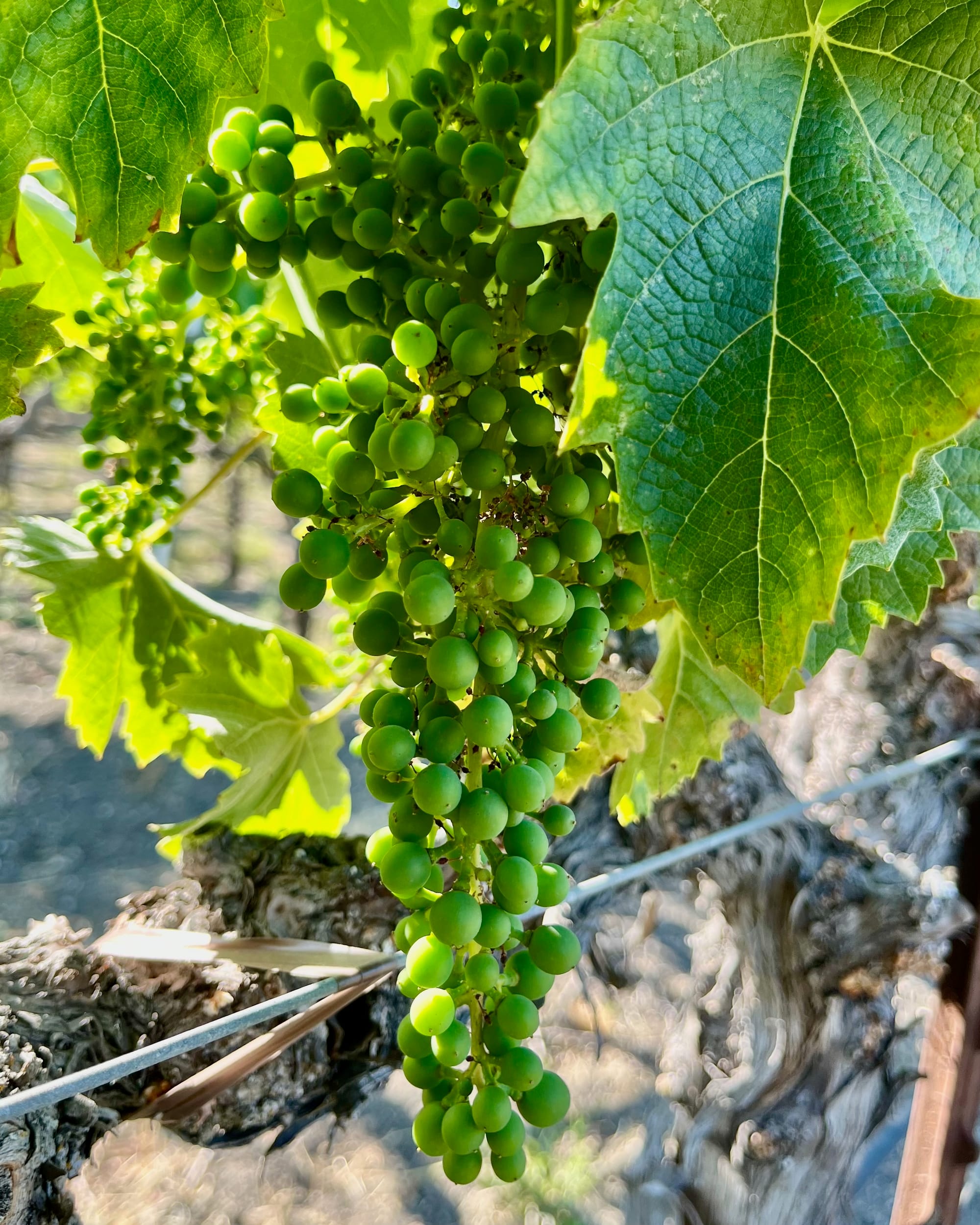
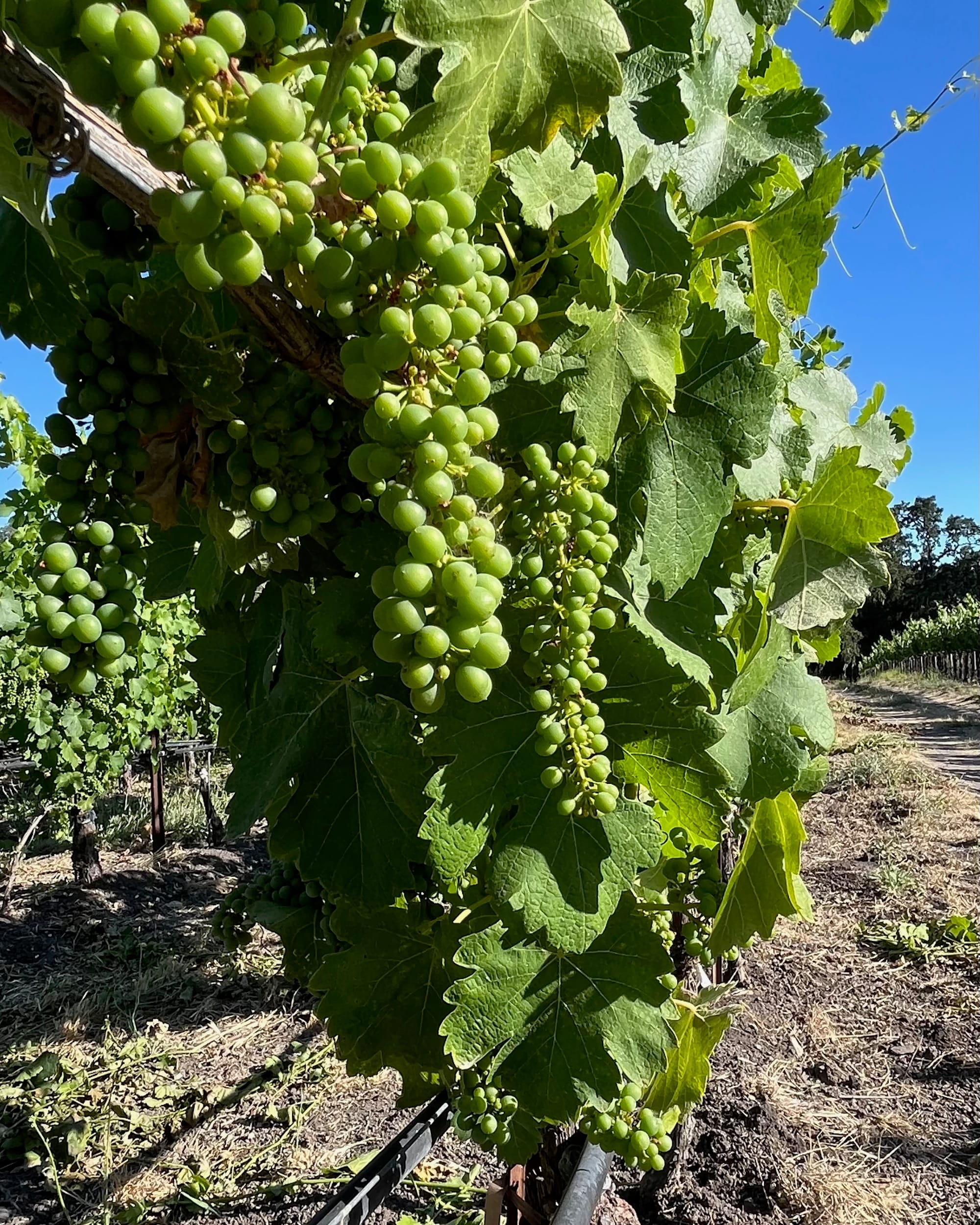
Could I find Viognier that looks more advanced than this? Sure! At the tops of the hills. But I could also find Mourvedre that looks more advanced than this up on our hilltops. And that seems likely to be another story we're going to have to keep an eye on. We always harvest by blocks (not just by grapes) and are used to different blocks of the same grape ripening at different times. Roussanne, in particular, is notorious for coming in all throughout harvest. It seems like this year we're going to have to keep an eye on the progress in more blocks of more varieties than we're used to.
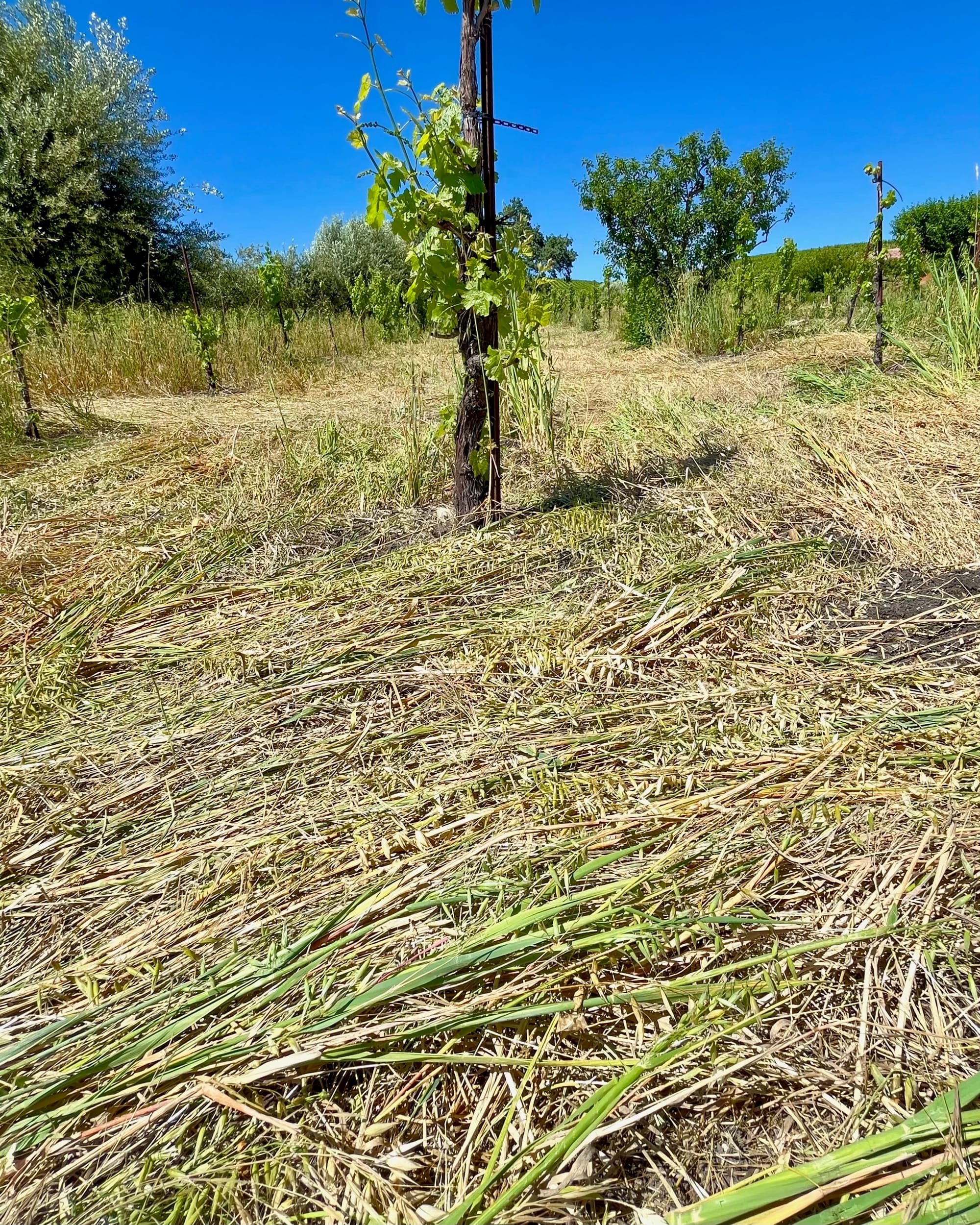
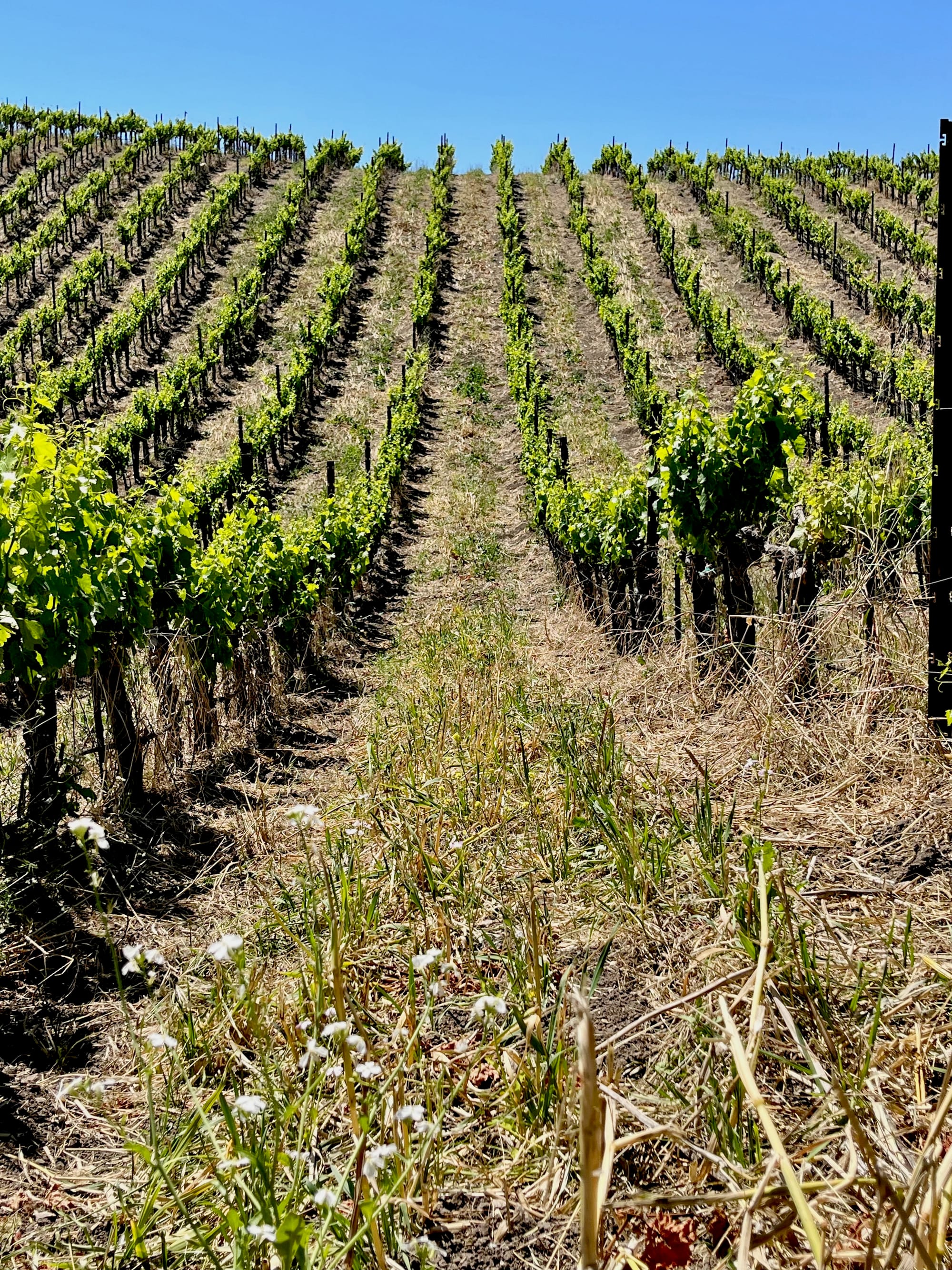
Meanwhile, the late rain has meant that we're seeing exceptional vigor in both our grapevines and our cover crops. We've made multiple crimping passes over the blocks where we often only have to crimp once (an example in a Cinsaut block is below, left) and are having to make multiple mowing passes in other sections where the grasses are reluctant to stop growing (an example in a Grenache Blanc block is below, right):
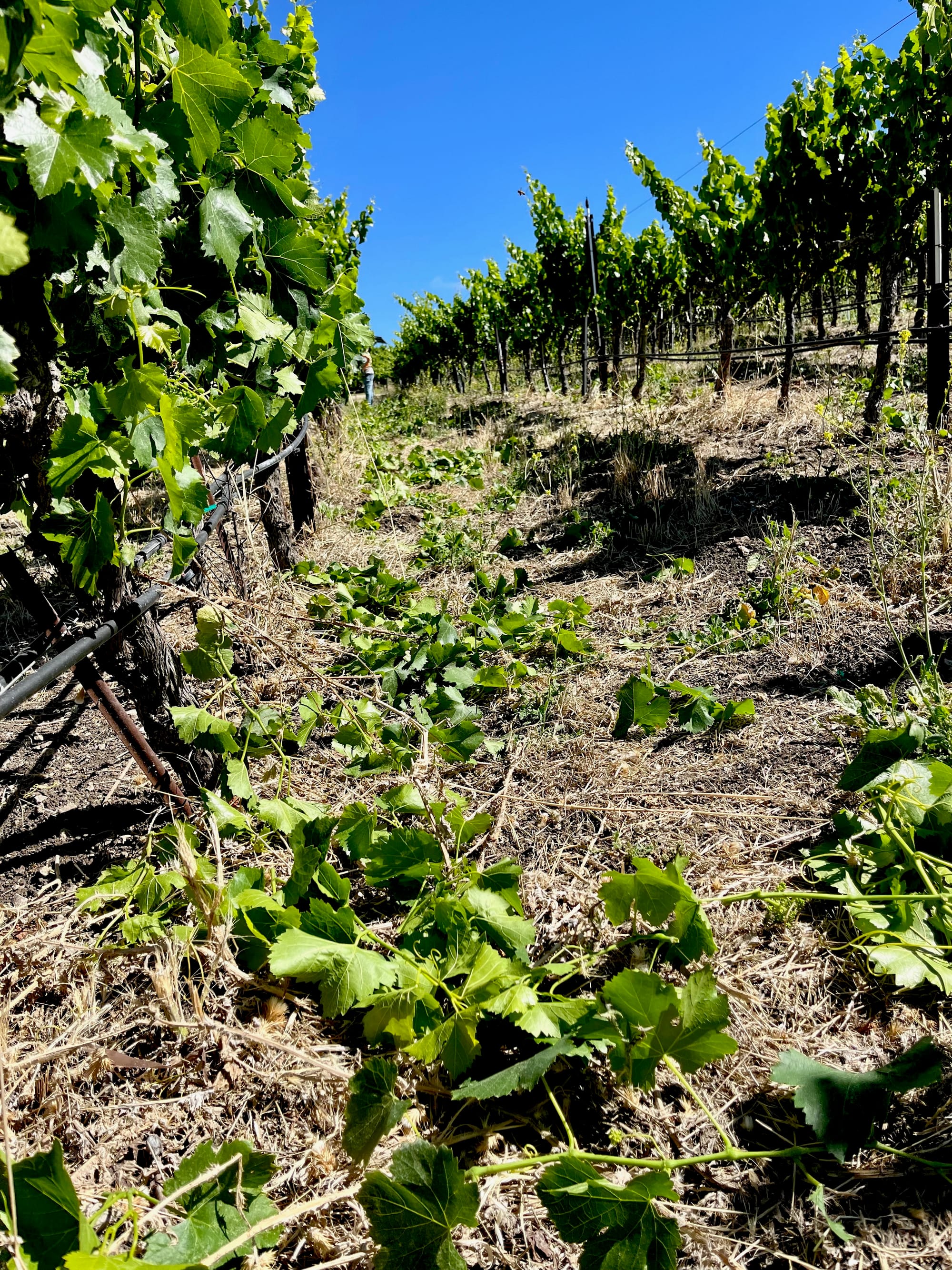
Finally, to control the vigor and yields while minimizing our mildew pressures in this year where it hasn't yet topped (or even really approached) 100ºF, we've been shoot thinning and tucking up the remaining canes to allow better flow of light and air. You can see an example of the results of our shoot thinning (in Grenache) below left, and of cane tucking (in Muscardin) below right.
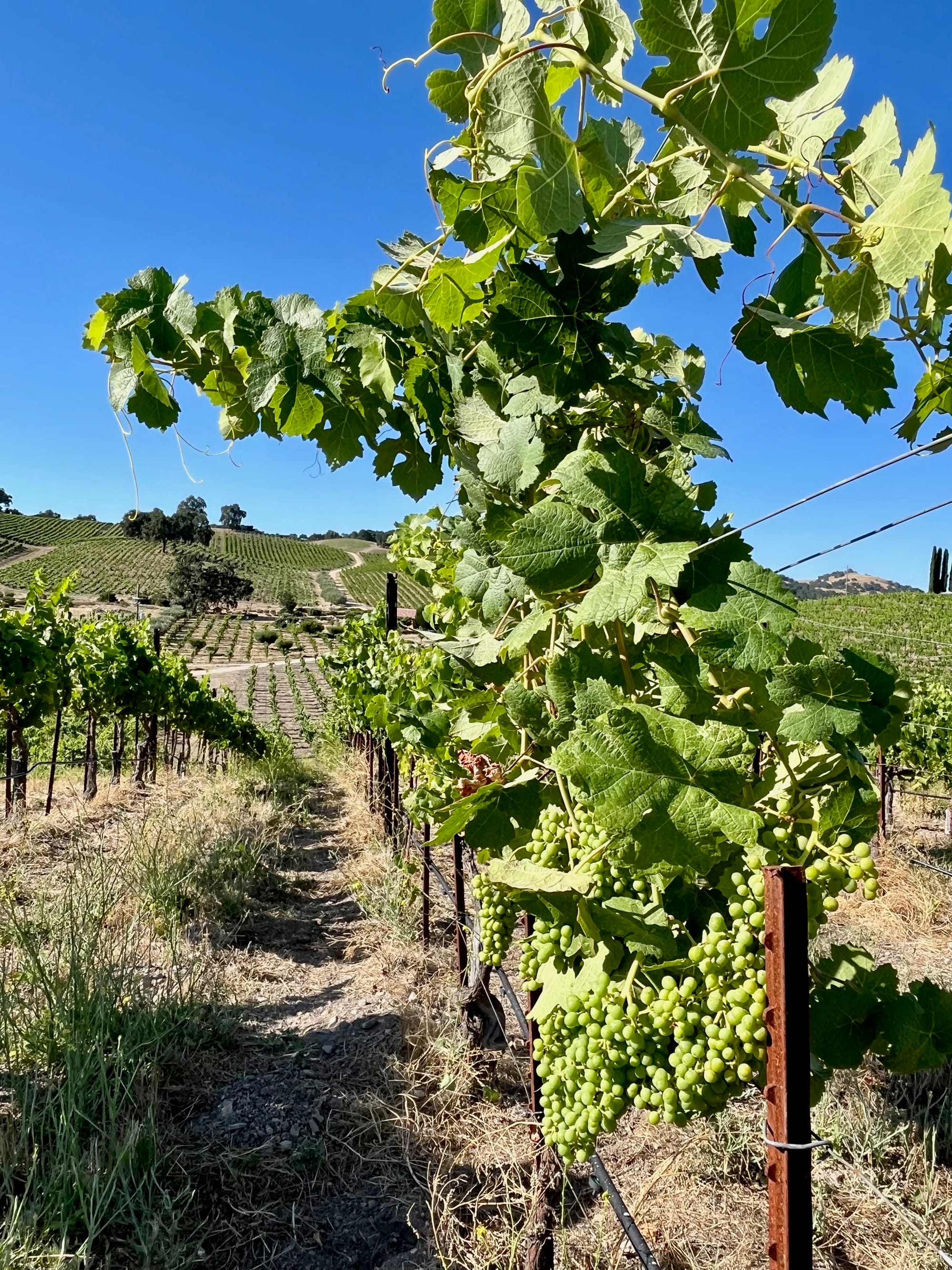
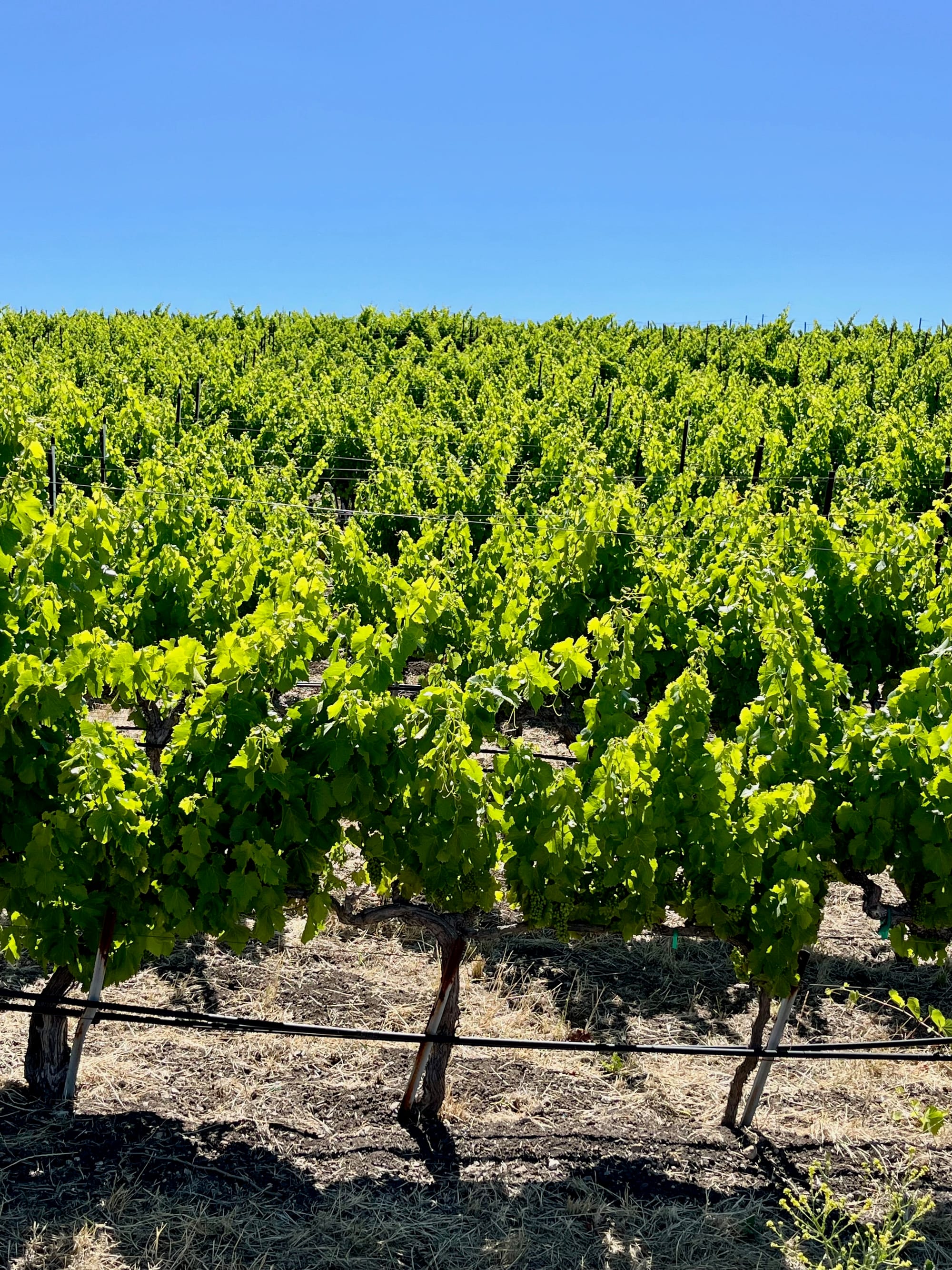
I'll leave you with one more photo that feels characteristic of the year. This is a picture looking up the hill of one of our older Grenache blocks. The green of the grapevine canopy is so intense it almost hurts your eyes. I feel like it gives a great idea of the health of the vineyard:
I still think we're going to see an early start to harvest, but am less convinced we're going to see an early finish. Could we start in mid-August and continue through October? Absolutely. But there's still a long way to go, and a sustained heat wave would have a real impact. Stay tuned.
PS The Mourvedre cluster is on the left, and the Viognier on the right.