Veraison 2026 suggests that our earliest-ever harvest is coming, maybe as soon as two weeks
We found veraison (color change) in our Syrah on July 9th. That's tied with 2014 for our earliest date ever. But while July 2014 was relatively cool, this year has seen such good ripening conditions that we're expecting to break records.
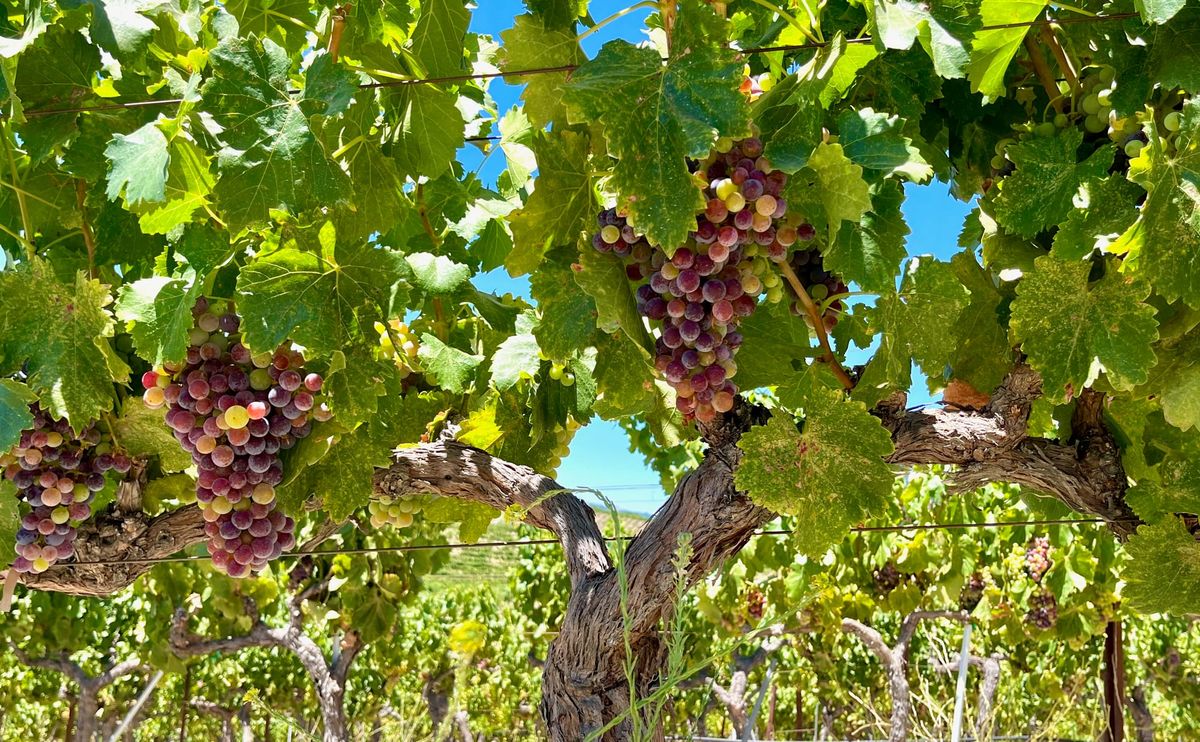
Veraison, if you're unfamiliar with the term, is a physiological stage of grape development where the berries stop accumulating mass and start accumulating sugar. More visibly, red grapes start their color change from green, while white grapes take on more of a yellow tint. Both red and white grapes start to soften. The onset of veraison comes roughly six weeks before the beginning of harvest, and gives us our best estimate for what sort of schedule we're likely looking at.
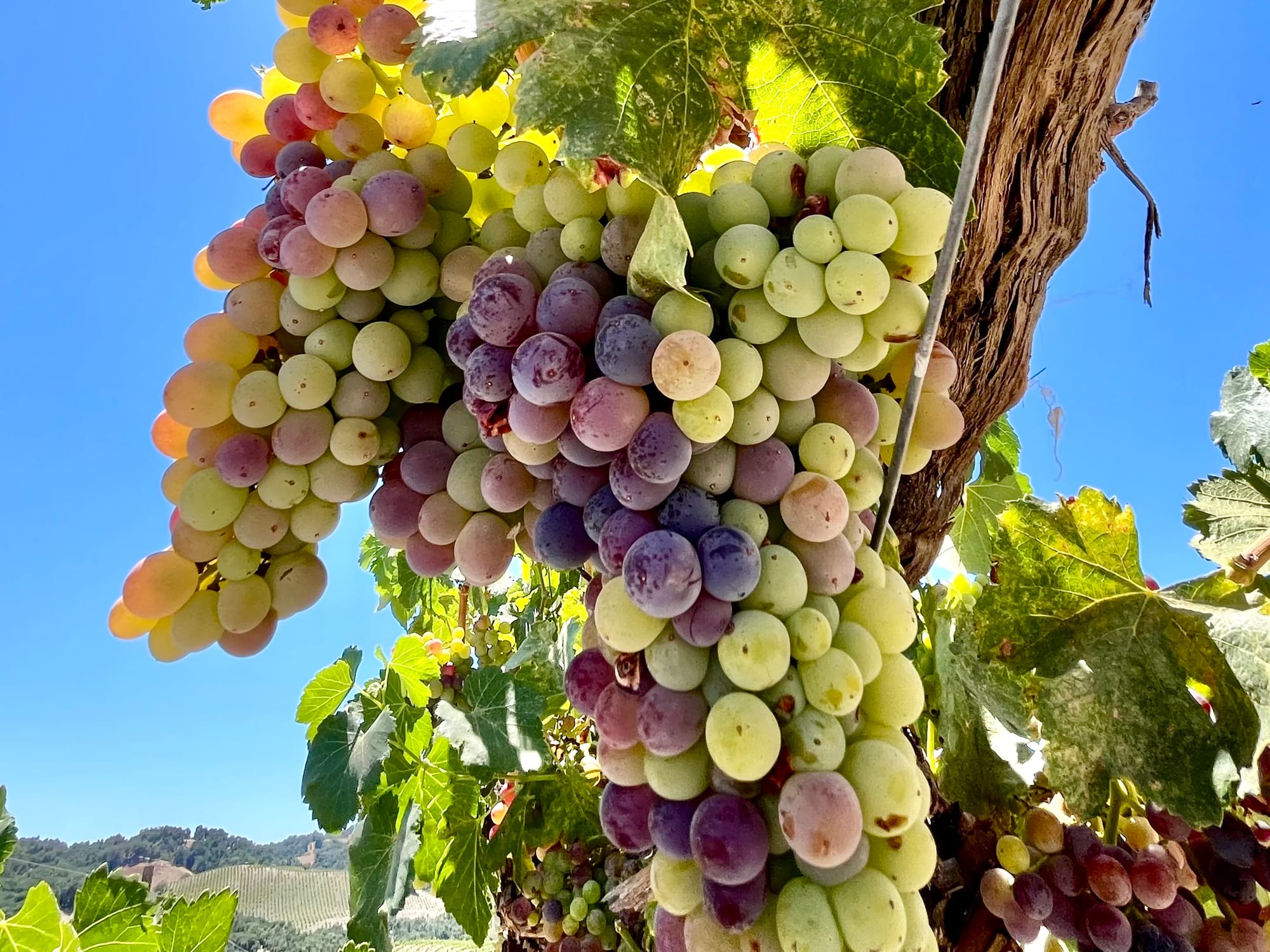
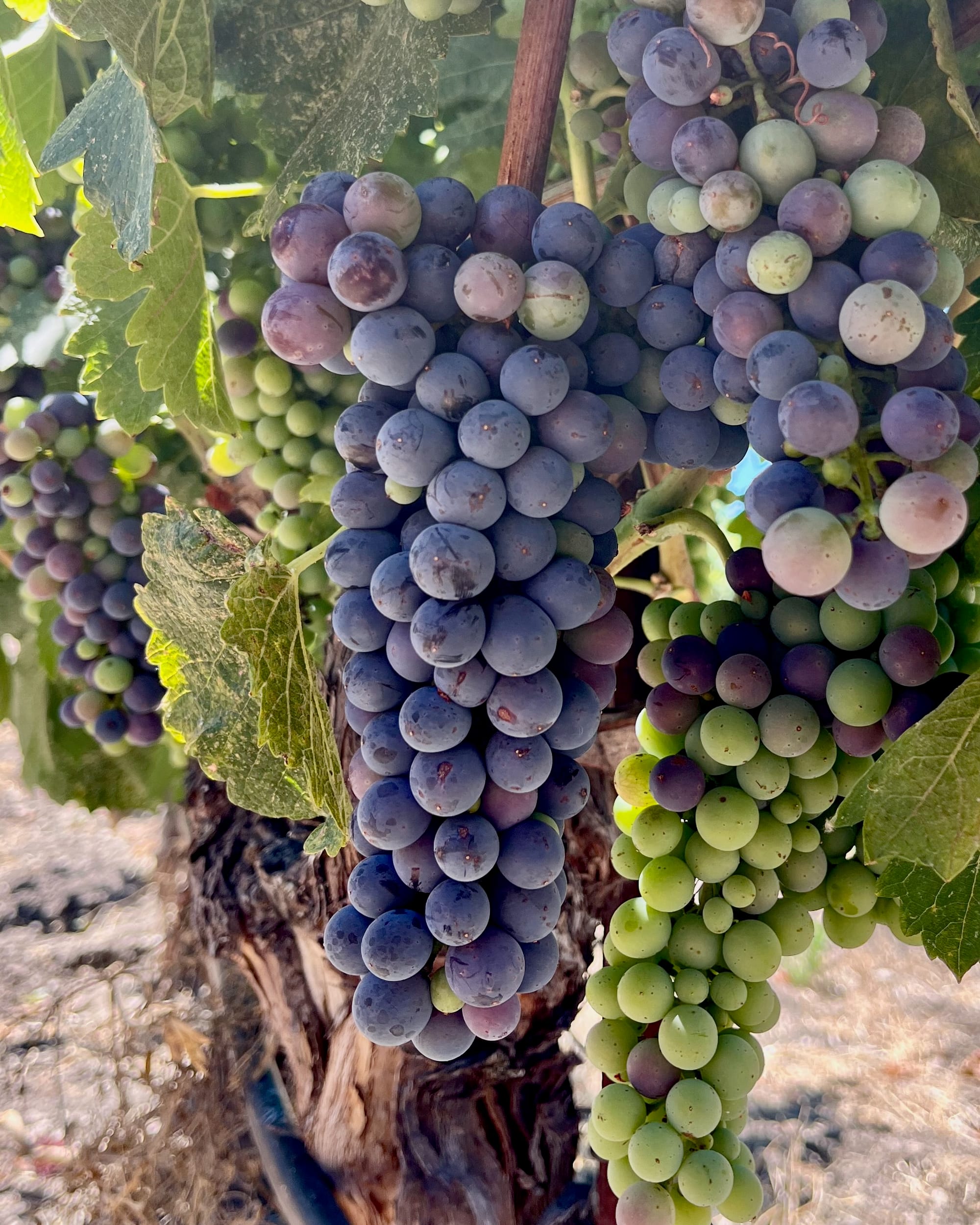
The 2026 growing season can be divided into three phases, each with their own likely impacts on the year's wines. In the first phase, March was off-the-charts warm, which got things going a full month earlier than normal. In the second phase, which lasted from April through June, we saw slightly cooler than average temperatures, which slowed down ripening but also interacted with the fact that the grapes were way ahead of normal to produce some challenges with flowering and fruit set. And since the beginning of July, we've been on the western fringes of a remarkably powerful heat dome. That has meant that we've had consistently warm days (average high 93.2°F) and seven days over 100°F but nothing over 103°F. These are perfect ripening conditions, and the vineyard is moving fast. Since July 9th, when I first saw some veraison in Syrah, we've seen Grenache, Mourvedre, Counoise, and finally Cinsaut follow. Today, I went out and took representative photos of each, which I thought I'd share. First, Syrah. I'd estimate that we're about 50% or a little more of the way through veraison in this, our earliest red grape:
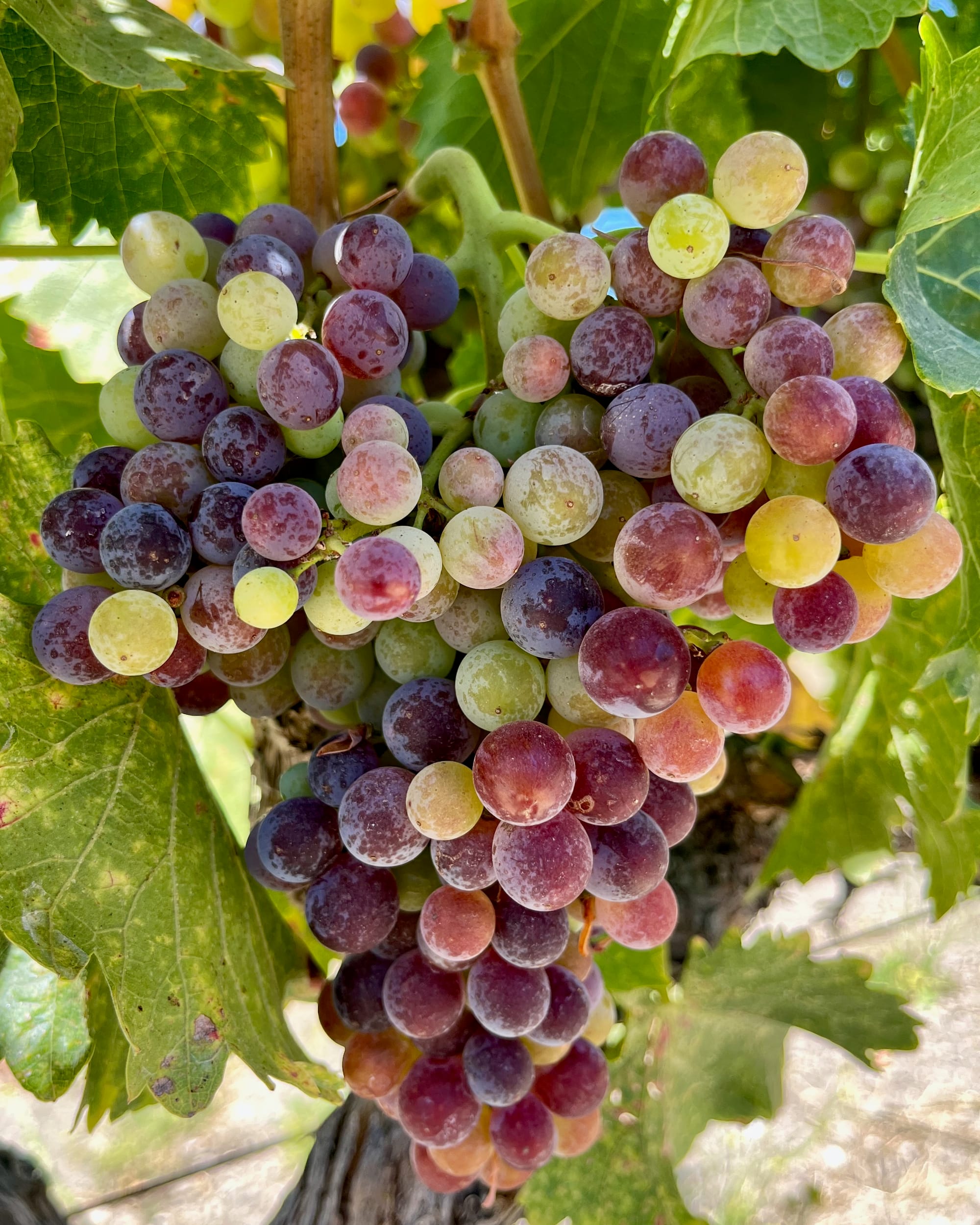
Next, Grenache. While the tops of the hills show a lot of color change, the bottoms show only a few pink berries in mostly-green clusters. But for the Grenache at the middle of the hills or above, we're already in gemstone season, where the berries turning jewel-like in the sun. I'd estimate that we're at around 30% veraison in Grenache:
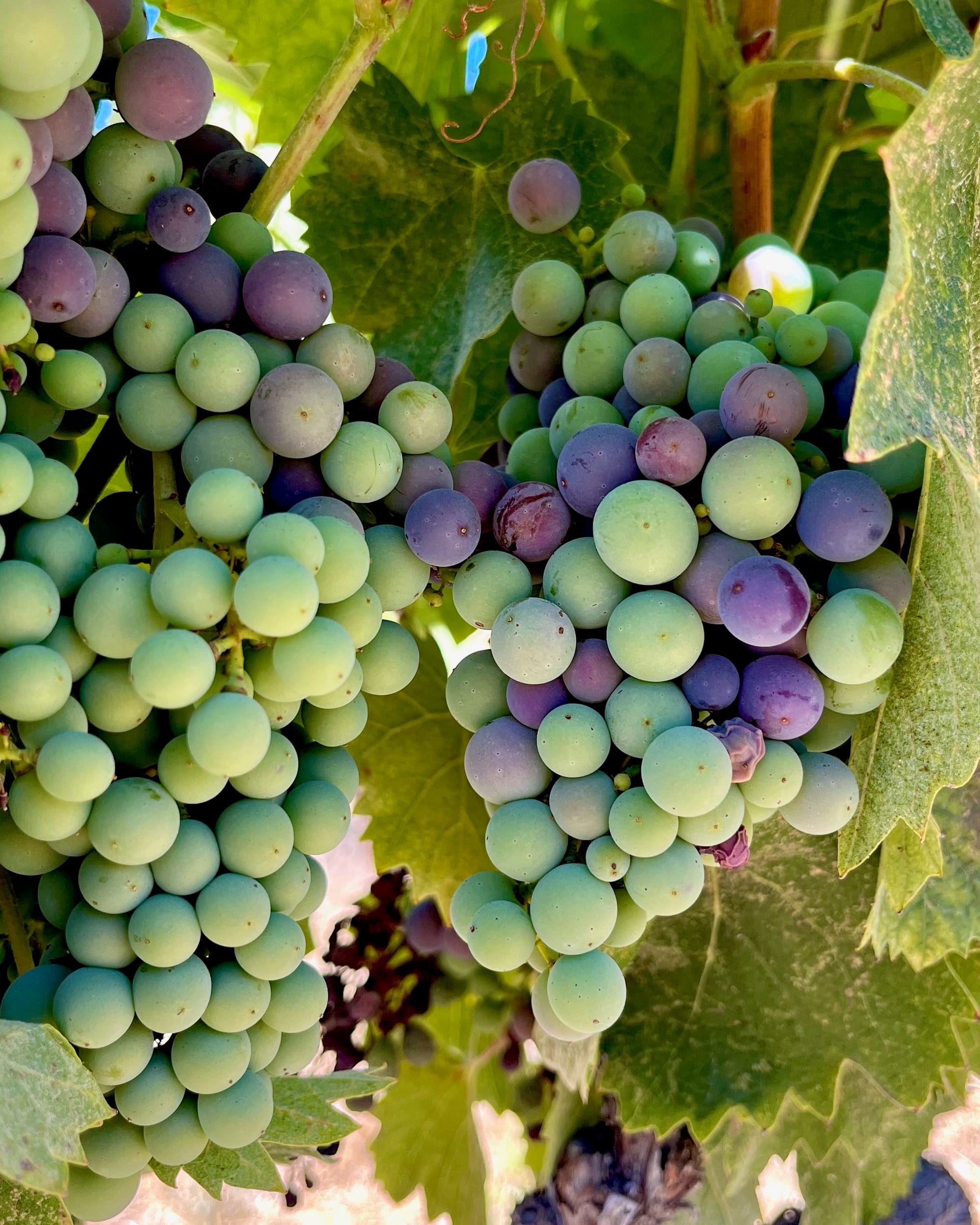
Late-ripening Mourvedre is next, at about 15% veraison:
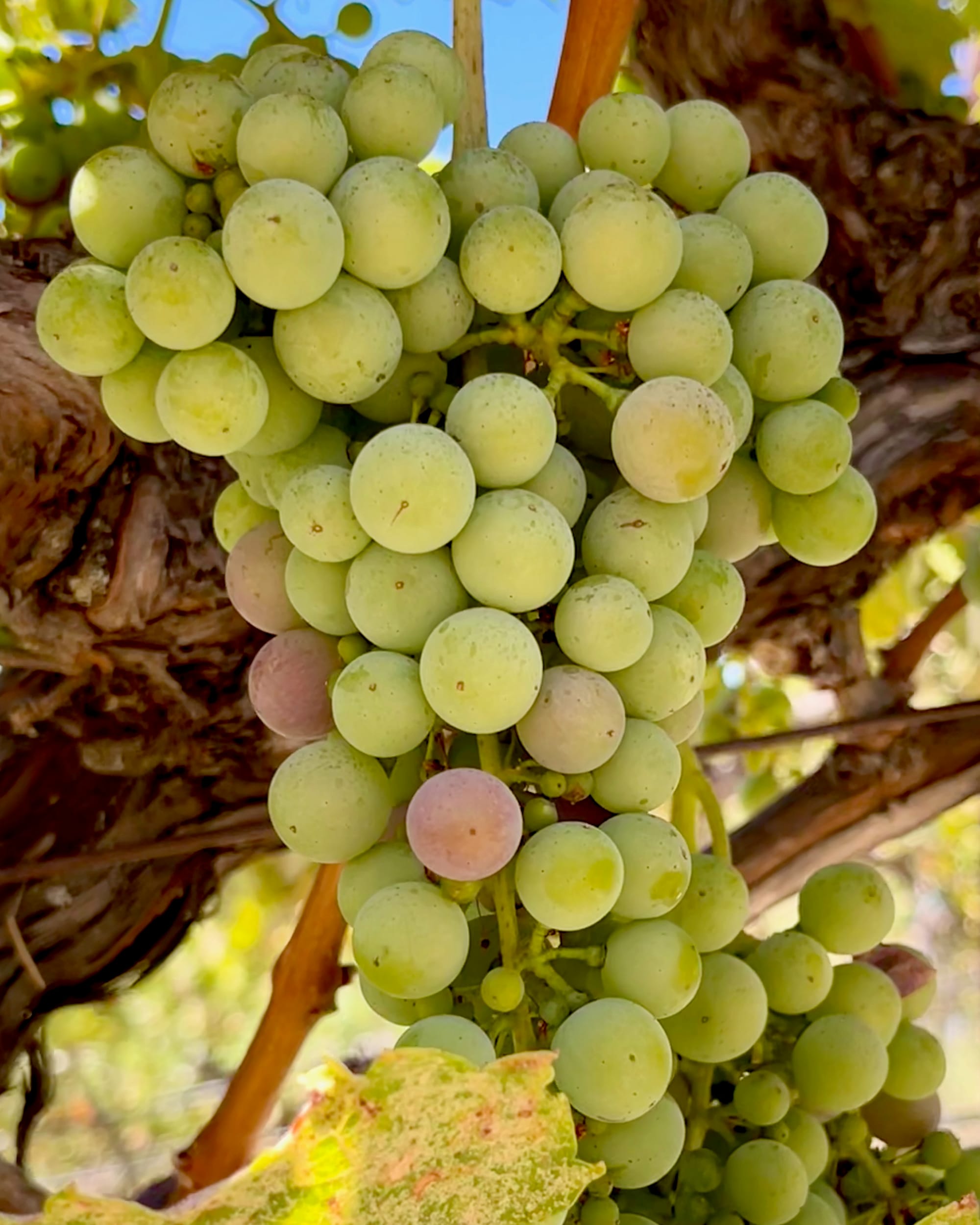
There are entire Counoise blocks that are still green. But at the top of the hill of our oldest block, we're starting to see color change. I'd estimate we're around 5% on Counoise, overall:
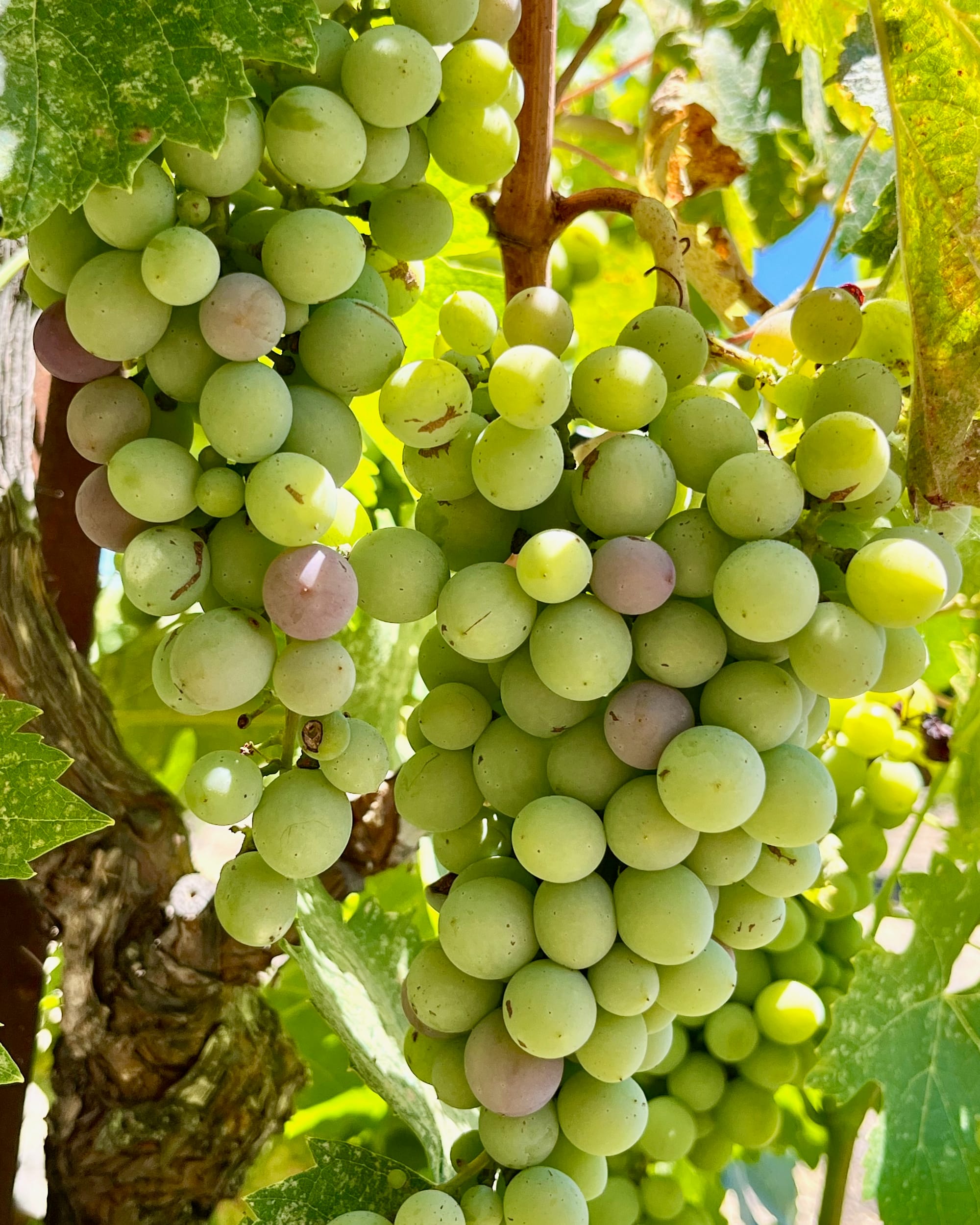
Finally, Cinsaut. We are learning that although Cinsaut is not a super late ripener, coming in pretty much in sync with Grenache, it is slow to enter veraison. Before my walk today I hadn't seen any color in any Cinsaut blocks, but today I found one plant with a couple of pink berries. Calling it 1% of the way through veraison is probably being over-generous:
While I didn't hit every vineyard block today, the other reds would be somewhere within this continuum as well. I saw some color in Muscardin last week, and it's looking more or less like Grenache, while Terret Noir is later like Counoise, and Vaccarese is very late, like Cinsaut.
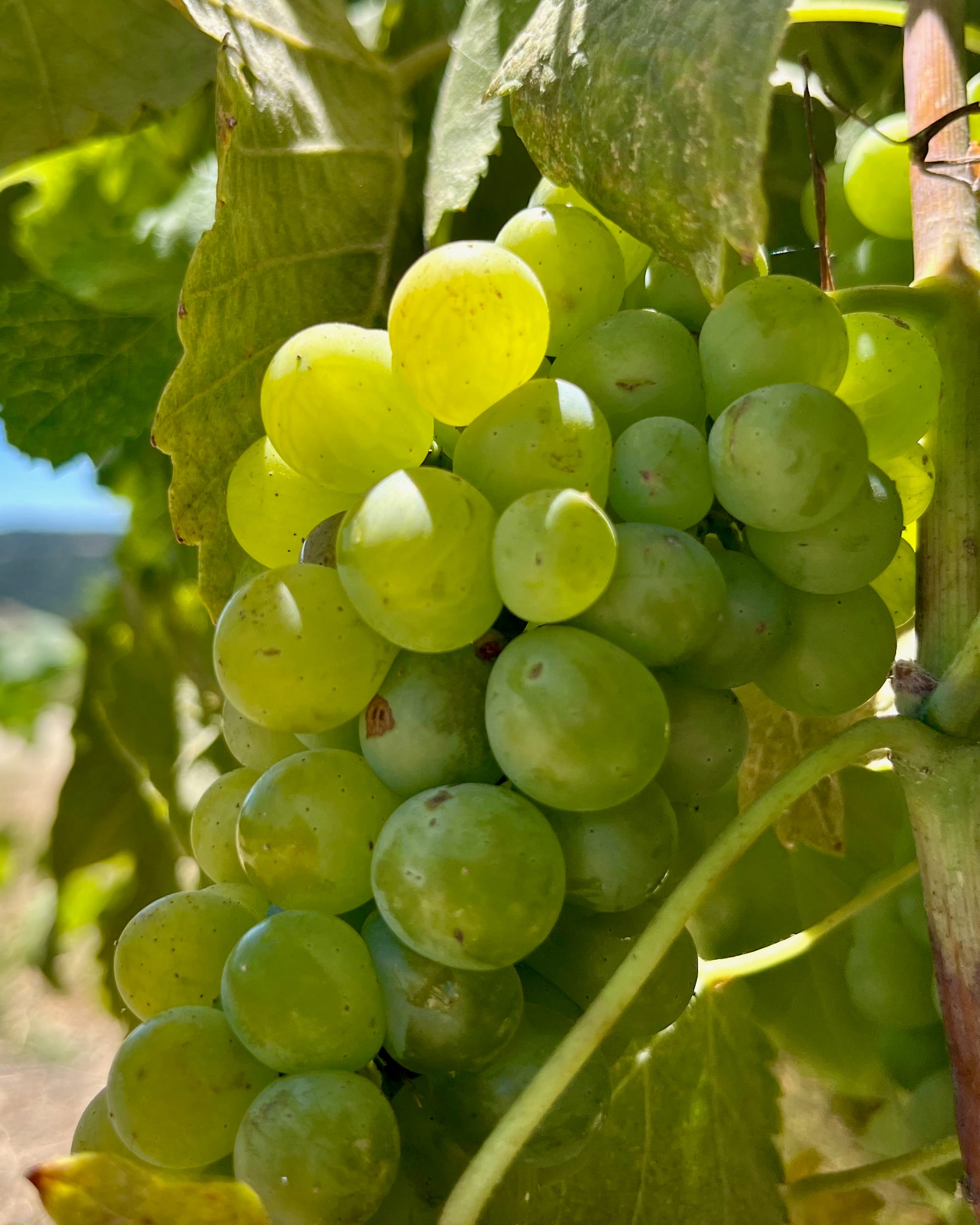
Although it's less exciting visually than with reds, white grapes go through veraison too. The grapes turn from green to something a little yellower, and soften and start to get sweet. They also become more translucent. The process happens over a similar time frame as the reds. Viognier goes first, followed by Vermentino, Marsanne, and Grenache Blanc, with Picpoul and Roussanne bringing up the rear. You can see the slightly golden tone and the translucency in the below cluster of Viognier:
While the veraison posts you're likely seeing from your favorite wineries may make it seem like veraison is a moment, like Christmas, it's better to think of it as a season, like winter, and first veraison is like first frost, or first snowfall. It will likely be another week or two before even all the Syrah clusters at Tablas are red, and six weeks until the last clusters of later grapes like Mourvedre and Counoise have finished coloring up.
While six weeks is a good basic guide for the duration between the onset of veraison and the beginning of harvest, it is always influenced by the weather that we get in the interim, as well as by the amount of fruit the vines are carrying. For example, a consistently cool summer and a plentiful crop in 2010 gave us a full seven weeks between first veraison and our first harvest, while 2024's consistent heat and low yields gave us just five weeks. Our last fifteen vintages are compiled in the chart below, with each year linked to my blog post about that year's veraison if you want my thoughts at the time:
| Year | First Veraison Noted | Estate Harvest Begins | # of Days |
|---|---|---|---|
| 2010 | July 30 | September 16 | 49 |
| 2011 | August 5 | September 20 | 47 |
| 2012 | July 25 | September 5 | 42 |
| 2013 | July 17 | August 26 | 40 |
| 2014 | July 9 | August 23 | 45 |
| 2015 | July 18 | August 26 | 39 |
| 2016 | July 13 | August 18 | 36 |
| 2017 | July 20 | August 30 | 41 |
| 2018 | July 29 | September 10 | 43 |
| 2019 | July 30 | September 4 | 36 |
| 2020 | July 21 | August 25 | 35 |
| 2021 | July 21 | August 24 | 34 |
| 2022 | July 12 | August 17 | 36 |
| 2023 | August 7 | September 14 | 38 |
| 2024 | July 24 | August 26 | 33 |
| 2025 | July 23 | August 28 | 36 |
| 2026 | July 9 | ? | ? |
Using the range of durations between first veraison and first harvest (33 to 49 days) we would normally predict that we'd begin picking sometime between August 11th and August 27th. I think it's certain to be on the early edge of that range, and perhaps even earlier. It looks like we're seeing crop levels on the low side this year. It's also forecast to get warmer, which is likely to speed things up. UCLA climate scientist and weather blogger Daniel Swain posted an alert this morning on Threads:
View on Threads
If I had to guess, I think we'll start bringing in estate fruit the week of August 10th, and wouldn't be surprised to get something for Patelin in the week before. Our earliest-ever estate harvest was 2022, when we started on August 17th, and I think it's very likely that we'll beat that this year. We wouldn't be alone in starting early. Two weeks ago, the Sonoma Press Democrat announced the earliest beginning of harvest in 40 years for sparkling wine producers. Last week the Santa Lucia Highlands announced that harvest was starting, also for sparkling. And closer to home, on Friday (July 24th!) I saw that Au Bon Climat celebrated their earliest beginning to harvest ever, with Chardonnay from Los Alamos and Pinot Noir from Edna Valley both arriving at the cellar for still wines.
What's next for the vineyard? The view in the vineyard is changing daily. We'll be posting regular photos of veraison's progress on our Facebook and Instagram pages. We've already started sampling the early varieties, looking for the moment when the flavors are fully developed and the balance of sugars and acids ideal. In the cellar, we'll be pulling out, cleaning, and checking all the tanks and equipment we'll need once harvest begins. So, now we wait, and enjoy the show. Harvest will be here before we know it.