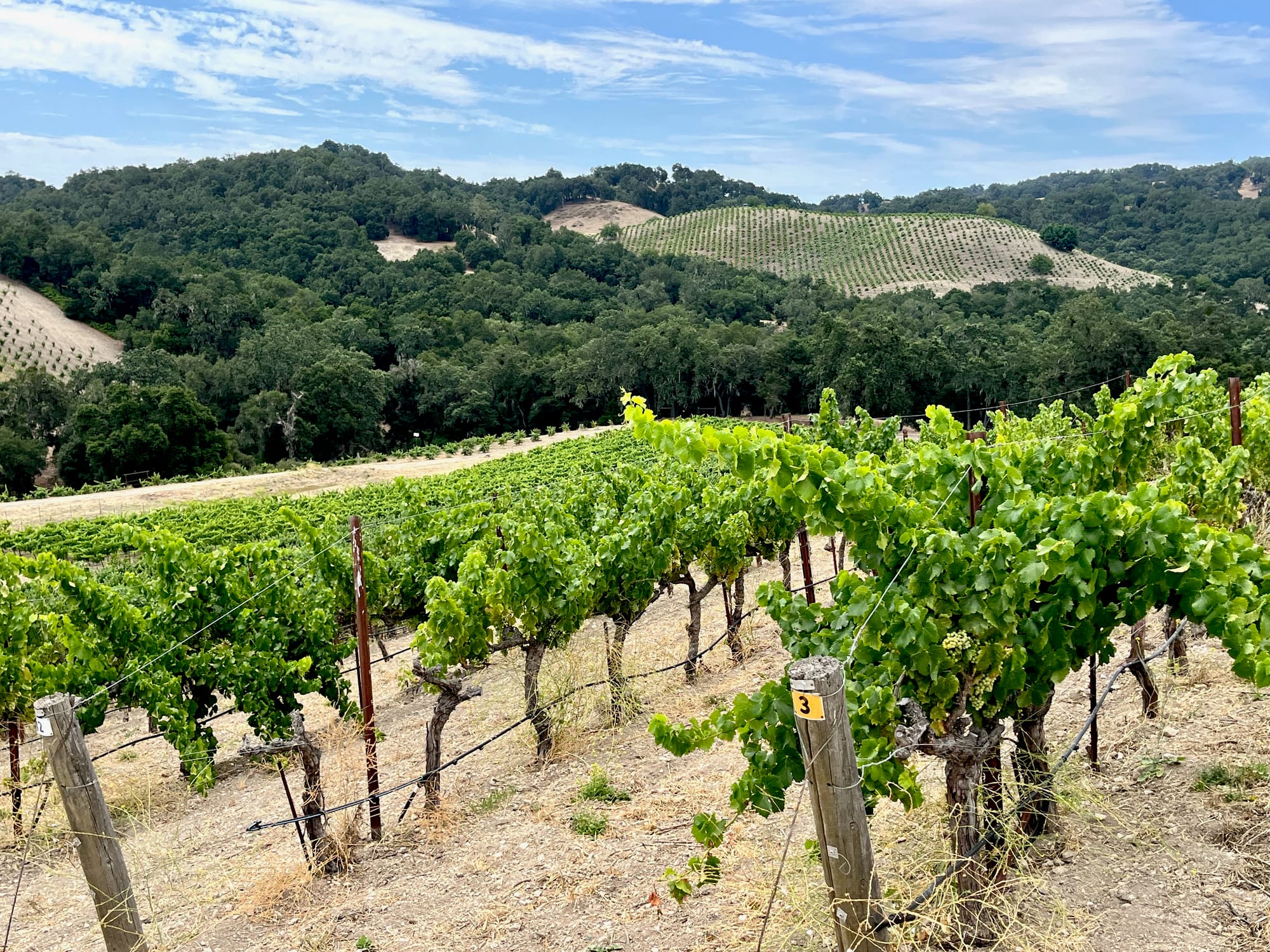
Our original nursery block, source of most of California's Rhone Cuttings, still teaching us lessons at age 32
When we planted our original nursery block, we planted the vines on their own roots to save ourselves a year in getting more vines propagated. Is this why the block has remained healthy and productive into its fourth decade?
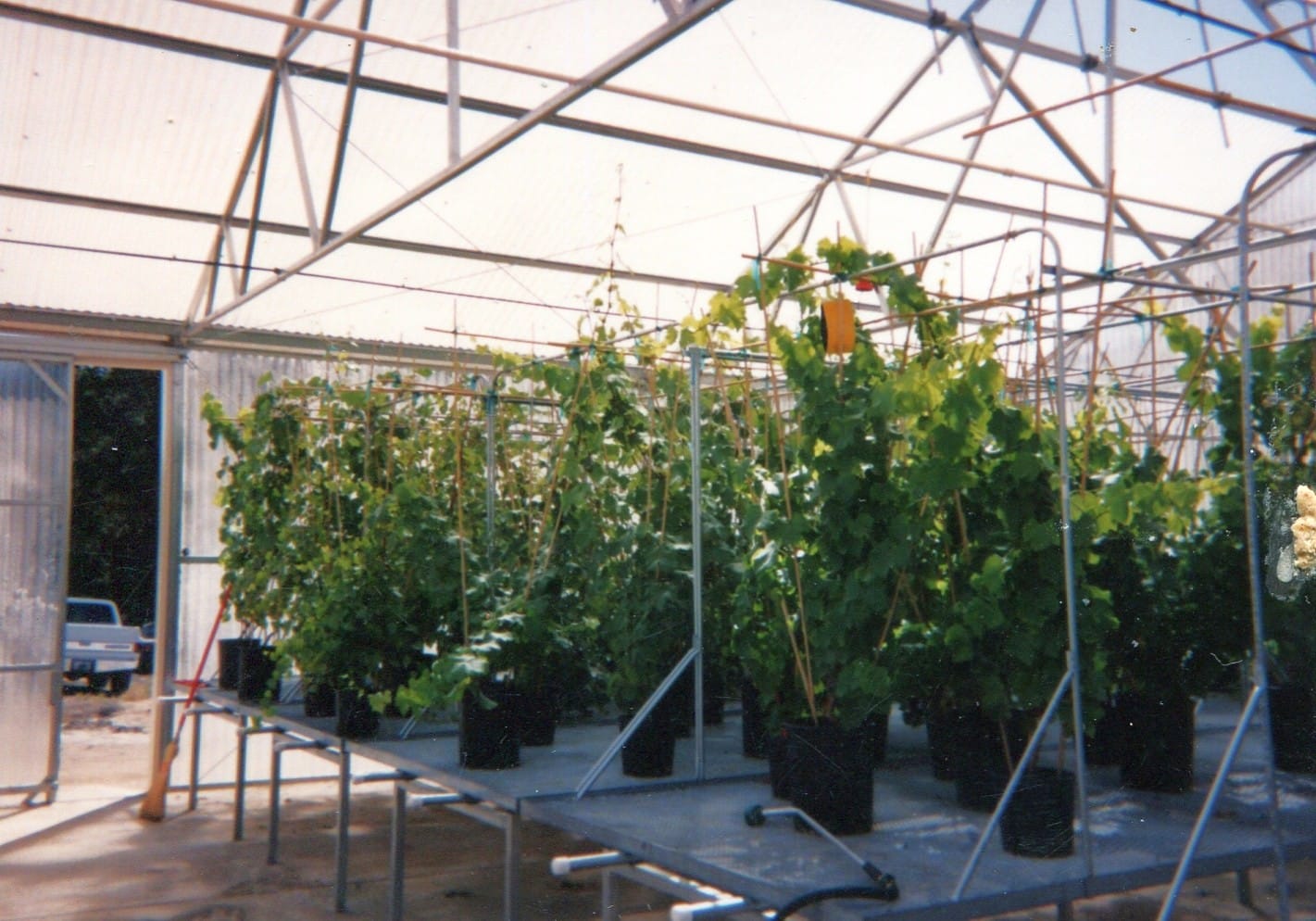
When we started Tablas Creek, the first thing we did was import what we and the Perrins agreed were the eight core Rhone grape varieties into the United States. For reds, this meant Mourvedre, Grenache, Syrah, and Counoise. For whites, it meant Roussanne, Marsanne, Viognier, and Grenache Blanc. Those vines spent three years in quarantine in Geneva, New York, and were released to us in 1992. We built greenhouses to propagate those vines, and spent the next two years turning the six cuttings of each variety into a few hundred vines. This was done by planting the vines we had, allowing them to grow, and then taking cuttings from those vines, rooting them, and planting those in new pots. The numbers grow exponentially, since you can get dozens of cuttings each year from each vine, but it still takes a while to get to the thousands you need to plant a vineyard when you start with six. This 1993 photo, from a collection sent to us by Dick Hoenisch, our original Nursery Manager, shows the "mother" vines as we started propagation:
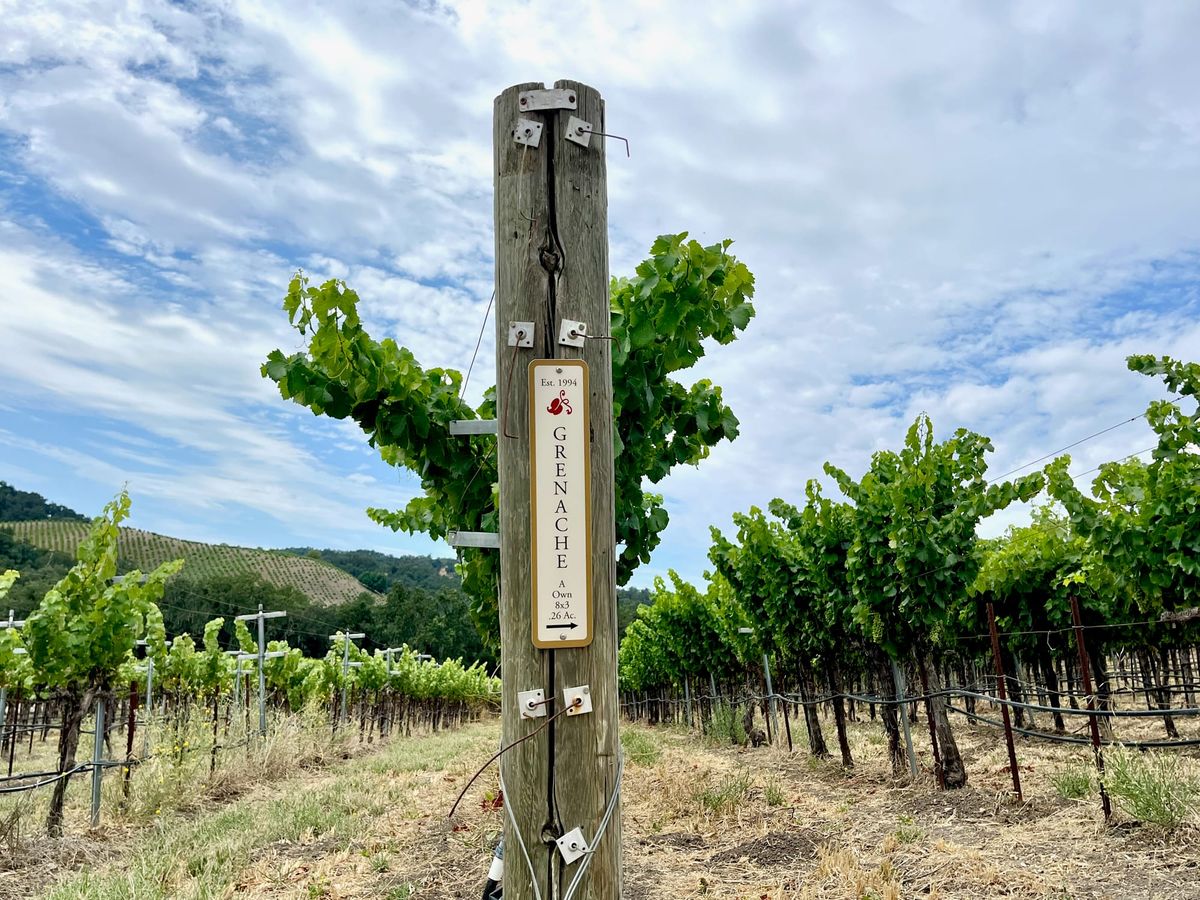
By 1994 we had reproduced enough vines to plant about five rows of each variety up the side of the hill nearest the nursery. We chose that spot because at that point, proximity was more important than suitability for any particular variety, as this wasn't intended to be a production block long-term. In order to save ourselves a year, we planted these vines on their own roots. If we had planted grafted vines, we would have had to wait another year for the rootstock fields that we were also planting to come into production. At that stage of our development, we thought it was more important to produce vine material sooner than it was to protect the block from potentially needing to be replanted at some future date because of phylloxera. This view, from 2001, shows the full hillside, with red grapes at the bottom and white grapes at the top:
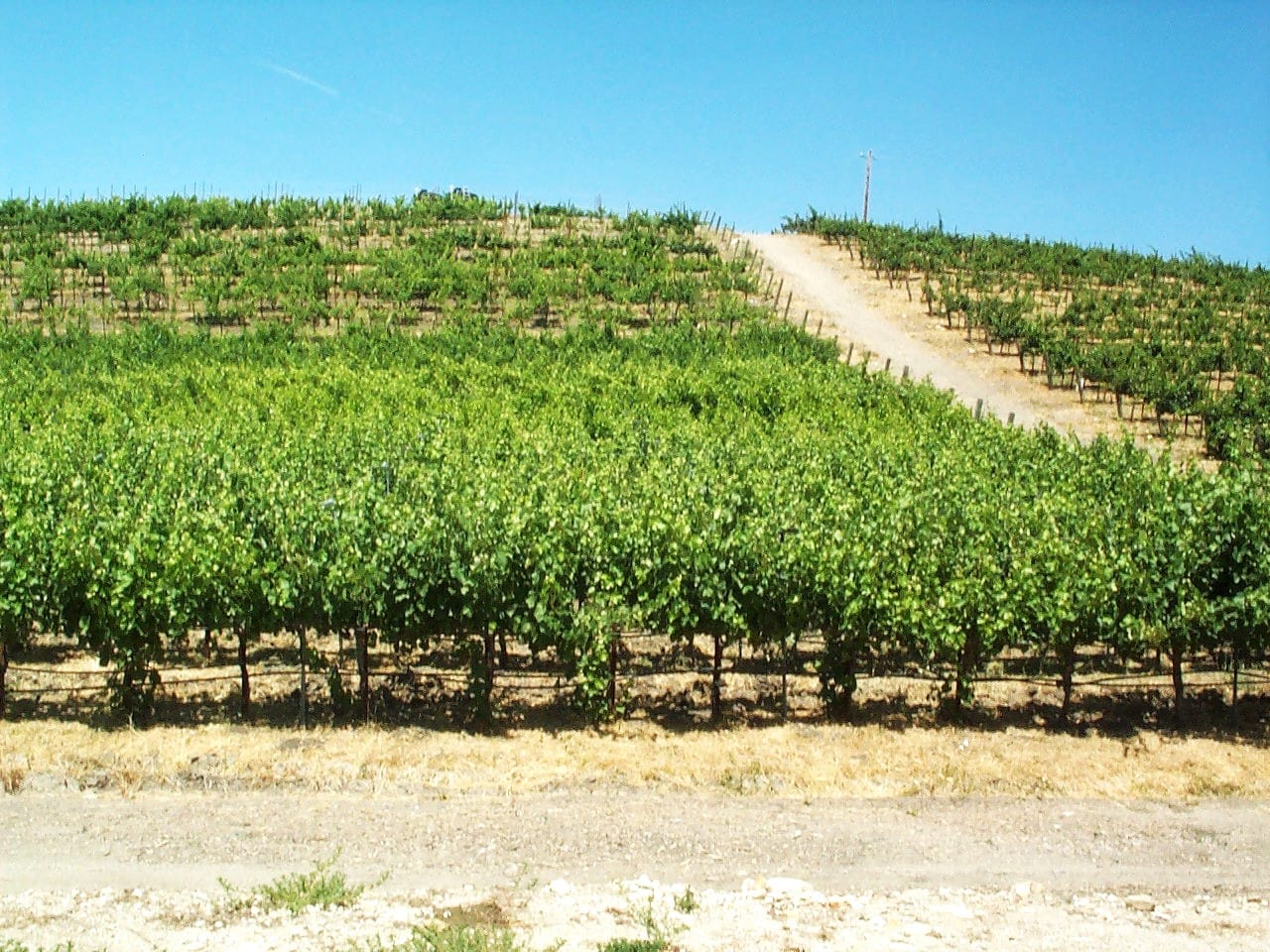
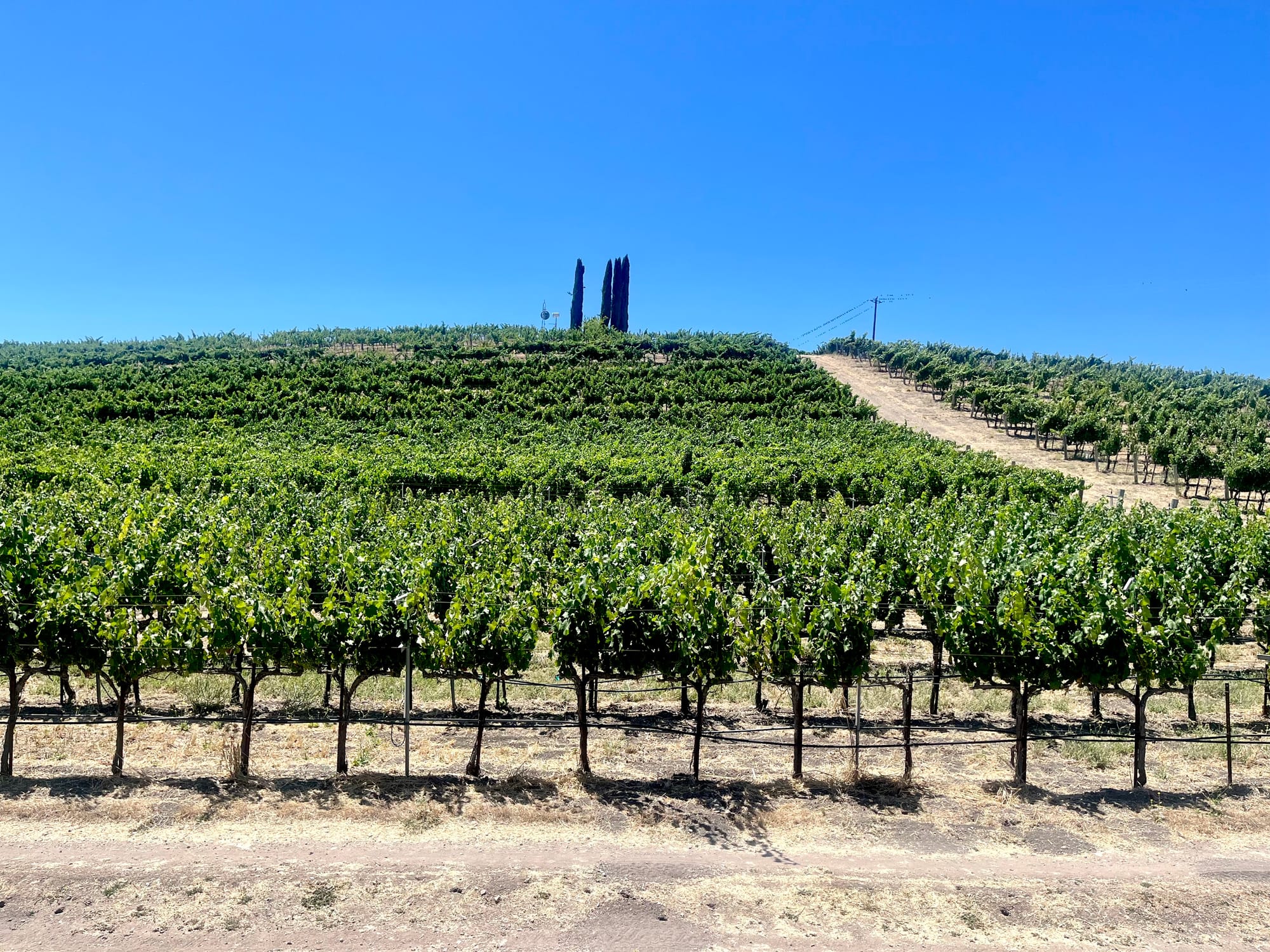
I was down visiting that block recently and was struck by how well these vines are still doing. A photo from last week from a similar angle:
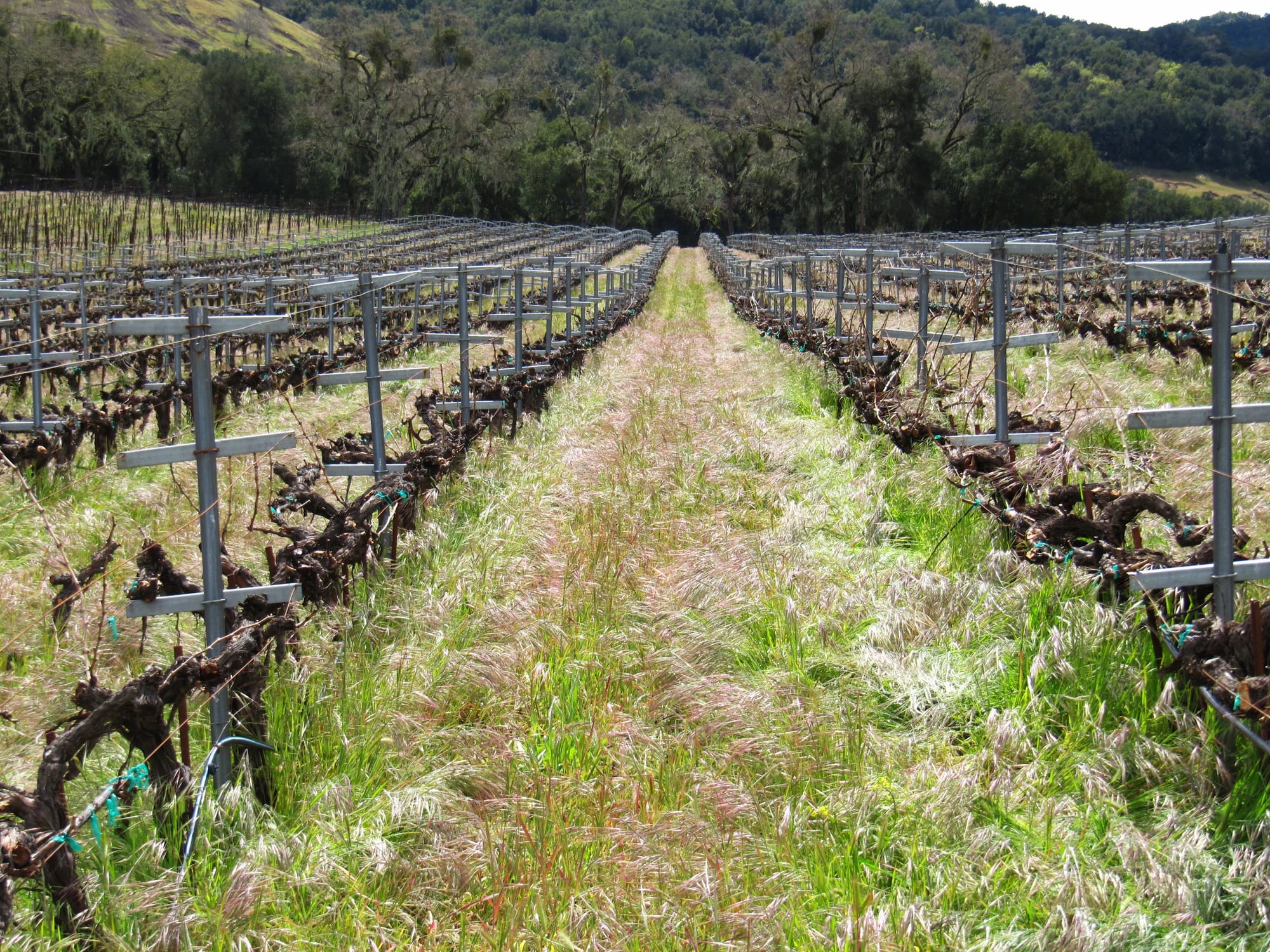
When it was originally planted, we brought the vines up into a quadrilateral cordon. This means that we separated the trunks into two branches perpendicular to the trellis, then separated each branch into two cordons parallel with the trellis. The advantage of that trellis system is that it produces a lot of new wood each year. Because at that stage what we really needed out of these vines was more wood that we could graft and plant (or sell as grafted vines) this system made sense. You can see that system in this photo from 2012:
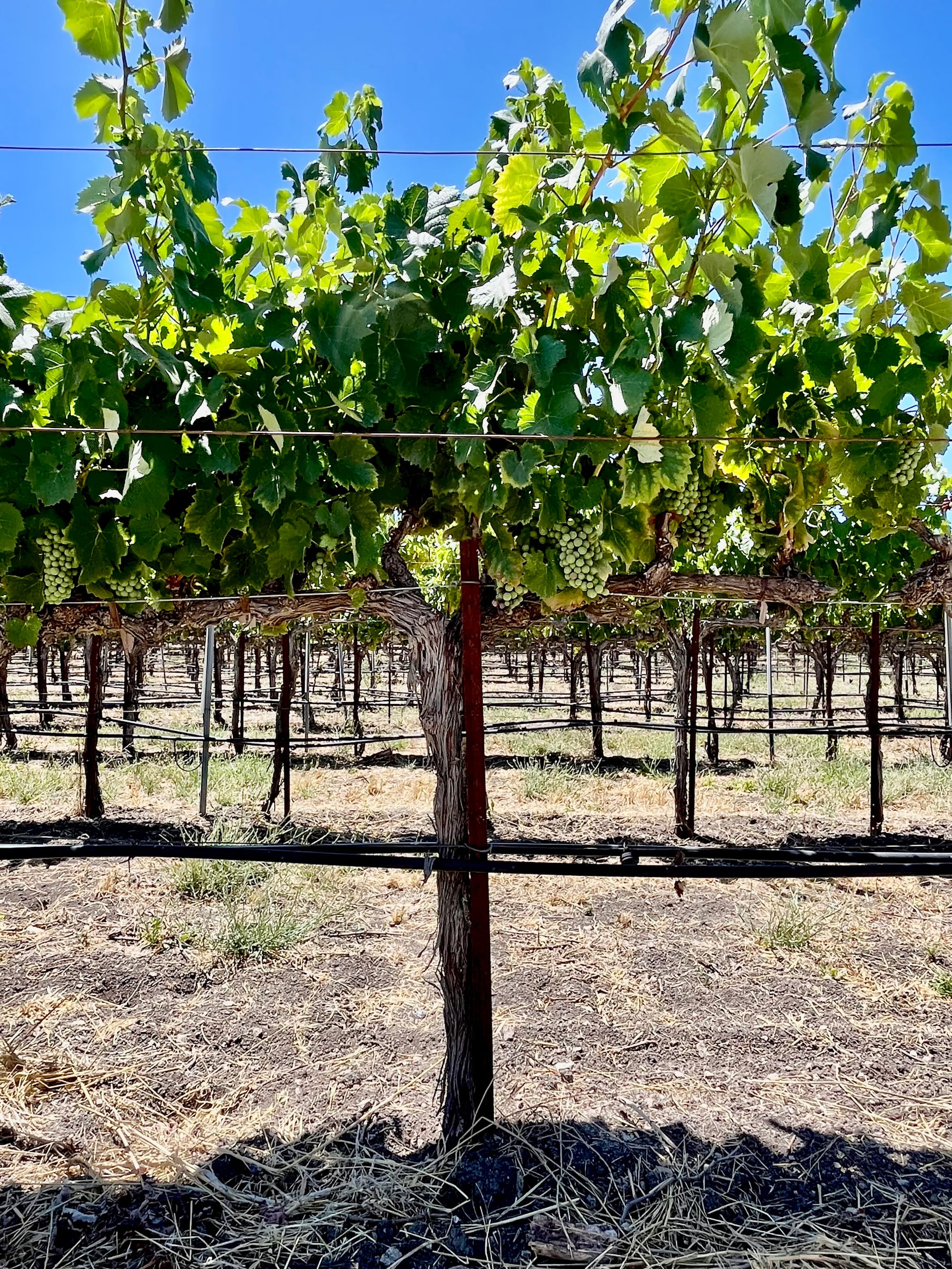
Unfortunately, while that system does produce a lot of wood, it also produces a lot of fruit, to the point that the fruit that was produced didn't have the character we wanted. We could (and did) go through in the summer and drop extra clusters, but that was a lot of extra work. So, about a decade ago, we decided to retrain the vines in this block. Because they were own-rooted, we could cut the trunks back to the root, and then train the strongest cane the next year into a new trunk. We split that into a standard double-cordon the following year, and the vines went right on working. Below left, you can see one of those vines today, and below-right you can see a close-up of the cut trunk, partially obscured by the new one that's grown over the last decade:
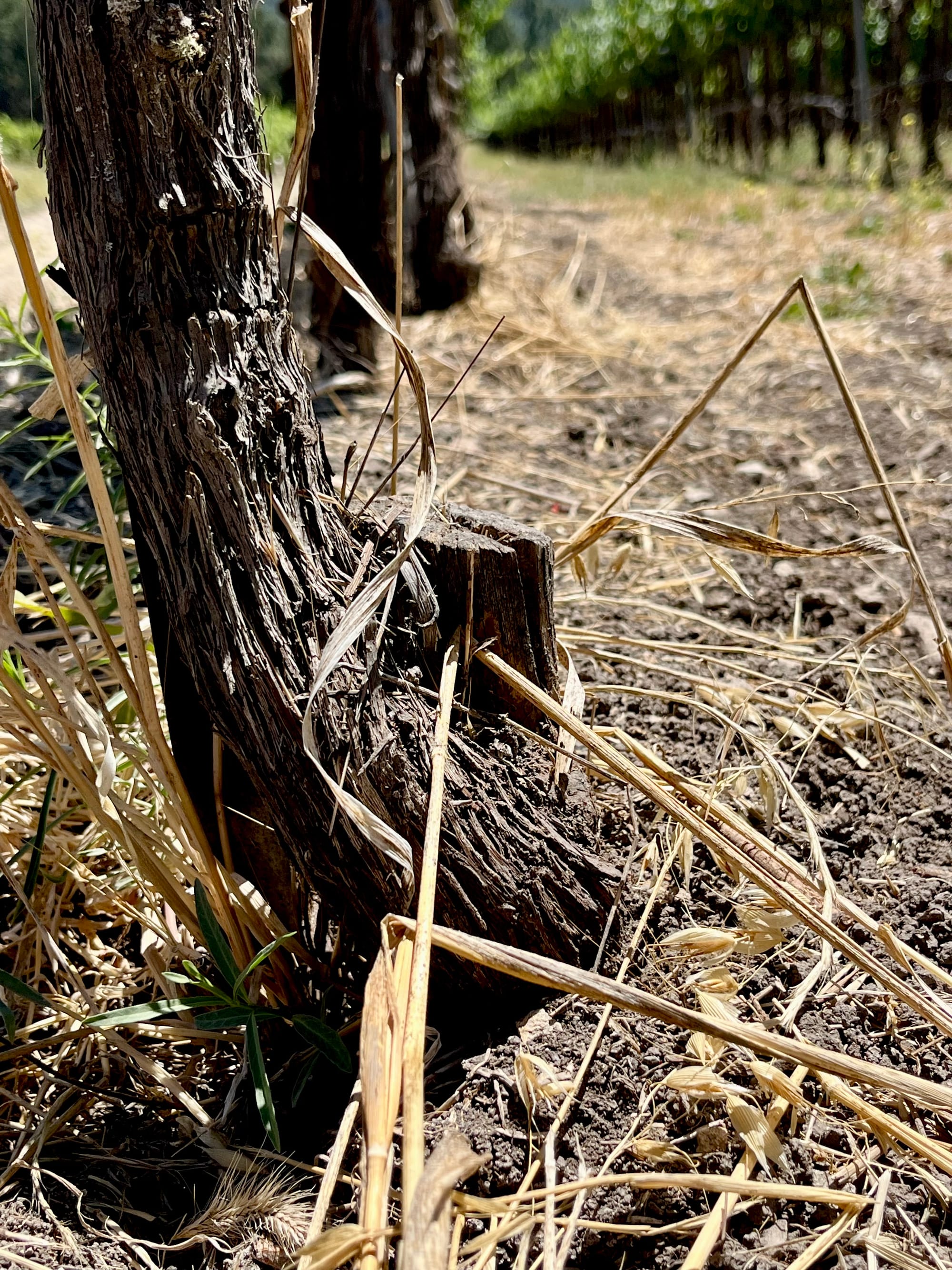
Beyond simply restoring the proper structure to the block, we didn't think much about the implications of our decision to retrain these blocks. But a few years ago, as we started to think about the declining health of some of our other older Mourvedre blocks (you may have seen our post on social media last week about pulling out our Mourvedre Mountain block) we realized that we didn't see the same signs of decline in the Mourvedre in this (even older) nursery block.
It's not that this block has had an easier life. In fact, in its early years, we were pushing it really hard to produce more wood, while also letting it carry more crop than it probably should have. It's not more widely spaced than our other blocks. It's not in deeper soils. It should really be showing more signs of age. But it's not. So what gives? One important difference is that the vines were planted on their own roots, ungrafted. While grafting isn't a big problem for some varieties, we know that Mourvedre became rare in France in the late 19th Century in part because it did not take well to grafting, at least not to the rootstocks that were available then.
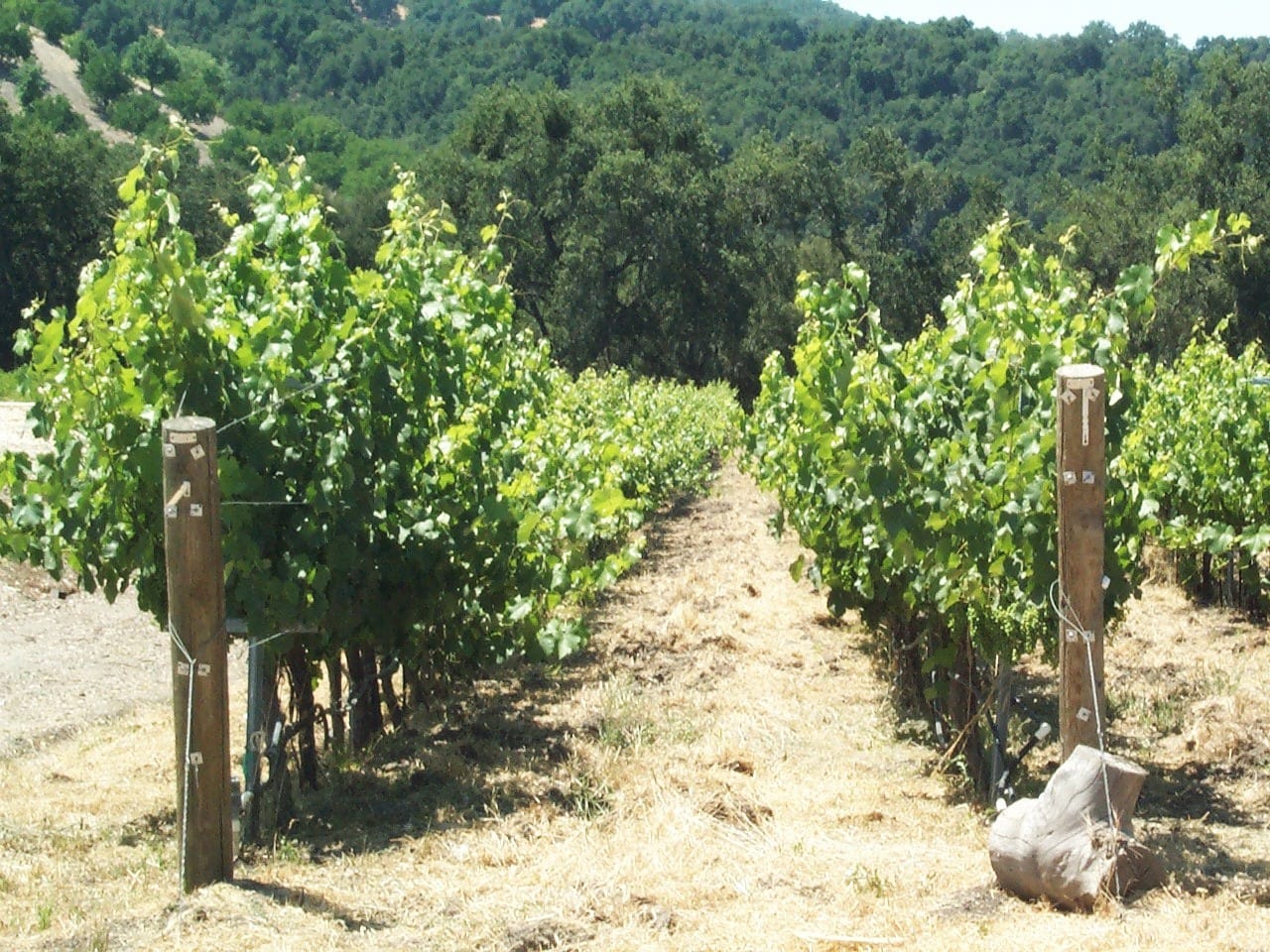
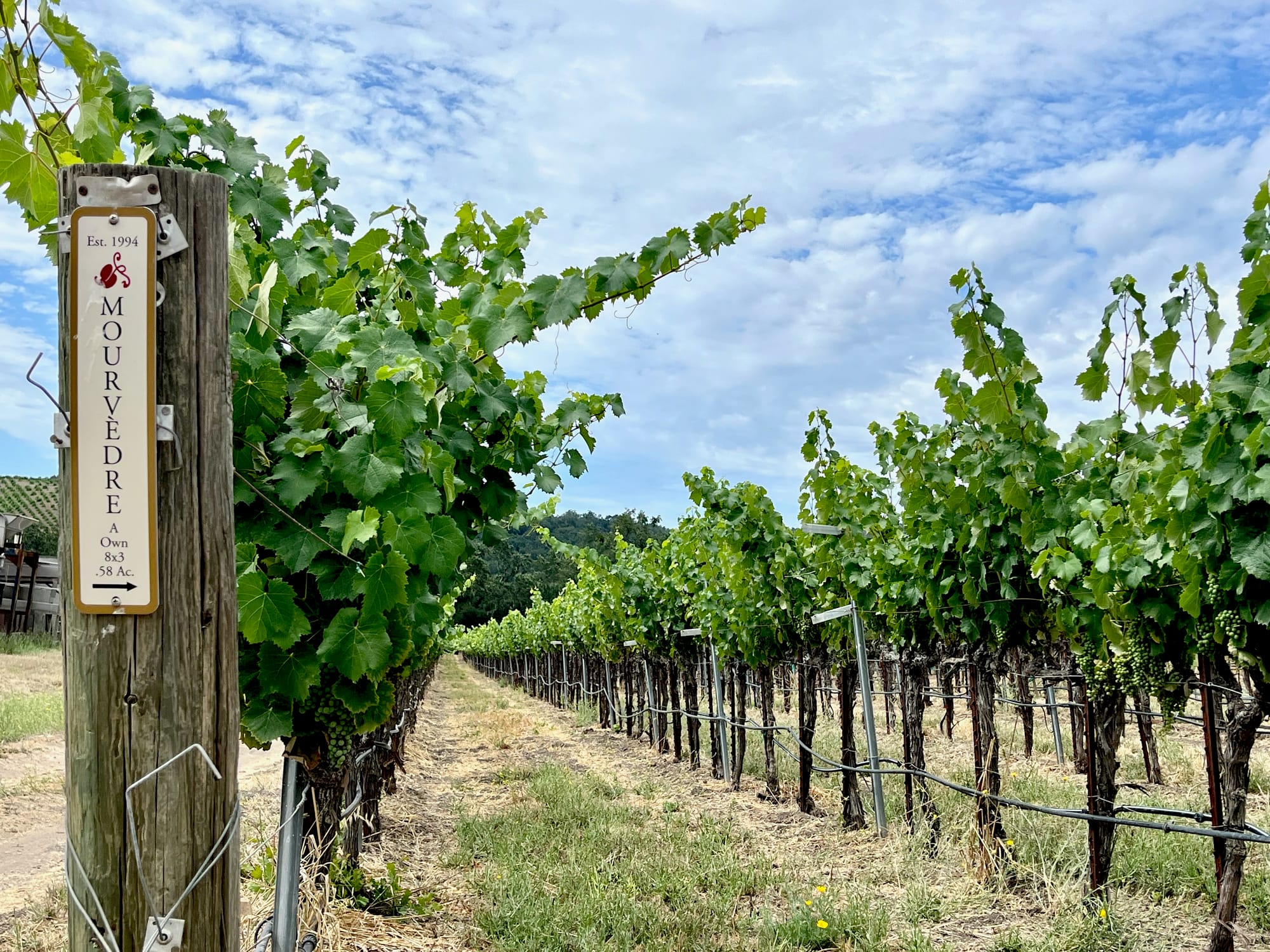
Grafting of grapevines is such standard practice these days that it's taken us a while to question something so fundamental. The reason you graft grapevines is so that they aren't vulnerable to the root parasite phylloxera, which has spread over the last 150 years from its home in the Mississippi River Valley to most of the world's wine regions. For all that, it has not yet made its way to Tablas Creek. It was that fact that helped us feel comfortable planting this nursery block on its own roots in the first place. We assumed that phylloxera would arrive as more vineyards were planted in our area, but it hasn't happened yet. While we wouldn't want to leave ourselves open to a catastrophe by planting our whole vineyard own-rooted, is it worth considering whether we should be doing so with Mourvedre? It seems possible. Stay tuned. Here are views from the end of that Mourvedre section from 2001:
And from today:
That block, though it has never produced enough fruit to make a major impact on our wines, has had a big impact on the American Rhone community. It was these rows that allowed us to start selling vine cuttings to other growers, which would end up helping seed the modern Rhone Rangers movement. From small beginnings in 1996, we were eventually selling hundreds of thousands of vines each year to other growers and wineries around the west coast, some 600 vineyards in all. In our own lineup, it has allowed us to add our Patelin de Tablas and Lignée de Tablas tiers to our mix. And still, when I go to a Rhone Rangers tasting and walk around the tasting hall, something like 70% of the wineries there are doing what they're doing at least in part with cuttings that came from Tablas Creek.
Is it possible that this block has one more lesson to teach us? We hope so. Meanwhile, we'll enjoy the fruit from these 32-year-old vines, and celebrate that they look like they can go another few decades.