
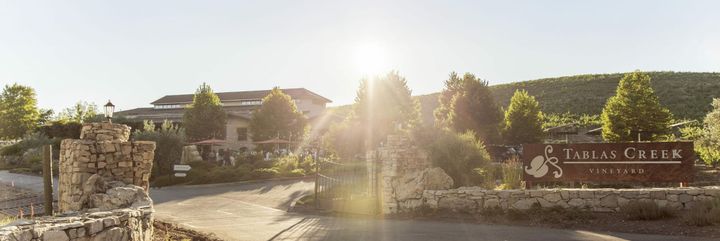
Tasting Twenty-Four Vintages of Esprit de Beaucastel Blanc and Esprit de Tablas Blanc: Power, Poise, and Petrichor
Each summer, we conduct a comprehensive vertical tasting of a single wine. We open every vintage we've ever made and use that to assess how the wine ages and if we want to adjust our approach in any way. This year, we turn our attention to our Esprit Blanc.
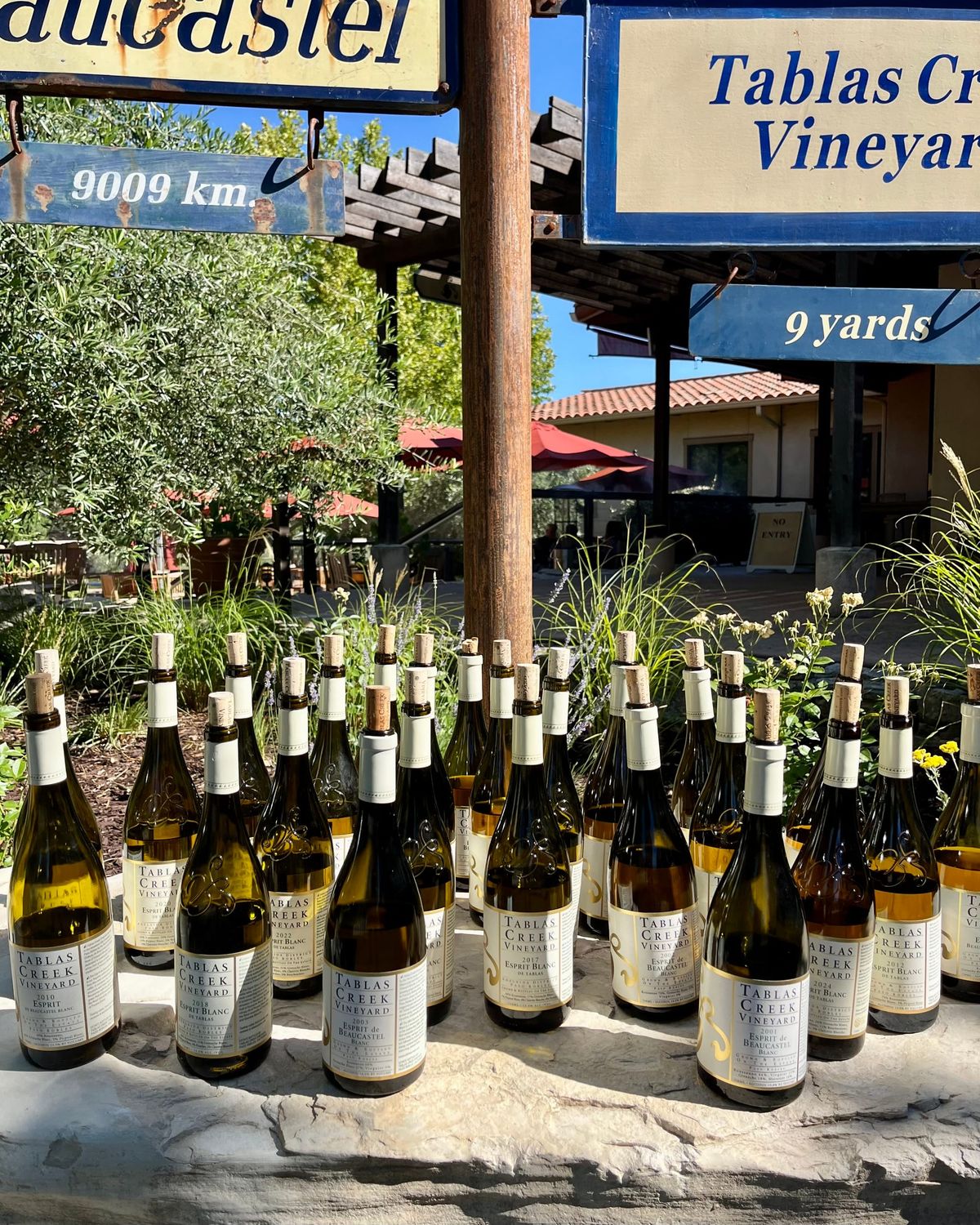
There are two ways that we try to work systematically through the collection of wines in our library. At the beginning of each year, we taste every wine we made ten years earlier. These horizontal retrospectives give us an in-depth look at a particular year, and a check-in with how our full range of wines is doing with a decade in bottle. I wrote up the results from our 2016 retrospective tasting back in January. And then each summer we conduct a comprehensive vertical tasting of a single wine, where we open every vintage we've ever made and use that to assess how the wine ages and if we want to adjust our approach in any way. This also serves as a pre-tasting for the public tasting (which this year will be July 12th) at which we share the highlights.
It was a surprise to me that it had been a full six years since we did a comprehensive tasting of our flagship white wine. We do open older vintages of our Esprit de Tablas Blanc (formerly Esprit de Beaucastel Blanc) with some regularity, most recently in December when I needed to choose an older Esprit Blanc vintage to show at Vinous Icons. Even so, those piecemeal investigations are different than what you get if you look at all the vintages in one sitting. Our last time doing so was in 2020, and we weren't able to share the results with the public because of the pandemic. Before that, you have to go all the way back to 2011 to find our previous comprehensive tasting of our flagship white.
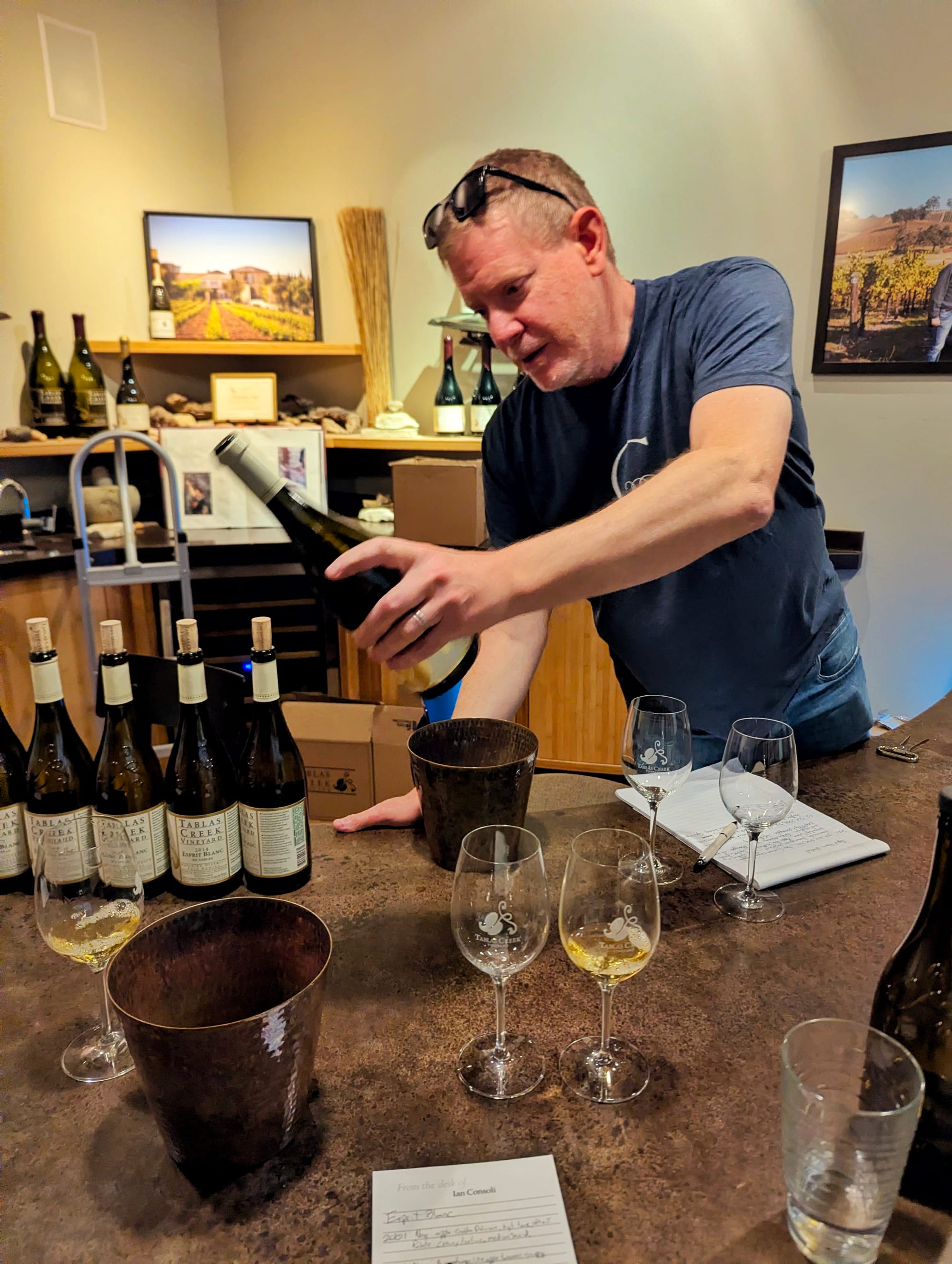
So, it was exciting to open 24 vintages of Esprit Blanc earlier this week. We started with our first-ever 2001, and finished with the newly-bottled 2024. Joining me for some or all of this tasting were Director of Winemaking Chelsea Franchi, Vineyard Operations Manager (and chief architect of our white wine program) Austin Collins, Director of Biodynamics Gustavo Prieto, Director of Marketing Ian Consoli, and Direct Sales Manager Ryan McGuire. Ian got an action photo of me pouring:
My notes on the wines are below, as well as each year's blend. I've linked each wine to its page on our website if you want detailed technical information, professional reviews, or our tasting notes from when the wines were first released. I've tried to be more descriptive of personality than flavor in these notes, but as you'll see the character has been consistent enough that I was reaching by the end for different ways of saying creme brulée, baked apple, citrus blossom, and honey.
- 2001 Esprit de Beaucastel Blanc (44% Roussanne, 22% Viognier, 18% Grenache Blanc, 16% Marsanne): This wine just keeps sailing on, more than a decade after I'd written it off as likely over the hill. The nose was mature but still fresh, with notes of warm caramel apple, chamomile, lemongrass, and hazelnut. In the mouth, still gorgeous with flavors of Golden Delicious apple, lychee, butterscotch, marzipan, and white pepper. A little pithy bite and a little minty lift helped keep the lingering finish of crystallized pineapple fresh. Just an amazing showing of a wine from seven-year-old (at most) vines twenty-five years later.
- 2002 Esprit de Beaucastel Blanc (70% Roussanne, 25% Grenache Blanc, 5% Viognier): The deeper golden color and the nose of baked apple, brown butter, and ginger candy shows more age and ripeness than the 2001. The mouth is fresher than the nose, like cream soda and pineapple upside-down cake, complete with fruit, molasses, and baking spices. A great showcase for the density and power of Roussanne, but definitely on the unctuous side.
- 2003 Esprit de Beaucastel Blanc (68% Roussanne, 27% Grenache Blanc, 5% Viognier): Similarly golden as the 2002. On the nose, though, quite different and more lifted, with notes of melon rind, passion fruit, kiwi, and fresh olive leaves. The palate is richer but quite saline, with notes of salt water taffy, dried apricot, peach pit, and toasted hazelnuts. Viscous and weighty without the heaviness of the 2002, and leaving a lingering impression of salted butter. Ian called it "a lineman doing ballet".
- 2004 Esprit de Beaucastel Blanc (65% Roussanne, 30% Grenache Blanc, 5% Picpoul Blanc): The first year that we included Picpoul in the blend, and the nose showed more tropicality and higher-toned spice: watermelon rind, Asian pear, gingersnap, and pineapple thyme. The mouth shows both salty and sweet aspects, like an apple turnover fresh out of the oven. A preserved lemon note came out on the finish, with additional notes of fresh peach juice, baked pear, cardamom, and brioche. I like what the Picpoul Blanc brought to the party.
- 2005 Esprit de Beaucastel Blanc (70% Roussanne, 25% Grenache Blanc, 5% Picpoul Blanc): Notably fresher on the nose compared to the previous three vintages: fresh-pressed apple cider, lemongrass, mandarin peel, and new honey. The mouth is similar, with tangy key lime and salted shortbread flavors and a lingering citrus blossom note. The finish shows lovely lift and a salt/acid/sweet spice trio that we loved.
- 2006 Esprit de Beaucastel Blanc (65% Roussanne, 30% Grenache Blanc, 5% Picpoul Blanc): A more youthful, paler gold color than the previous five wines. Tangy and lively on the nose, with jack fruit, orange peel, gardenia, and baking spices on the nose, along with a warm, rich note that Austin described as "suede leather". The mouth is gentle but lovely, with flavors of creme brulee, preserved lemon, salted apricot, and lanolin. The finish is long and rich, but with a lovely fresh pineapple note. For the second tasting in a row, separated by six years, a clear favorite among the older vintages.
- 2007 Esprit de Beaucastel Blanc (68% Roussanne, 22% Grenache Blanc, 10% Picpoul Blanc): A spicy nose of acacia and dried mango, lychee and vanilla extract, manzanita and prosciutto. The mouth is rich and salty but firmly dry, with flavors of peach cobbler, lemon verbena, honeydew rind and sarsaparilla. Sappy and long on the finish, with a chalky mineral note and a dried fruit membrillo-like density. Impressive and powerful.
- 2008 Esprit de Beaucastel Blanc (65% Roussanne, 30% Grenache Banc, 5% Picpoul Blanc): A fun interplay of rich and fresh, with older notes of bruised apple and torched sugar, like the top of a creme brulee, contrasting with a minty lemongrass greener note. On the palate, rich but also tangy, like pineapple core and fresh mango, toasted marshmallow and marmalade, complete with the pithy bite. The finish turns autumnal, like dried oak leaves and honeycomb.
- 2009 Esprit de Beaucastel Blanc (62% Roussanne, 26% Grenache Blanc, 12% Picpoul Blanc): A deeper gold than the previous few wines, back to something like the 2002-04 era. The nose is like the 2007, rich but spicy, like pine forest, salted caramel, baked pear, and petrichor. The mouth is dense yet with bright acids, like grilled pineapple crossed with apple turnover, plus a meaty jamon serrano richness. The finish shows dried apricot and graham cracker notes, with an aperol-like sweet/bitter combination.
- 2010 Esprit de Beaucastel Blanc (60% Roussanne, 35% Grenache Blanc, 5% Picpoul Blanc): An immediately appealing nose of beeswax, lanolin, fresh pineapple, lemongrass, and pink grapefruit pith. The mouth is elegant and fresh with nectarine and grilled grapefruit notes, salty, clean, and long with a finish showing fresh green herbs. A lovely showing from our coolest-ever year, and a nice precursor to the stylistic direction we've moved the Esprit Blanc toward more recently.
- 2011 Esprit de Tablas Blanc (64% Roussanne, 26% Grenache Blanc, 10% Picpoul Blanc): From a similarly cool vintage as 2010, but from a frost year too that further scrambled up our harvest sequence. The nose is unlike any other in the lineup, high-toned and alpine with notes of pine resin and crushed rock. The palate was a balance of salted melon rind and pineapple core, white almond and key lime. Anyone who has had a Bergeron from the Savoie (a region in the Alps, east of the Rhone, where Roussanne takes on a more mineral, less honeyed aspect) will find this in that vein.
- 2012 Esprit de Tablas Blanc (75% Roussanne, 20% Grenache Blanc, 5% Picpoul Blanc): A nose of apple crisp, complete with baked apples and spicy, nutmeg-laced topping, along with lanolin, lychee, sweet tea, and a little eucalyptus mintiness. The mouth is rich yet light on its feet, like an apple pie made with Golden Delicious apples, complete with pie crust, fruit, and spices. Seemingly right at its mature peak.
- 2013 Esprit de Tablas Blanc (71% Roussanne, 21% Grenache Blanc, 8% Picpoul Blanc): A nose of green herbs and marzipan, maraschino cherry and root beer. The mouth is salty and creamy, with baked apple and sarsaparilla notes and something both bright and rich like lemon bars. Not dramatic but very pretty, and in a nice place.
- 2014 Esprit de Tablas Blanc (72% Roussanne, 23% Grenache Blanc, 5% Picpoul Blanc): This was the first wine that really smelled young on the nose, with notes of new honey and sarsaparilla, Asian pear and sweet baking spices, and a little sweet oak. The mouth is both rich and impressive, with salted baked apple and cumquat notes, a salty-sweet prosciutto and melon element, and a little tannic bite on the finish. I believe that this was the year that we decided to get a little more oak into the Esprit Blanc, after several years where we went almost entirely for neutral wood and left all the new barrels for the varietal Roussanne. Twelve years later, I'm happy with the outcome.
- 2015 Esprit de Tablas Blanc (55% Roussanne, 28% Grenache Blanc, 17% Picpoul Blanc): Very Roussanne on the nose despite our lowest Roussanne percentage since the 2001: honeycomb and lanolin, with dolce de leche richness and a little sweet minty lift. On the palate, the Picpoul shows through, with vibrancy and a little alpine juniper character emphasizing freshness over the more traditional flavors of honey and pear. Intense flavors but no sense of weight. A bit of an outlier stylistically from everything that had come before, but also gave some signals of the direction we've taken the Esprit Blanc the past few years.
- 2016 Esprit de Tablas Blanc (75% Roussanne, 18% Grenache Blanc, 7% Picpoul Blanc): Dense with concentrated Roussanne character on the nose but also brighter elements like tangy nectarine and yellow plum, briny sea spray, and toasted almonds. On the palate, rich but bright, with lemon bar and graham cracker notes, salty, textured, pithy, and serious. A more modern version of 2007 or 2009.
- 2017 Esprit de Tablas Blanc (68% Roussanne, 17% Grenache Blanc, 7% Picpoul Blanc, 4% Clairette Blanche, 4% Picardan). Our first vintage with the two new grapes included. A really pretty nose, showing more minerality than most of the older wines: passion fruit, peach pit, new hay, petrichor, and sea spray. The mouth is lively with pineapple and kiwi flavors over vanilla custard and a lingering passion fruit note on the finish. On the livelier side of the bright/rich spectrum, and a consensus favorite of the vintages roughly a decade old.
- 2018 Esprit de Tablas Blanc (66% Roussanne, 21% Grenache Blanc, 8% Picpoul Blanc, 3% Picardan, 2% Clairette Blanche). Still incredibly youthful on the nose, with tropicality that leaps out of the glass: jack fruit and feijoa, fresh lychee, and a mineral note that suggested both petrichor and sea spray. On the palate, salty caramel, rich and dense, then enlivened with preserved lemon and a crushed rock mineral note, leaving a finish with a little pithy bite and notes of sweet spices and sweet green herbs. Maybe not totally integrated between nose and palate yet, but in a great place for another decade or more of fascinating development.
- 2019 Esprit de Tablas Blanc (63% Roussanne, 20% Grenache Blanc, 14% Picpoul Blanc, 3% Picardan). A nose that is luscious but laser-focused, with notes of preserved lemon, crushed rock, honeysuckle, and almond brittle. The mouth shows notes of pineapple and Valencia orange, lacquered cedar and lemongrass. Cool, crisp, powerful, and focused.
- 2020 Esprit de Tablas Blanc (46% Roussanne, 28% Grenache Blanc, 14% Picpoul Blanc, 5% Bourboulenc, 4% Clairette Blanche, 3% Picardan). The first vintage with all six of the Chateauneuf-du-Pape grapes. So inviting, bright and tropical on the nose, showing passion fruit and guava, jasmine and mint, and something both rich and green like rosemary shortbread. The mouth is similar, super appealing, with fresh pineapple and passion fruit notes over new honey and a yeasty, brioche-like element. From a difficult year in which we dealt with record heat, drought, smoke, and a pandemic, but we couldn't have been happier with how this wine turned out.
- 2021 Esprit de Tablas Blanc (70% Roussanne, 17% Picpoul Blanc, 10% Grenache Blanc, 2% Bourboulenc, 1% Clairette Blanche). After the 2020 the Roussanne-dominance of the 2021 really stood out, showing the traditional notes of honeycomb, lanolin, cedar, citrus blossom, and lemongrass. The palate is rich, with great acids, showing green plum, salted caramel, and preserved lemon notes. Rich and impressive but felt a little one-note compared to the vintages around it that had less Roussanne. Seemingly on the same path as years like 2009 and 2016.
- 2022 Esprit de Tablas Blanc (33% Roussanne, 32% Grenache Blanc, 14% Picpoul Blanc, 8% Clairette Blanche, 8% Picardan, 5% Bourboulenc). From a year when our Roussanne crop was decimated by frost and we used every drop of Roussanne in the Esprit Blanc, made less, and still had our lowest Roussanne percentage ever. A pretty, gentle nose of white flowers, sea spray, crushed rock, green apple, and white gummi bear. The mouth is so bright compared to the 2021, with lots of pineapple and limestone minerality and a citrus element like someone pulled the essence from a lime tree, from fruit to pith to flowers to leaves. An outlier, less rich and textured than any other wine in the lineup, but a lovely and fascinating wine in its own right.
- 2023 Esprit de Tablas Blanc (48% Roussanne, 22% Grenache Blanc, 13% Picpoul Blanc, 10% Bourboulenc, 5% Picardan, 2% Clairette Blanche). Classic and lovely on the nose, with feijoa and preserved lemon, white tea and cedar notes. On the palate, vibrant but rich too, with flavors of lemon meringue, white peach, and sweet green herbs. Salty and long and luscious, showing the character of a vintage with more Roussanne but still the brightness of all the other grapes. A showing every bit in keeping with our belief that 2023 will go down as one of our greatest-ever vintages.
- 2024 Esprit de Tablas Blanc (40% Roussanne, 26% Grenache Blanc, 17% Picpoul Blanc, 11% Bourboulenc, 3% Picardan, 3% Clairette Blanche). Bottled this past December and only released as of yet to club members. High-toned floral tropicality is at the fore here, showing jasmine, white peach, sweetgrass, fresh pear, and lemon verbena notes. The mouth is vibrant with sweet stone fruit and key lime pie notes, including meringue, citrus, and graham cracker crust elements. Long, bright, and lively on the finish with a lingering spicy-sweet note like crystallized ginger. A worthy follow-up to the 2023.
A few concluding thoughts:
- The overall quality of the wines was exceptionally high. I asked everyone around the table to pick five favorites, and the wines that got multiple votes were 2006 (2), 2010 (2), 2017 (4), 2020 (2), 2023 (3), and 2024 (2). But a whopping ten other wines got one favorite vote, which means that sixteen of the twenty-four vintages made someone's top five. And there were wonderful vintages that didn't get a "favorite" vote. I know, as a winery proprietor, I'm not supposed to have favorites, but when I'm asked to pick one of our wines to go up against the greatest wines in the world in its category, the Esprit Blanc is the wine I usually pick. Knowing I could pick just about any vintage and it would do us proud feels pretty great.
- We were happy with the direction we've taken in recent vintages. The last decade has seen us incorporate three new grapes (Picardan, Clairette Blanche, and Bourboulenc) and also move from a baseline that included something like 70% Roussanne to one where Roussanne usually lands around 45%. Doing so seems to have unlocked a tropical vibrancy that sits on top of the Roussanne richness, unlocking sea spray minerality and making wines that are serious and substantial but also fun and light on their feet. Win-win.
- Don't be afraid of a middle-aged "closed" phase. While many Roussanne-dominated wines from the Rhone Valley go into an oxidative phase around age six, can taste prematurely aged for five to ten additional years, and then somehow lighten back up and taste fresher than they did before, we didn't see that happening in this vertical tasting. There appeared to be a fairly linear progression with vintages 2018-2024 showing vibrant youth, those from 2010-2017 showing a lovely balance of youthful and mature elements, and the vintages from 2001-2009 showing deep, salted caramel and roasted nut maturity yet still showing life and lift. Sure, individual vintages were brighter or richer, but the vintages that sat outside the mainstream were largely consistent with what we found in our last vertical tasting in 2020. Overall the path the wines were on felt more predictable than I think we've noticed before.
- Don't forget the vintage chart. We update this chart several times a year based on the results of tastings like these as well as what we open in the normal course of life and feedback we get from customers and fans. It's there whenever you want it.
- We have a decent number of these older vintages available in half-bottle this month. I'd like to say that we planned this, but it wouldn't be true. Still, it's serendipitous that our featured wines for the month of June are our half-bottles of Esprit and Esprit Blanc. We don't have inventory of everything, but we do have Esprit Blanc from 2011, 2014, 2016, 2022, 2023, and 2024 if you'd like to snag some for your home cellar.
- If you're joining us on July 12th, you're in for a treat. This pre-tasting was in part to set the lineup for our public tasting of the highlights on July 12th. Chelsea and I will be sharing eight wines: the 2001, 2006, 2010, 2014, 2017, 2020, 2023, and 2024. This will take everyone through the different stages of life that their Esprit Blancs are likely to experience. I can't wait. We still have a few seats left, so if you're free to join us, we'd love to have you.