
Harvest 2026 begins: How our earliest-ever start also comes with longer-than-average hang time
Our August 7th beginning of our harvest was a week earlier than our earliest-ever previous start, way back in 1997. At the same time, there are still vineyard blocks just starting veraison. Buckle up. It's going to be a long ride.
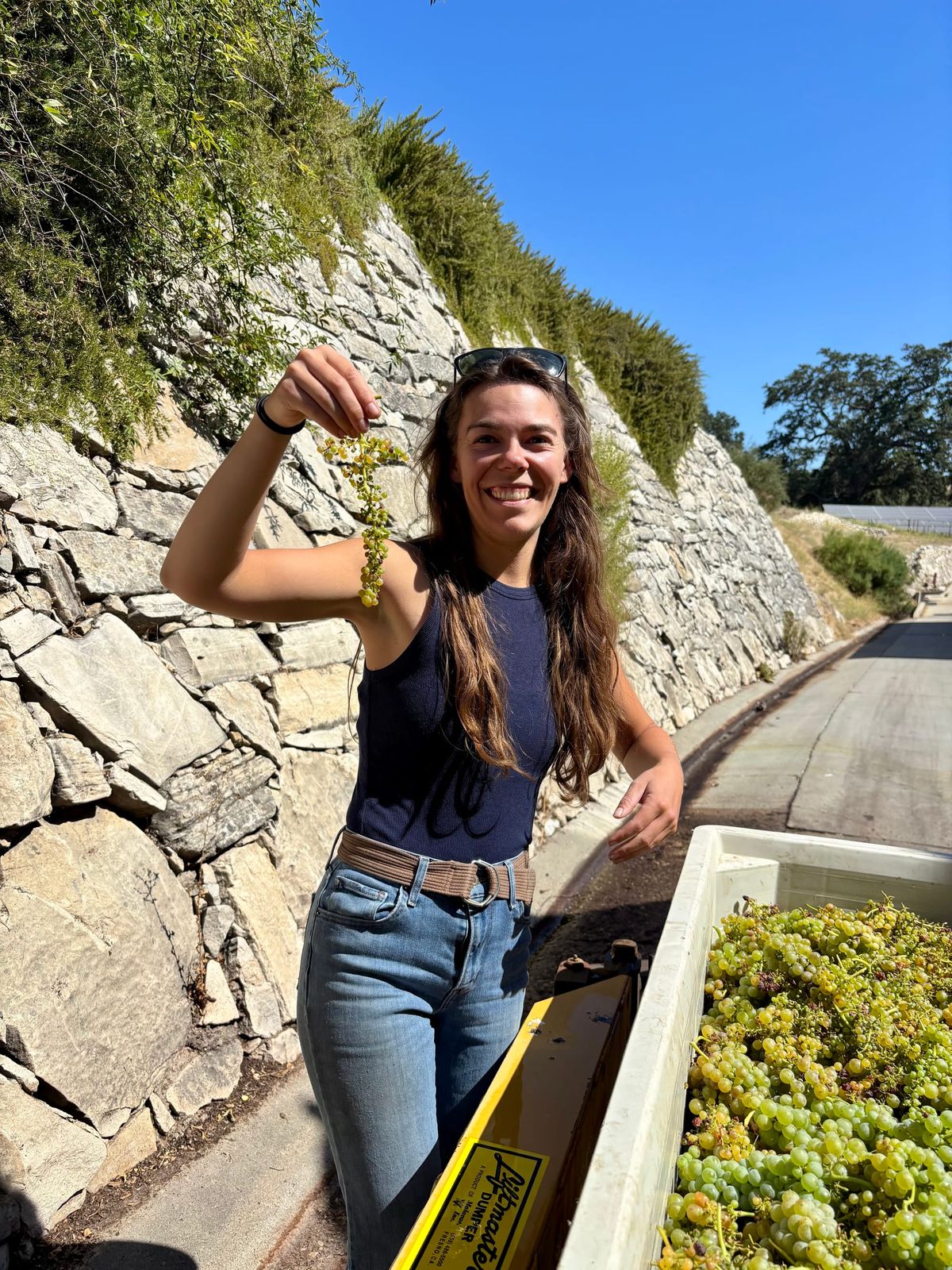
On Friday, August 7th, we welcomed three bins of Viognier into our cellar, marking the beginning of the 2026 harvest. These bins were a selective pick of the top of our oldest Viognier block at the north end of the property. The numbers were textbook: 21.8° Brix and 3.38 pH, with TA of 5.02.
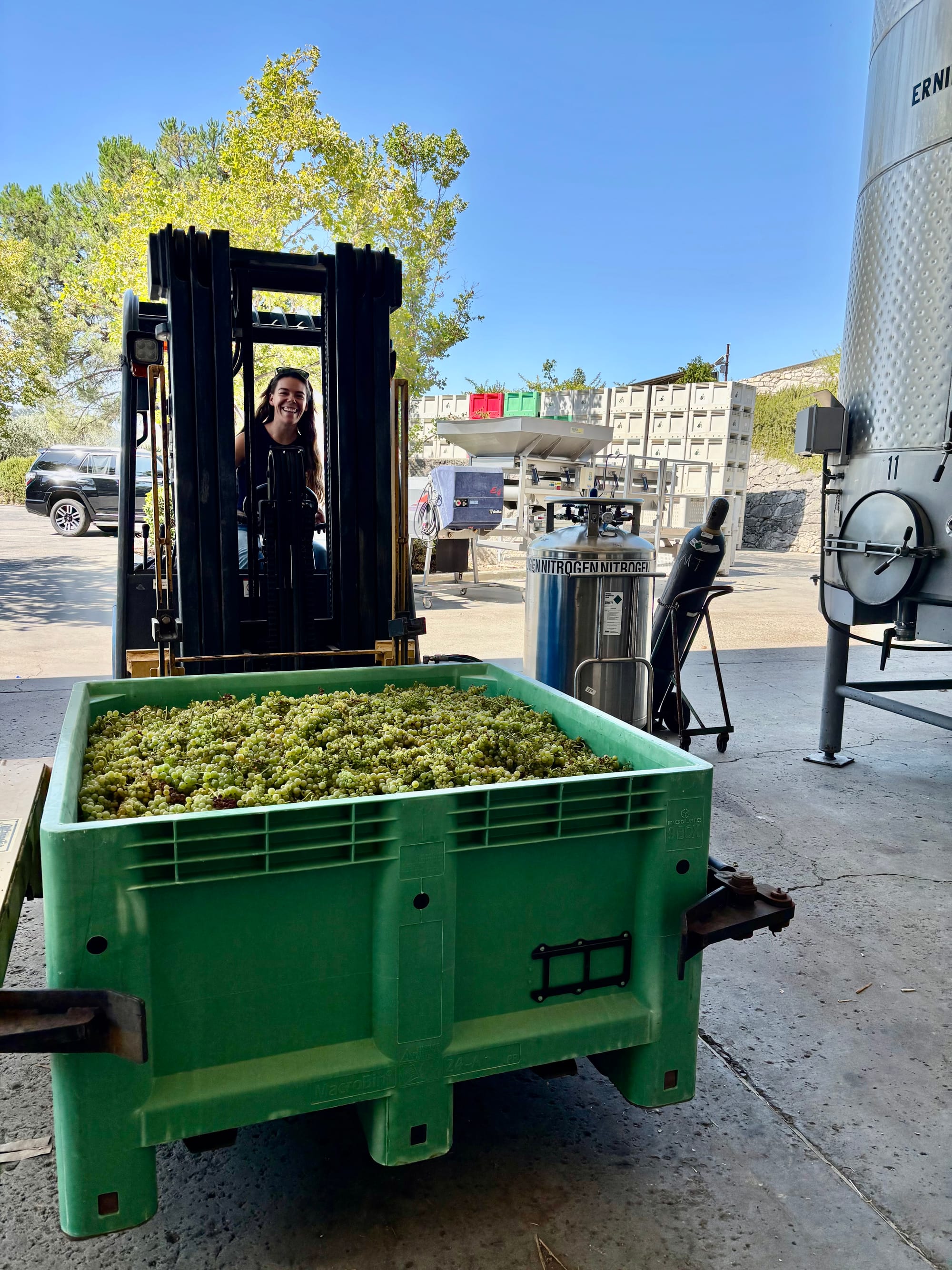
On Monday, we moved on to the Pinot Noir vineyard my dad planted outside our house (his house, then) in the cool-for-Paso Robles Templeton Gap. Those numbers were great too, and the berries small, dark, and flavorful. Then nothing happened for a few days. It's not unusual for harvest to start this way, with a few bursts of activity and then multiple days of waiting for the next thing to get ripe. And given that we just finished our last bottling of the summer on Thursday, August 6th, the cellar team was grateful for the chance to get things cleaned up and put away. It will be busy soon enough. So far, this is all pretty normal.
What's not normal? The fact that this is all happening in the first half of August. Our August 7th start to the estate harvest is the earliest we've ever seen, a full week earlier than 1997, when the lot of Syrah that we harvested on August 14th was the first fruit ever to arrive in our newly-built winery. The earliest beginning to harvest this century was three days later than that, on August 17th, 2022.
What pushed us to such an early beginning to harvest is the same thing that has made us early for every viticultural marker: our incredibly warm March. Budbreak was already two weeks early thanks to a mostly dry and fairly warm February. By the end of March, we were more than a month ahead of normal heat accumulation, already seeing foot-long shoots and the first flower clusters at a time when we can still be waiting for buds to swell. Temperatures returned to normal in April, and we saw flowering roughly three weeks early. Those moderate temperatures lasted through the end of June, at which point I was estimating that we'd reverted to maybe two weeks ahead of normal. Since the beginning of July it has warmed back up, with an average high temperature of 94.8ºF and twelve days that topped 100ºF. But while very hot temperatures can actually slow down ripening as grapevines close their pores to protect themselves from dehydration, we were spared that challenge as none of the twelve over-100ºF days reached 105ºF. The heat accelerated veraison to two or three weeks ahead of normal, and the continued warmth since then gets us to where we are now, beginning harvest roughly four weeks ahead of our historical average (September 2nd) and three weeks ahead of the average we've seen since 2013 (August 27th).
You might think that an early harvest means shorter hang time for the fruit and therefore less complexity. After all, one of the reasons we love cool years like 2023 is that when the grapes spend a longer-than-usual time on the vines, they tend to pick up deeper colors and more complex flavors. But if you've been paying attention to the sequencing this year, the whole year has been early. An early harvest doesn't necessarily mean shorter hang time if the entire growing season has shifted earlier. We're no earlier now, relative to the season, than we were at flowering. And the fact that we're seeing a lot of unevenness in the vineyard suggests that we'll have a longer spread between this start to harvest and our conclusion than our historical average. That bodes well for quality. And the fruit conditions that we're seeing so far bear this out: the fruit is intensely colored and perfumed, with beautiful deep flavors and acids exactly where we like to see them.
I do expect us to have a long, drawn-out harvest this year. There is massive variation between the tops of the hills and the bottoms. As we were picking the Viognier on Friday, long-time Vineyard Manager David Maduena reported that there were vines at the bottom of the hill that hadn't gone through veraison yet. Given that it's usually six weeks or so between veraison and harvest, we've got a way to go even with this early grape. As a further example, check out these two photos below, taken at the border between a Counoise block (left) and a Syrah block (right). The Syrah is mostly through veraison, but there are still definitely some green berries left. The Counoise remains almost entirely green:
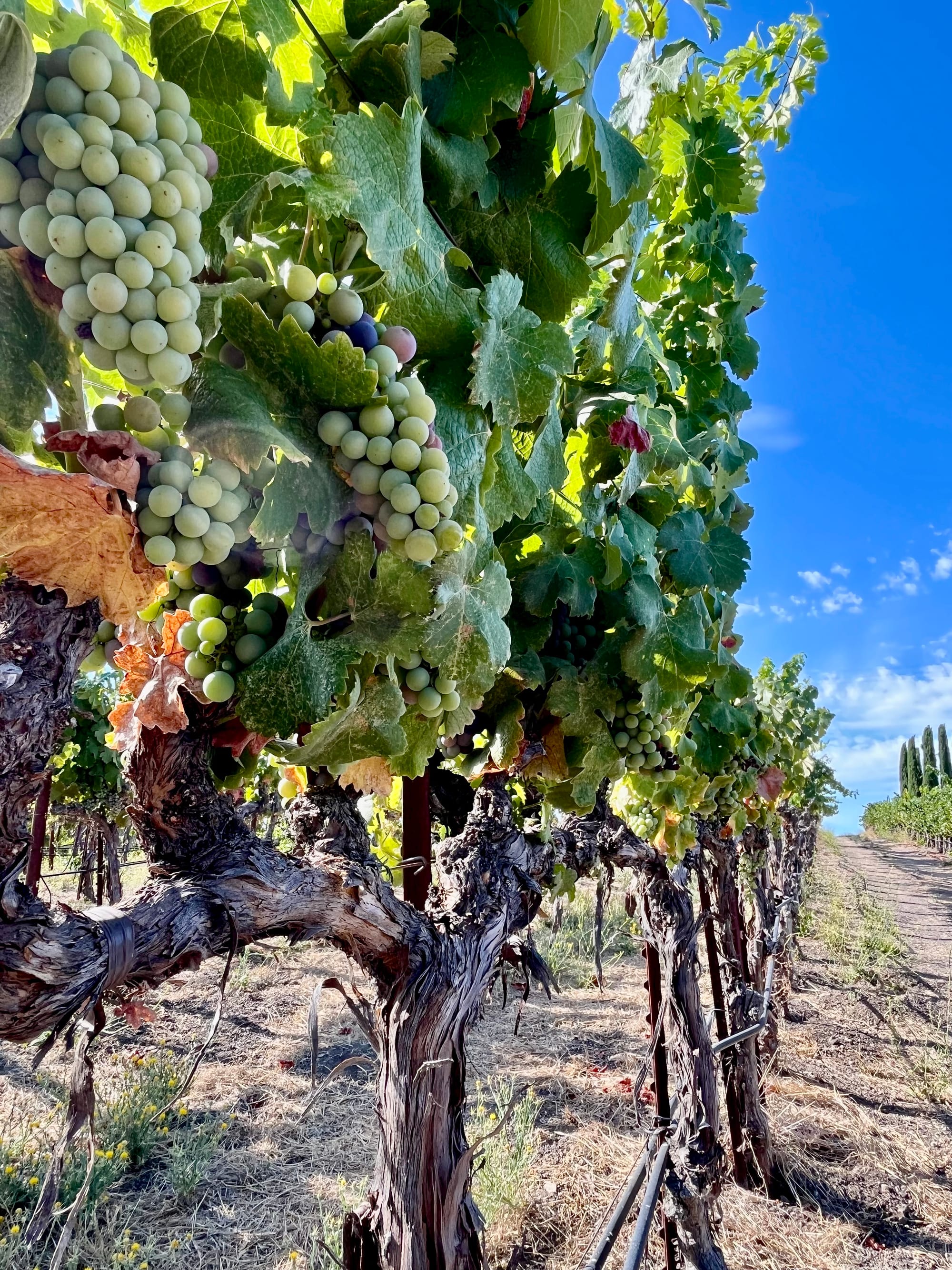
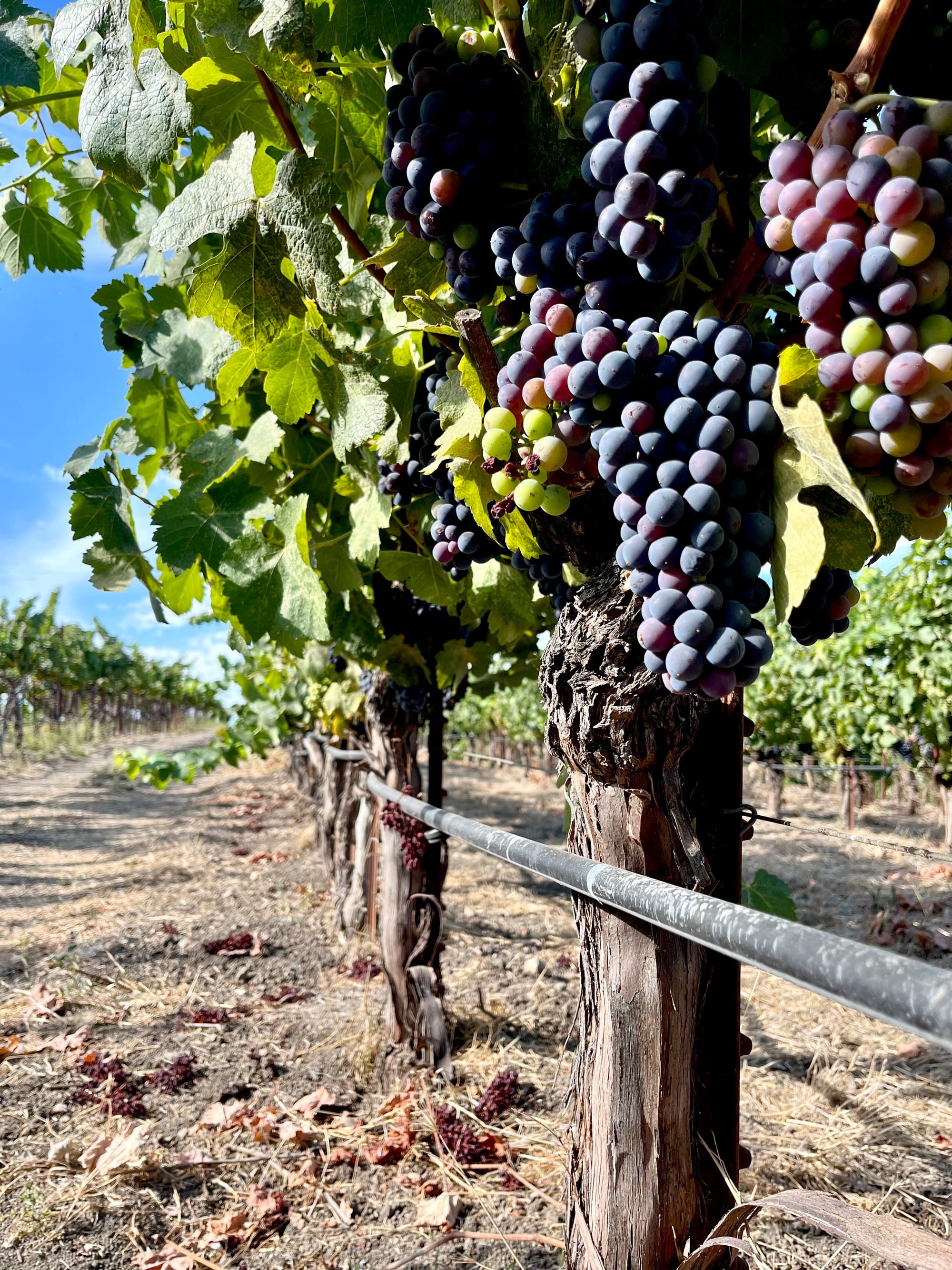
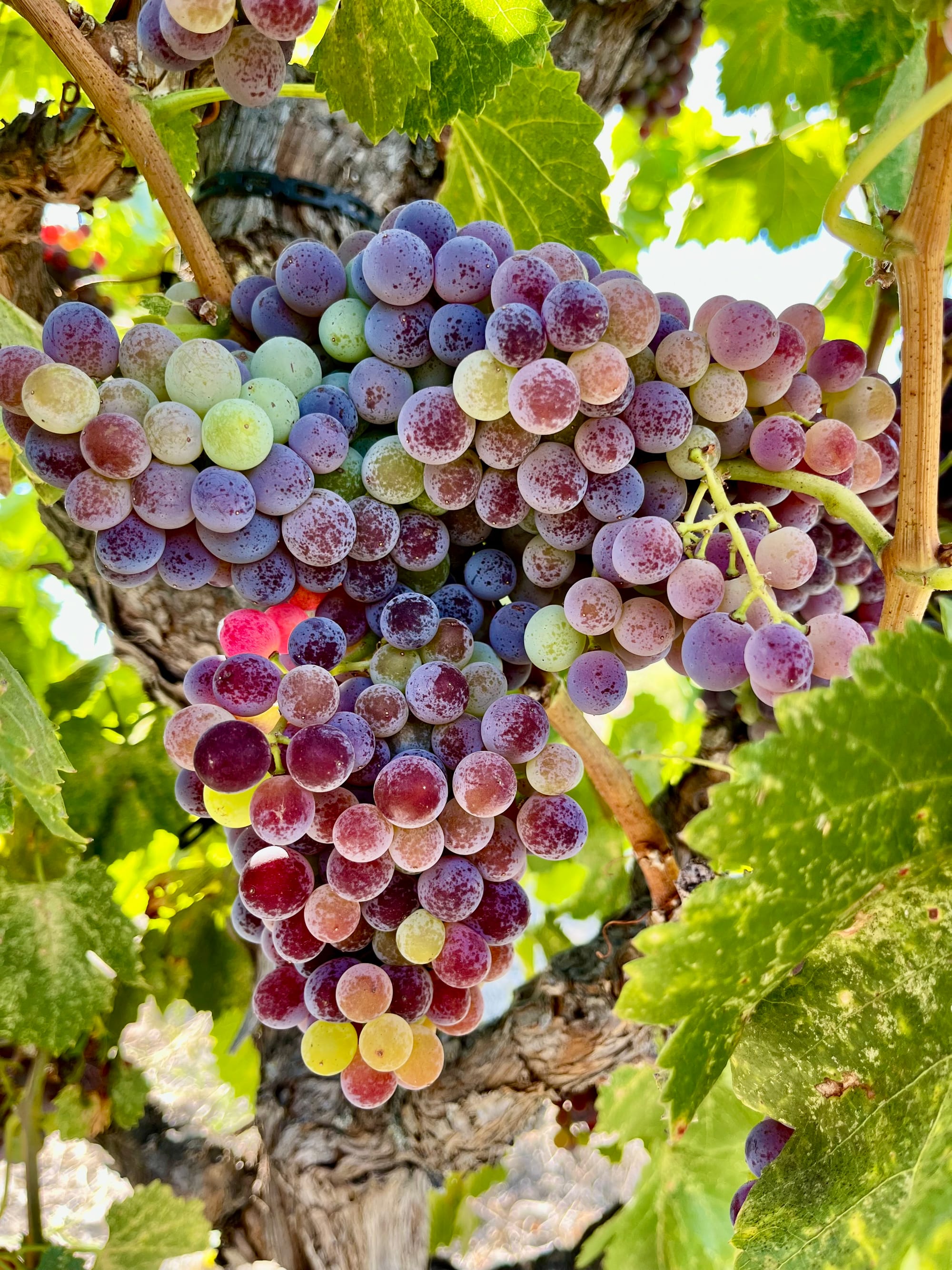
While it's not unusual to still be in the middle of veraison in our later grapes as we start picking the early ones, I can't remember so much of the vineyard being green as we're also picking. Even mid-season grapes like Grenache at the tops of our hills are still only just past halfway through veraison. It makes for beautiful photos, but a little cognitive dissonance:
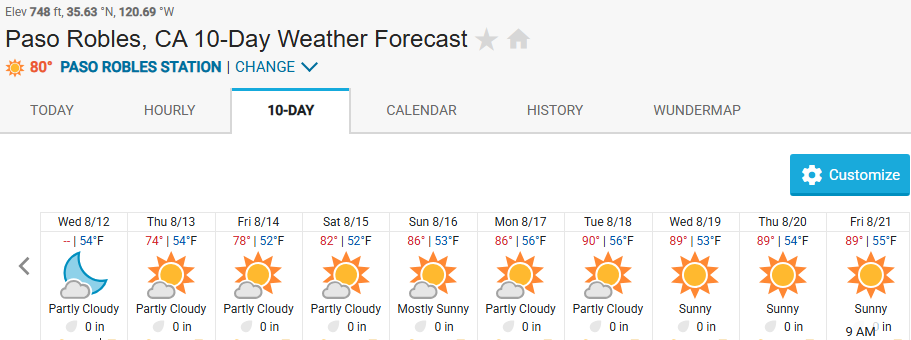
The last reason why I'm expecting a long harvest is that after six weeks of warmth, it's cooled down the last few days, and isn't supposed to get into the 90s again in the ten-day forecast. The Weather Underground forecast below is for the city of Paso Robles; note that our highs are usually 2-3 degrees cooler out here:
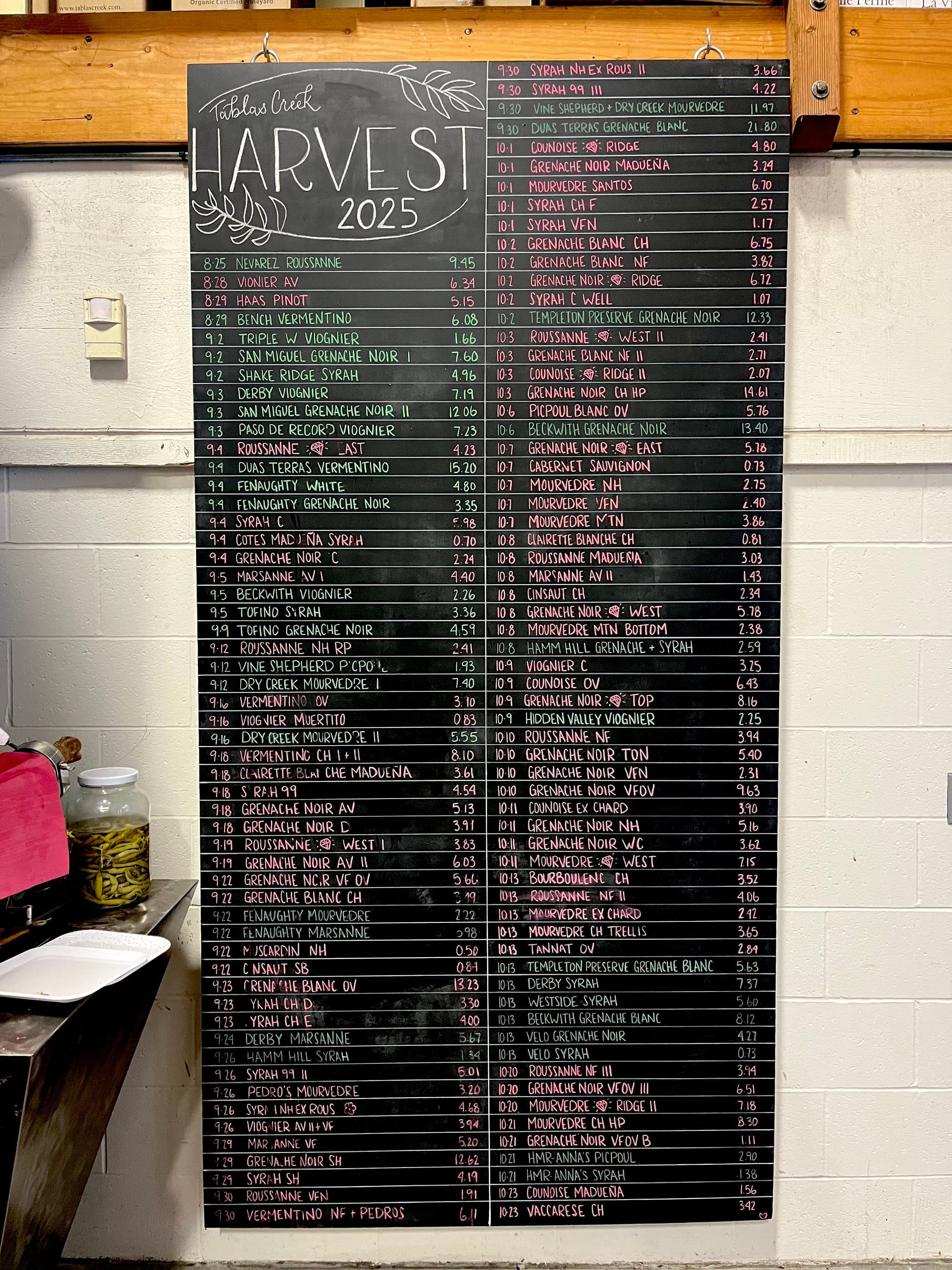
The unevenness means that we're having to approach the beginning of harvest a little differently than usual. We're sampling the tops of blocks separately from the bottoms. We're planning more daytime picks so the vineyard team has an easier job selecting just the ripe clusters and can leave the unripe ones on the vines for a later pick. And Chelsea, when I spoke to her earlier today, was trying to figure out if she could redraw the harvest chalkboard to have more lines, as she's sure we'll see more picks than last year... when we already ran out of lines ten days before we finished picking:
One thing we are pretty sure of is that we are expecting things to come in lighter in quantity than last year. The vines were flowering earlier and in cooler temperatures than they're used to, producing relatively high rates of shatter and millerandage. The good news: that shouldn't impact quality in a negative way and might even be an asset by increasing skin-to-juice ratios.
So, stay tuned. And plan to stay tuned for at least two months. We've just left the driveway of what we're expecting to be a long, winding trip.